 Back
Animal Behavior: Mechanisms, Development, and Evolutionary Significance
Study Guide - Smart Notes
 Tailored notes based on your materials, expanded with key definitions, examples, and context.
Animal Behavior
Overview of Animal Behavior
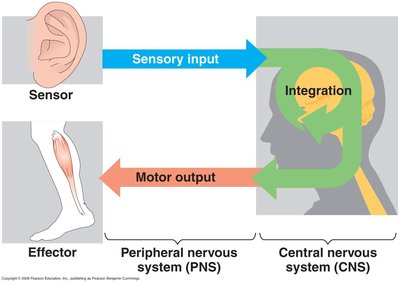
Animal behavior encompasses all the responses of organisms to internal and external stimuli. It is shaped by both genetic (genotype) and environmental factors, and can be subject to natural and sexual selection. The study of animal behavior in natural environments is known as ethology.
Behavior: The sum of all an organism’s responses to stimuli, determined by the nervous system.
Genetic and Environmental Components: Behavior is a phenotype influenced by genotype and environment.
Natural Selection: Acts on behavioral traits if there is genetic variation.
Proximate Causation: Immediate causes of behavior (e.g., what stimulus triggers a response?).
Ultimate Causation: Evolutionary reasons for behavior (e.g., how does the behavior increase fitness?).
Proximate Mechanisms of Behavior
Some behaviors are easily linked to specific stimuli. These include:
Taxis: Movement toward or away from a stimulus (e.g., moths flying toward a flame).
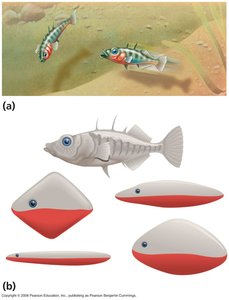
Fixed Action Patterns (FAPs): Sequences of unlearned acts triggered by a specific stimulus, carried to completion (e.g., male sticklebacks attacking red objects, greylag goose egg-rolling).
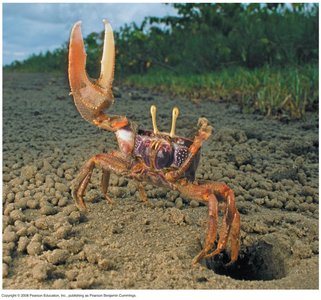
Communication: Transmission and reception of signals between animals, which can be visual, chemical, or tactile.
Innate and Learned Behaviors
Behavior can be innate (genetically programmed) or learned (modified by experience). Most behaviors are influenced by both.
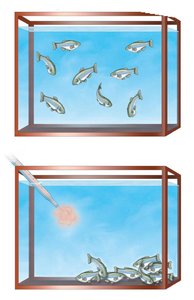
Innate Behavior: Fixed by genotype and development (e.g., minnow response to pheromones).
Learning: Modification of behavior based on experience.
Habituation: Decreased response to a repeated, irrelevant stimulus (e.g., prairie dogs near humans become less responsive to human presence).
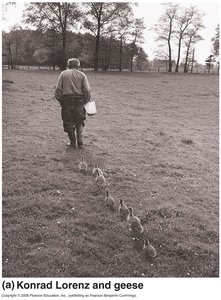
Imprinting
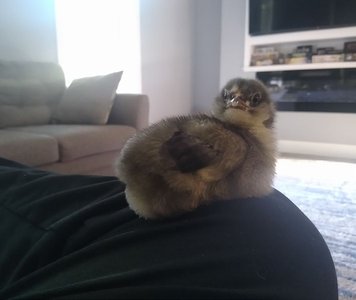
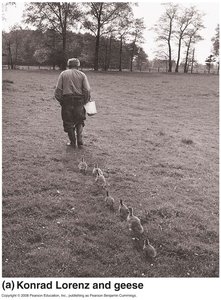
Imprinting is a type of learning that occurs during a sensitive period early in life, leading to strong attachments (e.g., young birds learning who their mother is).
Critical for bonding between parents and offspring, especially in egg-laying species.
Example: Greylag geese imprint on the first moving object they see after hatching.
Types of Learning
Animals exhibit a wide range of learned behaviors, from simple associations to complex problem-solving.
Associative Learning: Linking one stimulus with another.
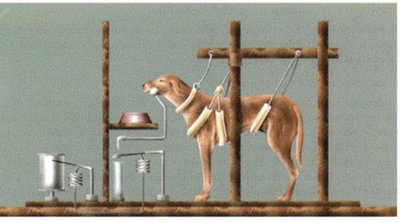
Classical Conditioning: An arbitrary stimulus becomes associated with a particular outcome (e.g., Pavlov’s dogs salivating at a bell).
Operant Conditioning: Learning through trial and error (e.g., a rat learning a maze).
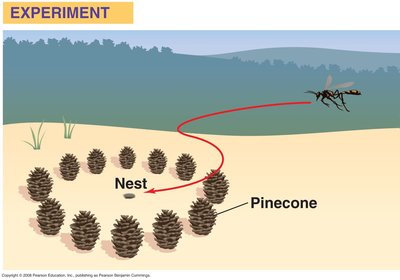
Spatial Learning: Using environmental landmarks to navigate (e.g., digger wasps use pinecones to locate their nest).
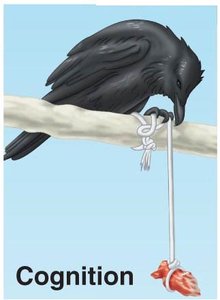
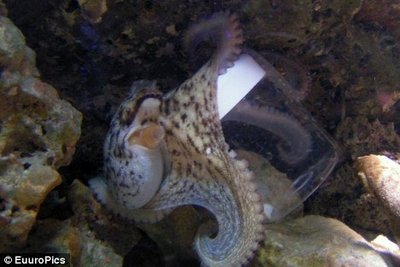
Cognition: Advanced mental processes such as reasoning, awareness, and problem-solving (e.g., ravens using tools, octopuses opening jars).
Genetic and Environmental Interactions
To understand the relative contributions of genetics and environment, scientists use controlled experiments such as cross-fostering and twin studies.
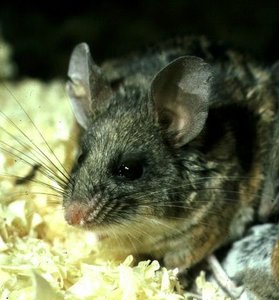
Cross-Fostering Studies: Offspring of one species raised by another to assess environmental effects on behavior (e.g., California mice and white-footed mice).
Twin Studies: Identical twins raised in different environments to separate genetic and environmental influences.
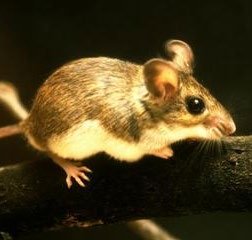
Species | Aggression Toward an Intruder | Aggression in Neutral Situation | Paternal Behavior |
|---|---|---|---|
California mice fostered by white-footed mice | Reduced | No difference | Reduced |
White-footed mice fostered by California mice | No difference | Increased | No difference |
Evolutionary Causes of Behavior
Many behavioral traits are shaped by evolutionary pressures to maximize survival and reproductive success.
Optimal Foraging Theory: Animals maximize benefits (nutrition) and minimize costs (time, energy, risk) when foraging.
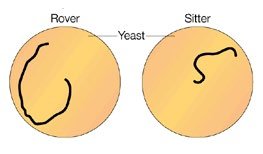
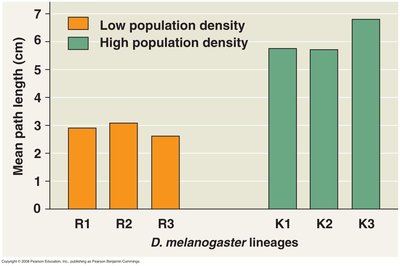
Example: Fruit fly larvae exhibit "rover" and "sitter" foraging strategies, favored under different population densities.
Mating Systems and Parental Care
Mating systems are closely related to parental roles and certainty of parentage.
Types of Mating Systems:
Monogamous: Long-term pair bonding.
Polygamous: Multiple long-term pair bonds (polygyny: one male, many females; polyandry: one female, many males).
Promiscuous: No pair bonding.
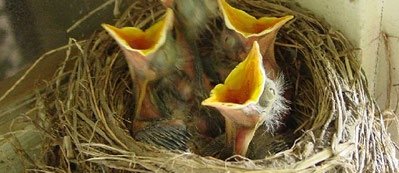
Parental care is influenced by certainty of parentage, especially in species with internal vs. external fertilization.
Male behaviors to increase certainty of paternity include mate guarding and sperm competition.
Sexual Selection and Behavioral Effects
Sexual selection results from differential mating success and often leads to sexual dimorphism in traits related to mate attraction and competition.
Males often compete for access to females, leading to the evolution of elaborate traits (e.g., peacock tails, bright colors, songs).
Runaway selection can occur if female preference for a trait increases its frequency.
Agonistic interactions among males can also drive the evolution of competitive traits.
Game Theory and Behavioral Strategies
The fitness of a behavioral phenotype can depend on the strategies of other individuals in the population. Game theory models these interactions.
Example: Side-blotched lizard males exhibit different strategies (aggressive, less aggressive, non-territorial) that are favored under different conditions.
Altruism and Evolution
Altruism is behavior that reduces an individual's fitness but increases the fitness of others. This presents a challenge for evolutionary theory, but can be explained by kin selection and inclusive fitness.
Example: Belding’s ground squirrel gives alarm calls, warning the group but increasing its own risk.
Parental care is a form of altruism, as parents increase their inclusive fitness by ensuring the survival of their offspring, who share their genes.
