 Back
BackAnimal Behavior: Mechanisms, Evolution, and Ecological Context
Study Guide - Smart Notes
 Tailored notes based on your materials, expanded with key definitions, examples, and context.
Animal Behavior
Introduction to Animal Behavior
Animal behavior is the study of how animals interact with their environment, other organisms, and themselves. Biologists seek to answer questions about the mechanisms, development, evolutionary history, and adaptive value of behaviors. Behaviors are actions carried out by muscles under the control of the nervous system, and both behaviors and their anatomical structures are subject to natural selection.
Behavior: An action carried out by muscles under nervous system control.
Natural Selection: Behaviors and related anatomical structures evolve if they confer survival or reproductive advantages.
Framework for Studying Animal Behavior
Animal behavior can be analyzed using two main frameworks: proximate causation (how a behavior occurs) and ultimate causation (why a behavior occurs in the context of evolution).
Proximate Causation: Focuses on the immediate mechanisms and development of behavior (e.g., stimuli, physiological responses, learning).
Ultimate Causation: Explores the evolutionary significance and adaptive value of behavior (e.g., survival, reproduction, evolutionary history).
Proximate Mechanisms of Behavior
Sensory Inputs and Behavioral Responses
Discrete sensory inputs can stimulate both simple and complex behaviors. These inputs are detected by sensory organs and processed by the nervous system, resulting in coordinated actions.
Innate and Learned Behaviors
Innate Behavior: Unlearned, genetically programmed behaviors performed the same way by all individuals of a species.
Learned Behavior: Behaviors that develop or change as a result of experience or socialization.
Animal Signals and Communication
Communication involves the transmission and reception of signals between animals. A signal is a stimulus generated by one animal that guides the behavior of another. There are four common modes of communication:
Visual
Chemical
Tactile
Auditory
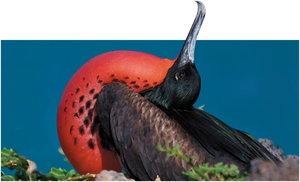
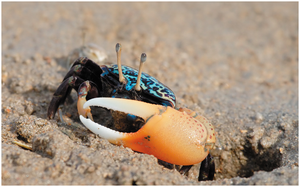
Examples: The male frigatebird displays a red throat pouch to attract mates (visual signal). Fiddler crabs wave their enlarged claws to communicate territory or attract mates (visual/tactile signal).
Fixed Action Patterns
A fixed action pattern is a sequence of unlearned acts directly linked to a specific external cue, called a sign stimulus. These behaviors are unchangeable and, once initiated, are usually carried to completion.
Example: Male stickleback fish attack objects with a red underside, regardless of shape, due to a fixed action pattern triggered by the color red.
Pheromones and Chemical Communication
Many animals communicate using chemical substances called pheromones, which can trigger specific behavioral responses even at low concentrations.
Example: Injured minnows release alarm pheromones that induce a fright response in nearby fish.
Learned Behaviors
Associative Learning
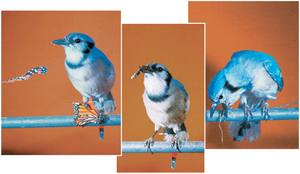
In associative learning, animals learn to associate one feature of their environment with another, such as associating a specific color with a foul taste.
Example: Blue jays learn to avoid eating monarch butterflies after associating their bright coloration with a bad taste.
Social Learning
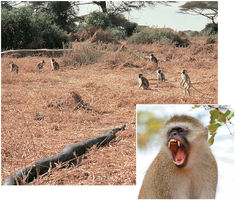
Social learning occurs when animals observe and interpret the behaviors of others, learning from their successes and mistakes. This can lead to the development of complex behaviors and traditions within populations.
Example: Vervet monkeys use specific alarm calls to warn about different predators, and young monkeys learn these calls by observing adults.
Genetic and Evolutionary Basis of Behavior
Genetic Basis for Behavioral Diversity
Some behaviors have a strong genetic basis. For example, alleles of the forager gene in Drosophila larvae determine whether individuals forage over short or long distances. Both alleles are maintained in natural populations, likely due to varying selective pressures.
Evolution of Foraging Behavior
Experimental evolution studies in Drosophila melanogaster show that foraging behavior can evolve rapidly in response to population density, demonstrating the fitness advantages of different behavioral strategies in different environments.
Migration as an Innate Behavior
Migration is a regular, long-distance movement guided by environmental cues such as the sun, stars, or Earth's magnetic field. In blackcaps (Sylvia atricapilla), recent changes in migratory orientation have a genetic basis, as shown by cross-breeding experiments and orientation tests in captivity.
Prey Specialization in Garter Snakes
Western garter snakes (Thamnophis elegans) show hereditary differences in prey preference. Coastal populations specialize in eating banana slugs, while inland populations do not, reflecting evolutionary adaptation to local prey availability. These differences are stable across generations and are not learned behaviors.
Evolutionary History of Complex Behaviors
Behaviors such as plunge-diving in kingfishers can be studied to determine whether they are homologous (inherited from a common ancestor) or the result of convergent evolution (independently evolved in different lineages). Understanding the evolutionary history of such behaviors helps clarify the adaptive significance and origins of behavioral traits.
