 Back
BackAnimal Behavior: Mechanisms, Evolution, and Examples
Study Guide - Smart Notes
 Tailored notes based on your materials, expanded with key definitions, examples, and context.
Animal Behavior
Introduction to Animal Behavior
Animal behavior encompasses what an animal does and how it does it, shaped by both genetic and environmental factors. The scientific study of animal behavior is called ethology. Behaviors are subject to natural selection, meaning advantageous behaviors are more likely to be passed on to future generations.
Proximate cause: Explains "how" a behavior occurs or is modified (mechanistic explanation).
Ultimate cause: Explains "why" a behavior occurs in the context of evolution and natural selection (evolutionary explanation).
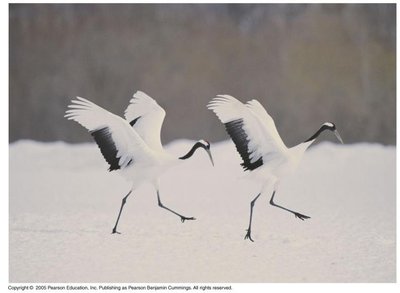
Example: Bird mating dances are shaped by both immediate triggers (proximate) and evolutionary benefits (ultimate).
Types of Behavior
Innate vs. Learned Behaviors
Animal behaviors can be classified as innate (genetically programmed) or learned (modified by experience). Most behaviors fall along a spectrum between these two extremes.
Innate behaviors: Developmentally fixed, automatic, and performed similarly by all members of a species.
Learned behaviors: Modified by experience, flexible, and often complex.
Fixed Action Patterns (FAPs)
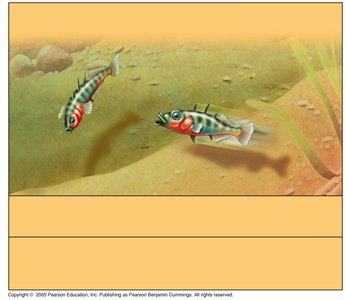
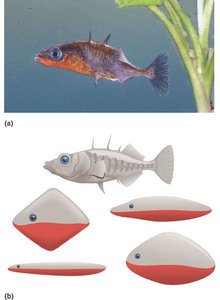
Fixed Action Patterns are sequences of unlearned, unchangeable behaviors that are usually carried to completion once triggered by a specific stimulus (sign stimulus).
Example: A male stickleback fish attacks other males with red bellies that enter its territory.
Movement Behaviors
Animals exhibit various movement behaviors in response to stimuli:
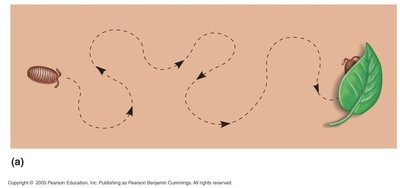
Kinesis: Random movement in response to a stimulus (e.g., increased activity in dry areas).
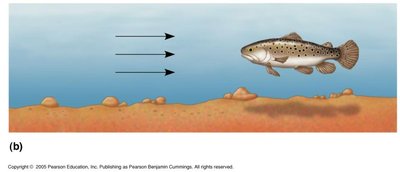
Taxis: Oriented movement toward or away from a stimulus (e.g., phototaxis, chemotaxis, geotaxis, rheotaxis).
Migration
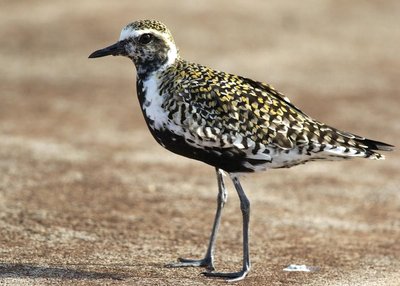
Migration is a regular, long-distance change in location, often guided by environmental cues such as the sun, stars, Earth's magnetic field, or landmarks.

Animal Communication
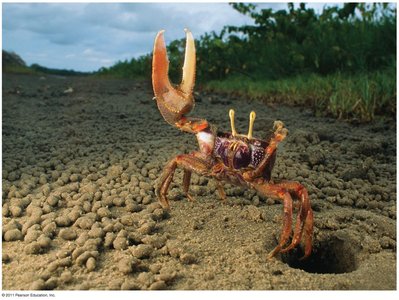
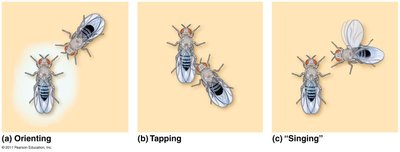
Animals communicate using a variety of signals, which can be auditory, visual, tactile, or chemical (pheromones). Communication is essential for mating, warning, territory defense, and social interactions.
Auditory: Dolphin clicks and whistles.
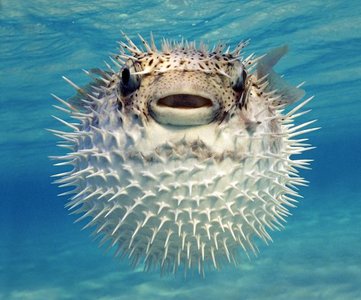
Visual: Courtship displays, warning coloration.
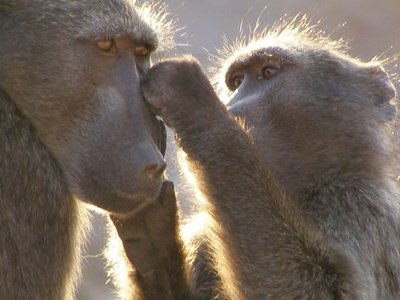
Tactile: Grooming in primates.
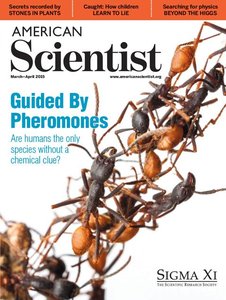
Pheromones: Chemical signals used by ants and other animals.
Honeybee Waggle Dance
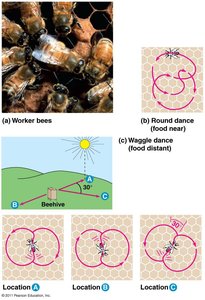
Honeybees use a complex dance to communicate the location of food sources to other members of the hive. The waggle dance conveys both distance and direction relative to the sun.
Learned Behaviors
Imprinting
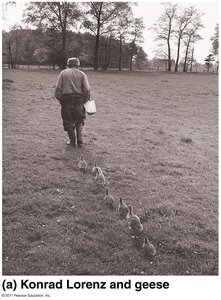
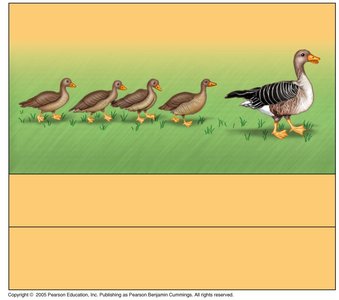
Imprinting is a type of learning that occurs during a sensitive period early in life and results in a long-lasting behavioral response to a particular individual or object. It has both innate and learned components.
Example: Young geese imprint on their mother (or the first moving object they see).
Associative Learning
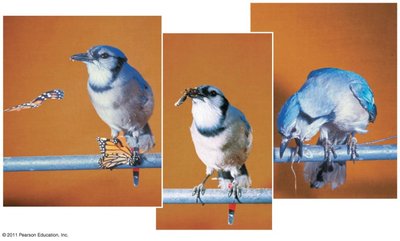
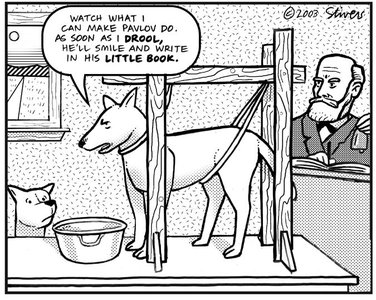
Associative learning involves forming associations between stimuli or between a behavior and a consequence. There are two main types:
Classical conditioning: An arbitrary stimulus becomes associated with a particular outcome (e.g., Pavlov's dogs salivating at a bell).
Operant conditioning: An animal learns to associate its own behavior with reward or punishment (e.g., Skinner box, coyotes avoiding porcupines).
Social Learning
Social learning occurs when animals learn behaviors by observing others. This is important for the transmission of behaviors within populations.
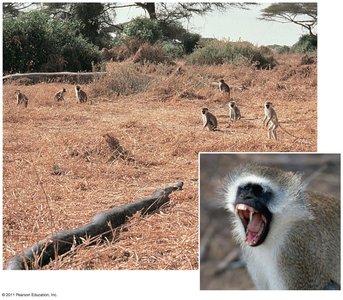
Example: Vervet monkeys learn alarm calls by observing adults.
Foraging Behavior
Optimal Foraging Model
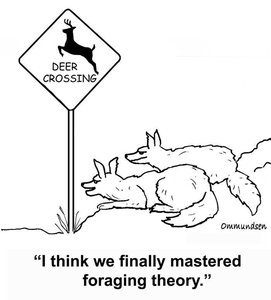
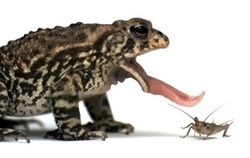
Foraging behavior includes searching for, recognizing, and capturing food. The optimal foraging model predicts that natural selection will favor behaviors that maximize benefits (energy gain) and minimize costs (energy expenditure, risk of predation).
Cost-benefit analysis: Animals weigh the risks and rewards of different foraging strategies.
Mating Systems and Parental Care
Mating Systems
Mating systems describe the patterns of mating between males and females in a population. Types include:
Monogamy: One male and one female form a pair bond.
Polygamy: One individual mates with several others (includes polygyny and polyandry).
Polygyny: One male, many females.
Polyandry: One female, many males.
Factors influencing mating systems include the need for parental care, certainty of paternity, and maximizing reproductive success.
Parental Care
Parental care strategies are influenced by the mode of fertilization:
Internal fertilization: Paternity is less certain; often less male parental care.
External fertilization: Paternity is more certain; often more male parental care.
Young born to or eggs laid by a female definitely share 50% of her genes, influencing her investment in care.
Altruism and Social Behavior
Selfishness and Fitness
Natural selection generally favors behaviors that increase an individual's own survival and reproductive success, which can appear "selfish." However, some behaviors, such as brood parasitism, may reduce the fitness of others.
Altruism
Altruism is a behavior that reduces an individual's fitness but increases the fitness of others. Examples include alarm calls in Belding's ground squirrels and sterile worker honeybees.
Inclusive Fitness and Kin Selection
Inclusive fitness is the total effect an individual has on proliferating its genes by producing its own offspring and by helping close relatives produce offspring. Kin selection is the process by which traits are favored due to their beneficial effects on the fitness of relatives.
Hamilton's Rule
Hamilton's Rule predicts that altruistic behavior will be favored by natural selection if:
r: Coefficient of relatedness (proportion of shared genes)
B: Benefit to the recipient
C: Cost to the altruist
For example, an individual may risk its life to save two siblings or eight cousins, as the genetic payoff is equivalent.
Reciprocal Altruism
Reciprocal altruism involves cooperation between unrelated individuals, where the favor is later returned. This is seen in some bird species and mammals, where individuals help each other raise offspring or share food.
Additional info: These notes cover the main concepts of animal behavior, including mechanisms, evolutionary explanations, and examples from both innate and learned behaviors. The content is structured to align with college-level biology curriculum, specifically Chapter 51: Animal Behavior.
