 Back
BackAnimal Development: From Fertilization to Organogenesis
Study Guide - Smart Notes
 Tailored notes based on your materials, expanded with key definitions, examples, and context.
Animal Development
Introduction to Animal Development
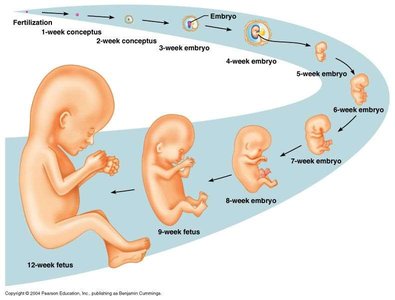
Animal development is the process by which a single-celled zygote transforms into a complex multicellular organism. This process involves a series of highly regulated stages that are remarkably conserved across the animal kingdom.
Zygote: The fertilized egg cell, which marks the beginning of a new organism.
Embryo: The early developmental stage following fertilization, characterized by rapid cell division and differentiation.
Fetus: The later stage of development, where the organism takes on a more recognizable form and organ systems mature.
Common Features of Animal Development
Despite the diversity of animal body plans, many basic mechanisms of development are shared. Biologists often use model organisms (such as sea urchins, frogs, and chicks) to study these processes due to their experimental accessibility.
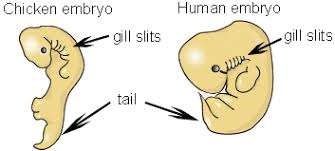
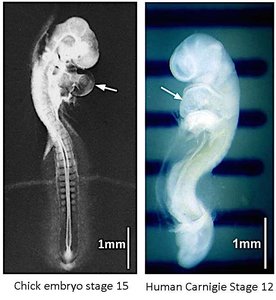
Early embryos of different species often display similar structures, such as gill slits and tails, reflecting common ancestry.
Embryonic Development Stages
Major Stages of Embryonic Development
Embryonic development proceeds through a series of ordered stages:
Fertilization
Cleavage
Blastula Formation
Gastrulation
Organogenesis
Fertilization
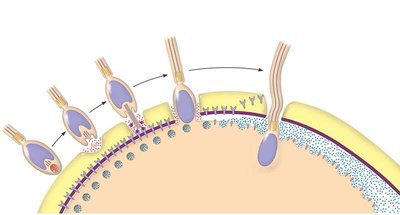
Fertilization is the union of haploid gametes (sperm and egg) to form a diploid zygote.
Main function: To bring together the genetic material from both parents and initiate embryonic development.
Acrosomal reaction: The sperm releases hydrolytic enzymes to penetrate the egg's protective layers, triggering changes that prevent additional sperm from entering (block to polyspermy).
Egg activation: Contact with sperm initiates metabolic changes in the egg, starting development.
Cleavage
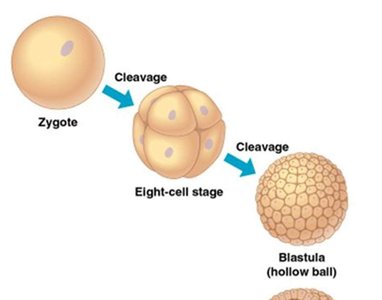
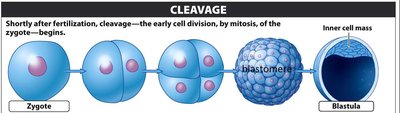
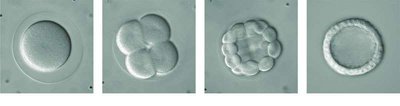
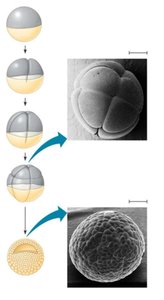
Cleavage is a period of rapid mitotic cell divisions without overall growth, partitioning the cytoplasm of the zygote into smaller cells called blastomeres.
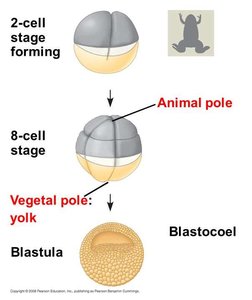
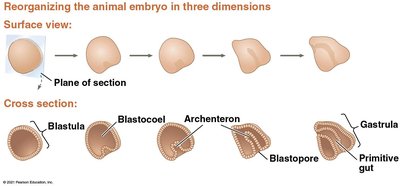
Results in the formation of a blastula, a hollow ball of cells surrounding a fluid-filled cavity called the blastocoel.
Patterns of Cleavage
Cleavage patterns vary among species and are influenced by the amount and distribution of yolk in the egg.
Holoblastic cleavage: Complete division of the egg, seen in species with little or moderate yolk (e.g., sea urchins, frogs).
Meroblastic cleavage: Incomplete division, occurring in yolk-rich eggs (e.g., birds, reptiles), where only the cytoplasmic region divides.
Polarity: Eggs have an animal pole (less yolk, more active division) and a vegetal pole (more yolk, slower division).
Gastrulation and Morphogenesis
Gastrulation
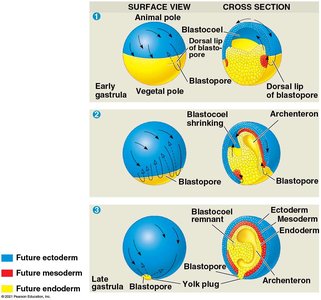
Gastrulation is the process by which the blastula is reorganized into a three-layered structure called the gastrula. This establishes the basic body plan and forms the embryonic germ layers:
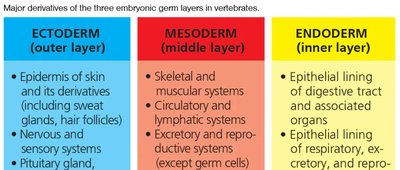
Ectoderm: Outer layer; forms skin and nervous system.
Mesoderm: Middle layer; forms muscles, skeleton, and circulatory system.
Endoderm: Inner layer; forms the lining of the digestive tract and associated organs.
Gastrulation in Chicks
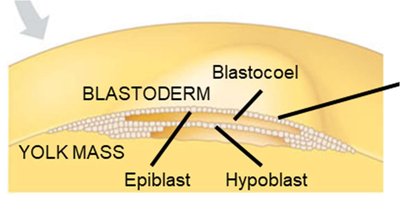
In birds, the embryo forms as a blastoderm atop the yolk mass. Gastrulation involves migration of epiblast cells through a structure called the primitive streak.
All cells that form the embryo originate from the epiblast.
The hypoblast contributes to extraembryonic structures but not the embryo itself.
Organogenesis
Formation of Organs
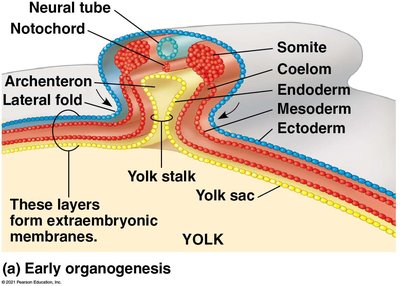
Organogenesis is the process by which the three germ layers develop into the rudimentary organs of the animal.
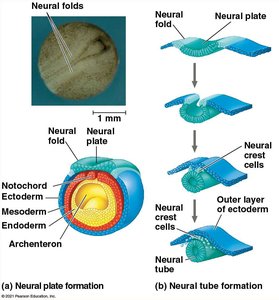
Notochord: Forms from mesoderm; provides structural support and signals neural development.
Neural plate: Forms from ectoderm; gives rise to the nervous system.
Neurulation
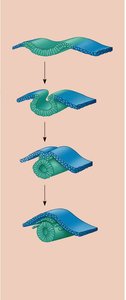
The neural plate curves inward to form the neural tube, which will become the brain and spinal cord.
Neural crest cells migrate to form various structures, including peripheral nerves and facial cartilage.
Organogenesis in the Chick
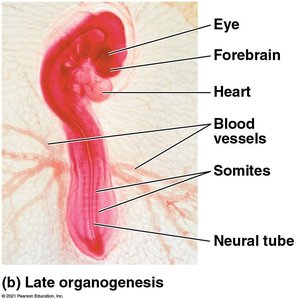
Early organogenesis involves the formation of the neural tube, somites (precursors to vertebrae and muscles), and coelom (body cavity).
By late organogenesis, rudiments of most major organs are present.
Cell Differentiation and Morphogenesis
Cell Differentiation
Cell differentiation: The process by which cells become specialized in structure and function, primarily through selective gene expression.
Morphogenesis
Morphogenesis: The process by which an organism takes shape, involving coordinated cell movements and tissue formation.
Summary Table: Major Derivatives of the Three Embryonic Germ Layers
Germ Layer | Major Derivatives |
|---|---|
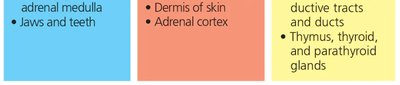
Ectoderm (outer layer) | Epidermis of skin and derivatives (sweat glands, hair follicles), nervous and sensory systems, pituitary gland, adrenal medulla, jaws and teeth |
Mesoderm (middle layer) | Skeletal and muscular systems, circulatory and lymphatic systems, excretory and reproductive systems (except germ cells), dermis of skin, adrenal cortex |
Endoderm (inner layer) | Epithelial lining of digestive tract and associated organs, epithelial lining of respiratory, excretory, and reproductive tracts and ducts, thymus, thyroid, and parathyroid glands |
Key Terms and Concepts
Polyspermy: Fertilization by more than one sperm; prevented by fast and slow blocks during fertilization.
Blastomere: A cell formed by cleavage of a fertilized ovum.
Blastocoel: The fluid-filled cavity of a blastula.
Archenteron: The primitive gut formed during gastrulation.
Primitive streak: Structure that forms in the blastoderm of birds, marking the future axis of the embryo and site of cell migration during gastrulation.
Sample Questions for Review
What is the process called that involves the movement of cells into new relative positions in an embryo and results in the establishment of three germ tissue layers? Answer: Gastrulation
After gastrulation, what is the outer-to-inner sequence of tissue layers in a vertebrate? Answer: Ectoderm, mesoderm, endoderm
The archenteron of the developing frog eventually develops into which structure? Answer: Digestive tract
