 Back
Backch 43
Study Guide - Smart Notes
 Tailored notes based on your materials, expanded with key definitions, examples, and context.
Animal Development: Principles and Mechanisms
Regeneration and Developmental Programs
Regeneration is the process by which certain animals can regrow lost body parts, a phenomenon more complex than simple wound healing. While wound healing involves the proliferation of a few cell types to close a wound, regeneration requires the reactivation of developmental programs to reconstruct the lost structure with all its components in the correct arrangement. In humans, the potential for regeneration is limited, raising questions about the control of normal development and the possibility of reactivating these programs in adults.
Principles of Animal Development
Key Processes in Development
Development is the process by which a multicellular organism grows and increases in complexity, beginning with a fertilized egg and ending with a sexually mature adult. Three main processes contribute to development:
Cell multiplication: Individual cells divide to increase their number.
Cell differentiation: Some daughter cells specialize in structure and function (e.g., nerve cells).
Cellular organization: Groups of cells move and organize into multicellular organs (e.g., brain).
Although all cells in an animal are genetically identical, differentiation occurs because specific sets of genes are turned on or off in different cells at specific times.
Direct and Indirect Development
Types of Development
Animals exhibit two main types of development as they progress from newborn to adult:
Direct development: The newborn resembles the adult. Common in mammals, reptiles, birds, some fish, and invertebrates like snails. Offspring are relatively large and require significant nourishment before birth or hatching. Strategies include yolk-rich eggs (birds, reptiles, many fish) or nourishment within the mother (mammals, some snakes, a few fish). Few offspring are produced, and parental care is often required.
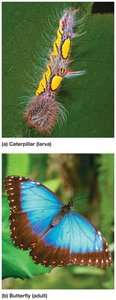
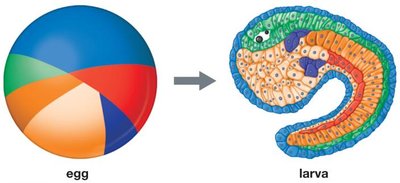
Indirect development: The newborn (larva) has a very different body structure from the adult. Common in most amphibians and invertebrates. Females produce many eggs with little yolk. Larvae feed and grow before undergoing metamorphosis to become sexually mature adults. Larvae often occupy different ecological niches than adults.

Early Animal Development
Cleavage, Blastula, and Gastrulation
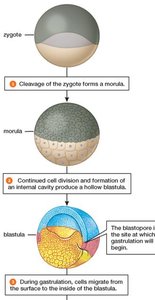
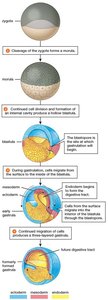
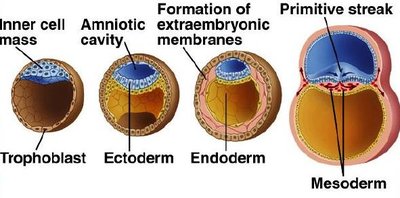
Development begins with the cleavage of the zygote, a series of mitotic divisions that produce a solid ball of cells called the morula. Continued division forms a hollow ball called the blastula. Gastrulation follows, during which cells migrate to form three primary tissue layers:
Ectoderm: Forms surface structures (skin, hair, nails) and the nervous system.
Endoderm: Forms the lining of the digestive tract, liver, pancreas, and respiratory tract.
Mesoderm: Forms muscles, skeleton, and circulatory system.
Organogenesis
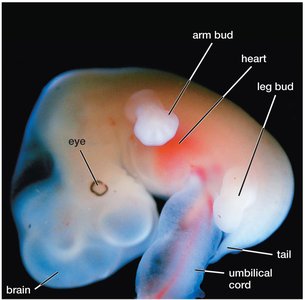
Organogenesis is the formation of organs from the three germ layers. This process is regulated by master genes that control the expression of many other genes. Programmed cell death (apoptosis) sculpts body parts by removing unnecessary cells.
Extraembryonic Membranes and the Amniotic Egg
Adaptations for Terrestrial Development
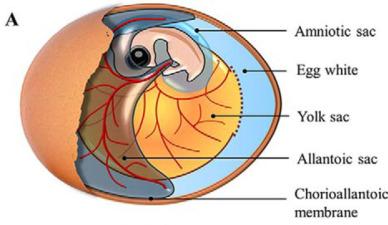
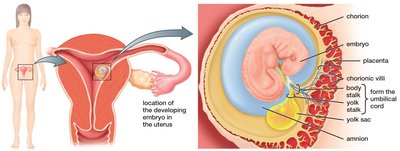
Reptiles, birds, and mammals possess an amniotic egg with four extraembryonic membranes:
Chorion: Gas exchange
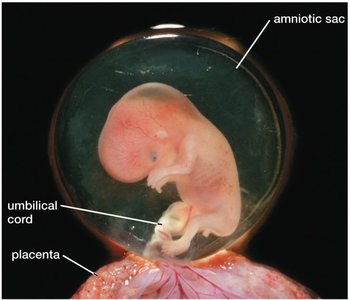
Amnion: Encloses the embryo in fluid
Allantois: Stores waste
Yolk sac: Provides nourishment
Control of Animal Development
Gene Expression and Differentiation
All cells contain the same genetic material, but differentiation arises from selective gene expression. This is regulated by:
Transcription factors: Proteins that bind to DNA and regulate gene transcription.
Maternal molecules: Substances in the egg cytoplasm direct early differentiation.
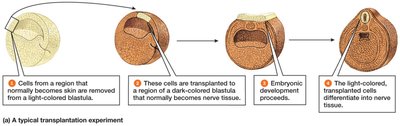
Induction: Chemical signals from neighboring cells influence cell fate.
Homeobox Genes
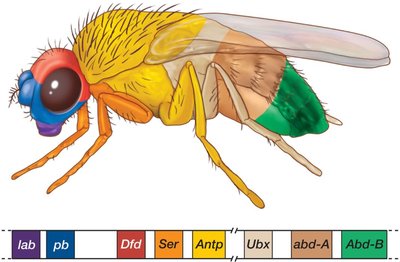
Homeobox genes are master regulatory genes that control the development of body segments. They are arranged on chromosomes in the same order as the body regions they affect. Mutations can cause dramatic changes, such as extra body segments or misplaced limbs.
Human Development
Fertilization to Implantation
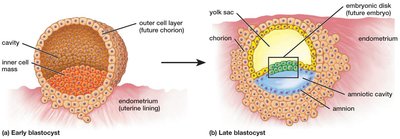
Human development begins with fertilization in the uterine tube. The zygote undergoes cleavage, forming a morula, then a blastocyst. The blastocyst implants in the uterine lining, and its outer layer forms the chorion, which contributes to the placenta.
Gastrulation and Organogenesis in Humans
Gastrulation forms the three germ layers in the embryonic disk. Organogenesis begins in the third week, with the formation of the brain, spinal cord, and heart. The umbilical cord forms, connecting the embryo to the placenta for nutrient and waste exchange.
Fetal Development and Birth
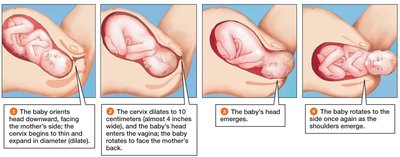
By the end of the second month, the embryo is called a fetus, with all major organs present. Growth and differentiation continue, and the placenta facilitates exchange between maternal and fetal blood. Labor and delivery are triggered by hormonal and mechanical signals, culminating in birth.
Lactation
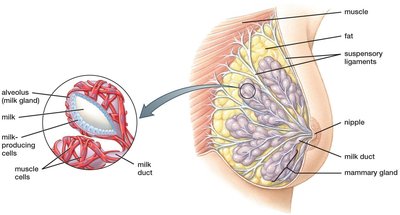
After birth, the mammary glands secrete milk, initially producing colostrum, which is rich in antibodies. Milk production and ejection are regulated by hormones such as prolactin and oxytocin.
Aging: The Final Stage of Development
Mechanisms and Variation in Aging
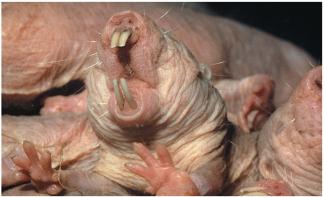
Aging is the gradual accumulation of molecular damage, particularly to DNA, leading to decreased function and increased vulnerability to disease. Some animals exhibit programmed aging, while others, like the naked mole rat, show negligible senescence and exceptional longevity due to superior DNA repair and metabolic adaptations.
Human Longevity
While medical advances have extended human lifespan, the maximum remains around 130 years. Research into genes associated with longevity, such as those from the naked mole rat, offers hope for future interventions to slow aging and extend healthy life.
