 Back
BackAnimal Diversity and Body Plans: Structure, Function, and Evolution
Study Guide - Smart Notes
 Tailored notes based on your materials, expanded with key definitions, examples, and context.
Animal Diversity
Overview of Animal Diversity
Animals are a diverse group of eukaryotic, multicellular organisms that share a common ancestor. The animal kingdom is characterized by a wide variety of body plans, developmental modes, and evolutionary adaptations. Most animal phyla are classified within the clade Bilateria, which includes organisms with bilateral symmetry and three germ layers.
Metazoa: Monophyletic group containing all animals.
Sponges (Porifera): Basal animals lacking true tissues.
Eumetazoa: Animals with true tissues; includes most animal phyla.
Cambrian Explosion: Period of rapid diversification of bilaterians.
Animal Body Plans
Symmetry
Animal body plans are often categorized by their symmetry, which reflects their lifestyle and evolutionary history.
Asymmetry: No plane of symmetry (e.g., sponges).
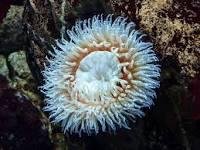
Radial Symmetry: Body parts arranged around a central axis; any longitudinal cut through the central axis results in mirror images (e.g., cnidarians).
Bilateral Symmetry: Only one plane divides the body into mirror-image halves; associated with cephalization and active movement (e.g., most animals).
Tissues and Germ Layers
Tissues are collections of specialized cells that function together. Most animals (except sponges) develop distinct tissue layers during embryogenesis, known as germ layers.
Ectoderm: Outermost germ layer; forms the outer covering and, in some phyla, the nervous system.
Endoderm: Innermost germ layer; lines the digestive tract or cavity.
Mesoderm: Middle germ layer (in triploblastic animals); forms muscles and most internal organs.
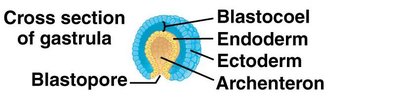
Diploblastic animals have two germ layers (ectoderm and endoderm), while triploblastic animals have three (including mesoderm).
Body Cavities
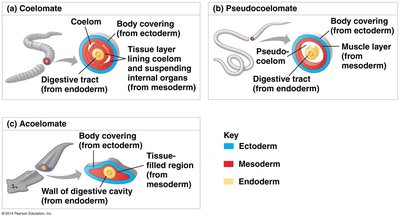
Body cavities are fluid- or air-filled spaces between the digestive tract and the outer body wall. They provide space for organ development and function.
Coelomate: True coelom, completely lined by mesoderm.
Pseudocoelomate: Body cavity partially lined by mesoderm.
Acoelomate: No body cavity between digestive tract and outer body wall.
Developmental Modes
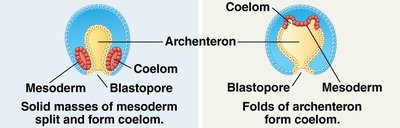
Animals can be classified by their embryonic development, particularly in the formation of the coelom and the fate of the blastopore.
Protostome Development: Spiral, determinate cleavage; coelom forms from solid masses of mesoderm; blastopore becomes mouth.
Deuterostome Development: Radial, indeterminate cleavage; coelom forms from folds of archenteron; blastopore becomes anus.
Major Animal Clades
Basal Animals: Sponges (Porifera)
Sponges are simple, sessile filter feeders that lack true tissues. They are considered basal animals and are important for understanding early animal evolution.
Filter feeding: Water is drawn through pores, and food particles are captured.
Sessile: Fixed in one place.
Eumetazoa: Cnidaria and Ctenophora
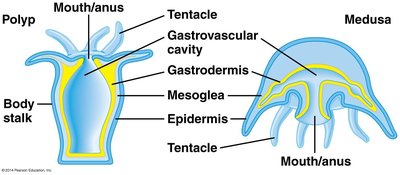
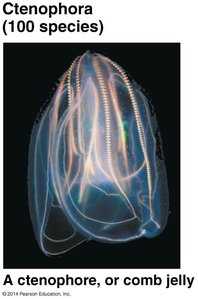
Cnidarians and ctenophores are diploblastic animals with radial symmetry. They have a simple body plan with a central digestive compartment called the gastrovascular cavity.
Cnidaria: Includes hydra, corals, and jellyfish. Two main body forms: polyp (sessile) and medusa (motile).
Ctenophora: Comb jellies; similar to cnidarians but with specialized adhesive cells for prey capture.
Bilateria
Most animal phyla belong to the clade Bilateria, characterized by bilateral symmetry and three germ layers. Bilaterians are divided into three major clades: Deuterostomia, Lophotrochozoa, and Ecdysozoa.
Deuterostomia: Includes echinoderms and chordates.
Lophotrochozoa: Includes flatworms, rotifers, molluscs, and annelids.
Ecdysozoa: Includes nematodes and arthropods.
Lophotrochozoa
Platyhelminthes (Flatworms)
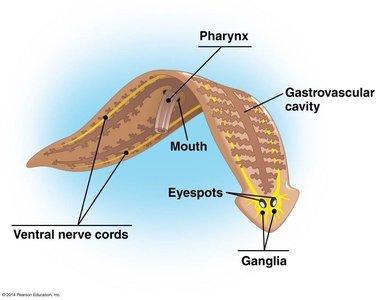
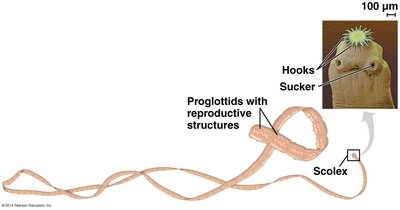
Flatworms are acoelomate, dorsoventrally flattened animals. They may be free-living or parasitic and have a gastrovascular cavity or lack a digestive tract entirely (e.g., tapeworms).
Acoelomate: No body cavity.
Tapeworms: Absorb nutrients directly through their body surface.
Rotifera
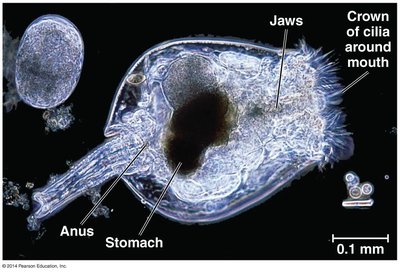
Rotifers are pseudocoelomates with a complete digestive tract (alimentary canal). They use a crown of cilia to draw water into their mouths and have internal jaws called trophi.
Parthenogenesis: Some species reproduce asexually by producing females from unfertilized eggs.
Lophophorates: Ectoprocts and Brachiopods
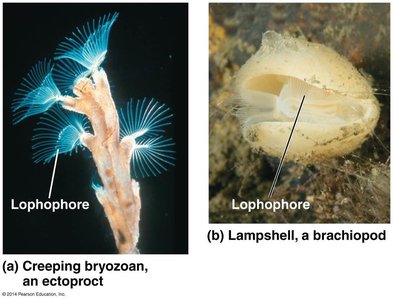
Lophophorates are coelomates that possess a lophophore, a crown of ciliated tentacles used for feeding. Ectoprocts are colonial and important reef builders, while brachiopods superficially resemble clams but have dorsal and ventral shells.
Mollusca
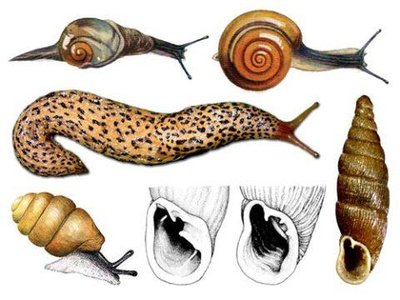
Molluscs are soft-bodied coelomates, most of which secrete a hard shell made of calcium carbonate. Their body plan includes a muscular foot, a visceral mass, and a mantle. Many molluscs use a radula for feeding.
Gastropods: Snails and slugs.
Bivalves: Clams, oysters, and mussels.
Cephalopods: Squids, octopuses, and cuttlefish.
Annelida
Annelids are segmented worms and coelomates. They are divided into two major clades: Errantia (mobile, often marine) and Sedentaria (less mobile, includes earthworms and leeches).
Leeches: Many are blood-sucking parasites that secrete anticoagulants.
Earthworms: Important for soil aeration and nutrient cycling.
Ecdysozoa
Nematoda (Roundworms)
Nematodes are cylindrical, unsegmented worms with a pseudocoelom and a complete digestive tract. They undergo ecdysis (molting of their exoskeleton) and include both free-living and parasitic species.
Trichinella spiralis: Causes trichinosis in humans, acquired from undercooked meat.
Arthropoda
Arthropods are the most diverse and abundant animal phylum. Their body plan includes a segmented body, a hard exoskeleton made of chitin, and jointed appendages. Arthropods have specialized appendages for various functions such as walking, feeding, and sensory reception.
Hox genes: Changes in Hox gene expression contribute to the diversity of arthropod body plans.
Summary Table: Major Animal Body Plans
Feature | Asymmetry | Radial Symmetry | Bilateral Symmetry |
|---|---|---|---|
Example | Sponges | Cnidarians, Ctenophores | Most other animals |
Germ Layers | None | Diploblastic | Triploblastic |
Body Cavity | None | Varies | Coelomate, pseudocoelomate, or acoelomate |
Developmental Mode | None | Varies | Protostome or deuterostome |
