 Back
Chapter 27
Study Guide - Smart Notes
 Tailored notes based on your materials, expanded with key definitions, examples, and context.
Overview of Animal Diversity
Defining Characteristics of Animals
Animals are a diverse group of multicellular, heterotrophic organisms that typically reproduce sexually and lack cell walls. They are capable of motion at some stage in their life cycle and respond quickly to external stimuli due to specialized nerve and muscle tissues.
Multicellularity: Animals are composed of multiple cells with specialized functions.
Heterotrophy: Animals obtain energy by consuming other organisms.
Sexual Reproduction: Most animals reproduce sexually, increasing genetic diversity.
Absence of Cell Walls: Animal cells are flexible and lack rigid cell walls.
Motion: Animals exhibit movement, either throughout life or during certain stages.
Rapid Response: Specialized tissues allow quick reaction to environmental changes.
Origins and Early Evolution of Animals
Animal Origins and Fossil Evidence
Animals likely evolved from single-celled eukaryotes similar to modern choanoflagellates. Fossil and molecular evidence suggests animals arose by 770 million years ago, with the earliest fossils from the Ediacaran biota (about 560 million years ago).
Choanoflagellates: Closest living relatives to animals.
Ediacaran Biota: Early animal fossils, including soft-bodied forms.
Fossil Evidence: Steroid traces and molecular analyses support early animal origins.
Early-Diverging Animal Groups
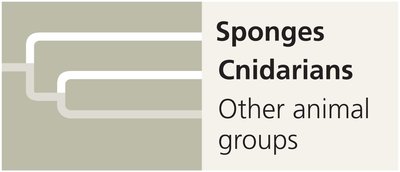
Sponges (phylum Porifera) and cnidarians diverged early in animal evolution, representing some of the most primitive animal groups.
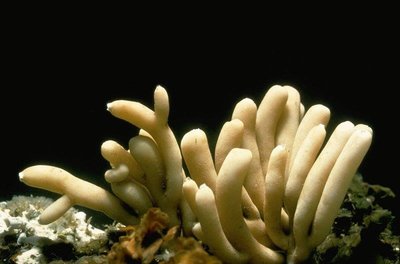
Sponges: Filter feeders lacking true tissues.
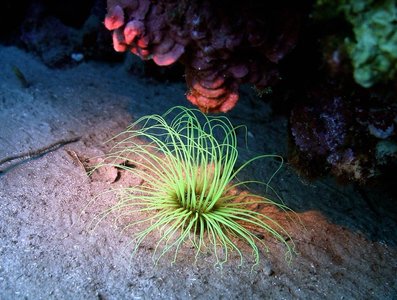
Cnidarians: Eumetazoans with true tissues, including hydrozoans, jellies, and sea anemones.
Animal Body Plans and Evolutionary Innovations
Body Plan Symmetry
Animal body plans are defined by symmetry, tissues, and body cavities. Symmetry can be radial (arranged around a central axis) or bilateral (arranged around two axes, with distinct head-tail and dorsal-ventral orientation).
Radial Symmetry: Seen in sessile or planktonic animals; any slice through the central axis yields mirror images.
Bilateral Symmetry: Seen in actively moving animals; only one slice yields mirror-image halves.
Body Axes: Dorsal (top), ventral (bottom), anterior (front), posterior (back), right and left sides.
Tissue Organization
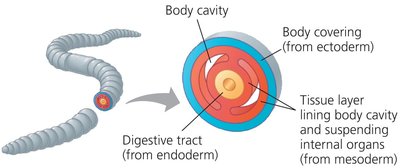
Tissues are collections of specialized cells. During development, germ layers (ectoderm, endoderm, mesoderm) give rise to tissues and organs.
Ectoderm: Forms outer covering and nervous system.
Endoderm: Forms digestive tract and internal organ linings.
Mesoderm: Forms muscles and most other organs; present in all bilaterians.
Body Cavities
Most bilaterians possess a coelom, a fluid- or air-filled space between the digestive tract and body wall. The coelom cushions organs, acts as a hydrostatic skeleton, and allows organ movement independent of the body wall.
Major Animal Phyla and Their Evolution
Animal Phylogeny
Most animal phyla were established by 500 million years ago. Zoologists recognize about three dozen phyla, with most animals being invertebrates. Chordata is the only phylum with vertebrates.
Common Ancestor: All animals share a single origin.
Sponges: Sister group to all other animals.
Eumetazoa: Clade with true tissues.
Bilateria: Most animal phyla belong to this clade.
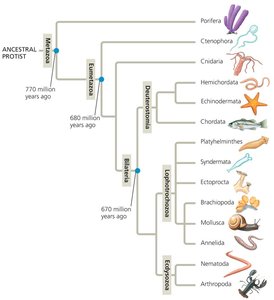
Invertebrate Diversity
Bilaterian invertebrates account for 95% of known animal species, with major clades including Lophotrochozoa, Ecdysozoa, and Deuterostomia.
Annelida: Segmented worms, including earthworms.
Nematoda: Roundworms, many are parasitic.
Arthropoda: Largest animal group, with segmented exoskeleton and jointed appendages.
Vertebrate Evolution
Vertebrates are dominant ocean predators, originating about 500 million years ago. They are members of phylum Chordata and possess a backbone, skull, and well-defined head.
Chordate Characters: Notochord, dorsal hollow nerve cord, pharyngeal slits, muscular tail.
Jawless Vertebrates: Hagfishes and lampreys.
Jawed Vertebrates (Gnathostomes): Sharks, rays, and bony fishes.
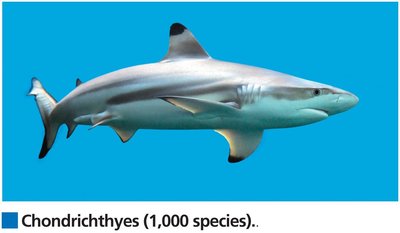
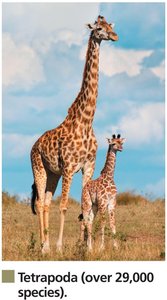
Colonization of Land and Terrestrial Adaptations
Transition to Land
Arthropods were among the first animals to colonize land, followed by vertebrates. Adaptations included modified appendages, exoskeletons, and specialized respiratory organs.
Arthropod Adaptations: Jointed appendages, cuticle exoskeleton, specialized organs for gas exchange.
Insect Flight: Enabled rapid dispersal and ecological success.
Origin of Tetrapods
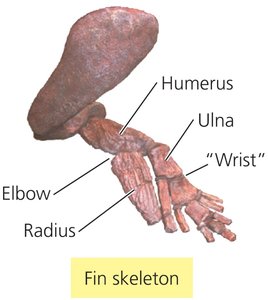
Tetrapods evolved from lobe-finned fishes, with Tiktaalik as a transitional fossil showing both fish and tetrapod characteristics. Tetrapods have limbs with digits, a neck, and a pelvic girdle.
Tiktaalik: Exhibited both fish (scales, fins, gills) and tetrapod (neck, ribs, limb bones) traits.
Tetrapod Limbs: Fins became progressively more limb-like over time.
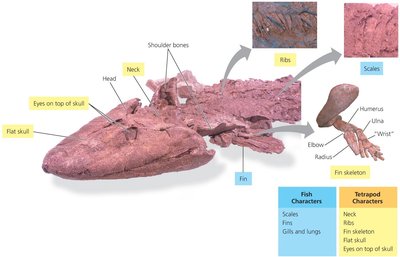
Amniotes and Terrestrial Adaptations
Amniote Evolution
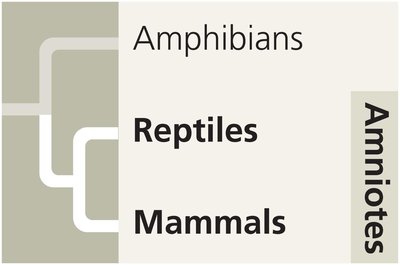
Amniotes are tetrapods with adaptations for life in dry habitats, including reptiles, birds, and mammals. The amniotic egg and rib cage ventilation are key adaptations.
Amniotic Egg: Contains specialized membranes for protection and nourishment.
Rib Cage Ventilation: Efficient lung ventilation, less reliance on skin for breathing.
Less Permeable Skin: Improved water conservation.
Reptiles and Birds
Reptiles include lizards, snakes, turtles, crocodilians, and birds. Most reptiles are ectothermic, while birds are endothermic and capable of flight.
Protective Scales: Contain keratin.
Internal Fertilization: Most lay shelled eggs on land.
Birds: Originated from reptilian ancestors, evolved flight and migration.
Mammalian Diversity
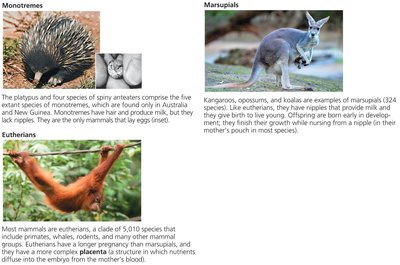
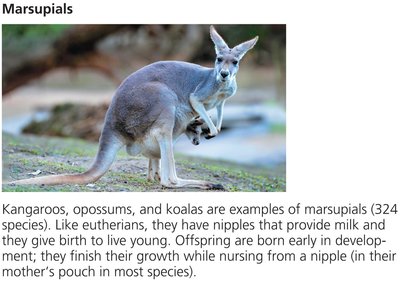
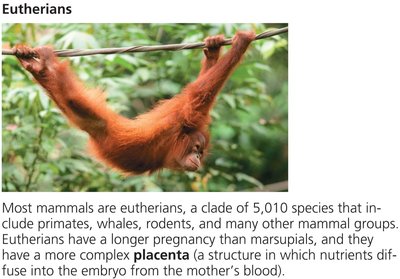
Mammals are named for their mammary glands and have adaptations for terrestrial life, including hair, kidneys, endothermy, and specialized teeth. Three lineages exist: monotremes, marsupials, and eutherians.
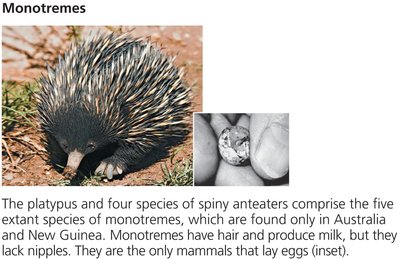
Monotremes: Egg-laying mammals (platypus, spiny anteaters).
Marsupials: Offspring complete development in a pouch (kangaroos, opossums, koalas).
Eutherians: Placental mammals with longer pregnancies (primates, whales, rodents).
Primates and Human Evolution
Primates
Primates include lemurs, tarsiers, monkeys, and apes. Adaptations for arboreal life include grasping hands and feet, opposable thumbs, large brains, and forward-looking eyes.
Arboreal Adaptations: Grasping limbs, depth perception.
Social Behavior: Highly social groups, especially in apes.
Humans
Humans (Homo sapiens) are distinguished from other apes by upright posture, bipedal locomotion, larger brains, language, symbolic thought, artistic expression, and complex tool use.
Bipedalism: Walking on two legs.
Brain Size: Enables advanced cognitive abilities.
