 Back
Done Animal Diversity and Evolution: From Sponges to Mammals Exam#2
Study Guide - Smart Notes
 Tailored notes based on your materials, expanded with key definitions, examples, and context.
Overview of Animal Diversity
Defining Characteristics of Animals
Animals are a diverse group of multicellular, heterotrophic organisms that typically reproduce sexually and are capable of motion at some stage in their life cycle. Their cells lack cell walls, and they possess specialized tissues such as nerve and muscle cells, enabling rapid responses to external stimuli.
Multicellularity: Animals are composed of multiple cells organized into tissues and organs.
Heterotrophy: Animals obtain energy by consuming other organisms.
Sexual Reproduction: Most animals reproduce sexually, increasing genetic diversity.
Absence of Cell Walls: Animal cells are flexible and lack rigid cell walls.
Motility: Movement is a key feature, enabled by muscle and nerve tissues.
Rapid Response: Specialized cells allow quick reaction to environmental changes.
Origins and Early Evolution of Animals
Animal Origins and Fossil Evidence
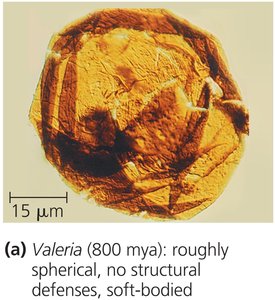
Animals likely evolved from single-celled eukaryotes similar to modern choanoflagellates. Fossil and molecular evidence suggests animals arose by 770 million years ago, with the earliest fossils found in the Ediacaran biota (about 560 million years ago).
Choanoflagellates: Closest living relatives to animals.
Ediacaran Biota: Early animal fossils, including soft-bodied forms.
Fossil Evidence: Steroid traces and molecular analyses support early animal origins.
Early-Diverging Animal Groups
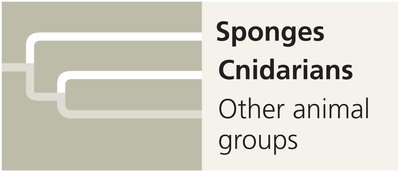
Sponges (phylum Porifera) and cnidarians diverged early in animal evolution. Sponges are filter feeders lacking true tissues, while cnidarians possess tissues and include both sessile and motile forms.
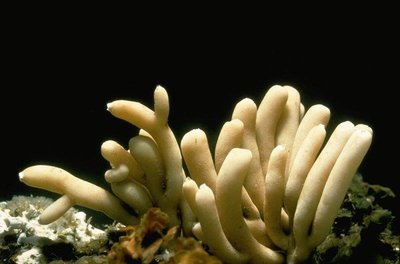
Sponges: Simple animals without true tissues, filter feeders.
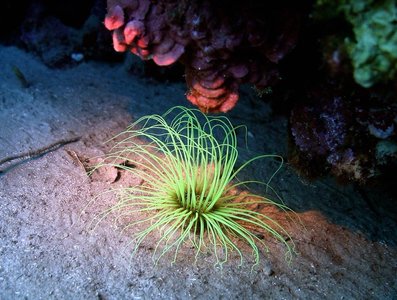
Cnidarians: Eumetazoans with tissues, including hydrozoans, jellies, and sea anemones.
The Cambrian Explosion and Animal Diversity
Cambrian Explosion
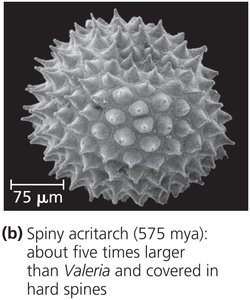
The Cambrian explosion (535–525 million years ago) marked a dramatic increase in animal diversity, with the appearance of many present-day phyla and the first hard, mineralized skeletons. Most fossils from this period are bilaterians, animals with bilateral symmetry and a complete digestive tract.
Bilaterians: Animals with bilateral symmetry and a complete digestive tract.
Predator-Prey Dynamics: Evolution of hunting predators and defensive adaptations.
Animal Body Plans
Symmetry
Animal body plans are defined by symmetry, tissues, and body cavities. Symmetry can be radial (arranged around a central axis) or bilateral (arranged around two axes, with distinct head-tail and dorsal-ventral orientation).
Radial Symmetry: Mirror images through any central axis slice; common in sessile or planktonic animals.
Bilateral Symmetry: Only one slice divides the animal into two mirror-image halves; associated with active movement and centralized nervous systems.
Tissues and Germ Layers
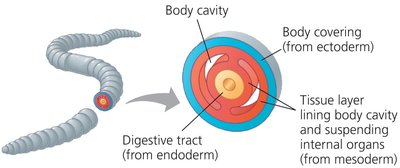
Tissues are collections of specialized cells. During development, germ layers (ectoderm, endoderm, mesoderm) give rise to tissues and organs. Bilaterians possess all three germ layers, while cnidarians lack mesoderm.
Ectoderm: Forms outer covering and nervous system.
Endoderm: Forms digestive tract and internal organ linings.
Mesoderm: Forms muscles and most other organs.
Body Cavities
Most bilaterians possess a coelom, a fluid- or air-filled space between the digestive tract and body wall. The coelom cushions organs, acts as a hydrostatic skeleton, and allows internal organs to move independently.
Coelom: Body cavity with multiple functions.
Hydrostatic Skeleton: Provides support and movement.
Animal Phylogeny and Diversification
Current Animal Phylogeny
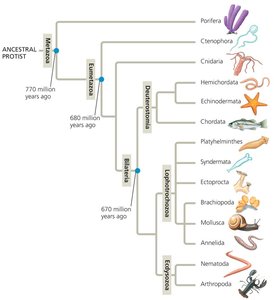
Most animal phyla were established by 500 million years ago. Zoologists recognize about three dozen animal phyla. Key points include a common ancestor for all animals, sponges as the sister group to all other animals, and the clade Bilateria containing most animal phyla.
Invertebrates: Animals without a backbone; most animal species.
Vertebrates: Only found in phylum Chordata.
Invertebrate Diversity
Major Invertebrate Groups
Bilaterian invertebrates account for 95% of known animal species. Major clades include Lophotrochozoa, Ecdysozoa, and Deuterostomia. Examples include annelids (segmented worms), nematodes (roundworms), and arthropods (insects, crabs, arachnids).
Annelida: Segmented worms, terrestrial and aquatic.
Nematoda: Roundworms, many are parasitic.
Arthropoda: Segmented exoskeleton, jointed appendages; most animal species.
Vertebrate Evolution and Diversity
Chordate Characteristics
Chordates share four key traits: notochord, dorsal hollow nerve cord, pharyngeal slits, and a muscular tail. Vertebrates possess a backbone, skull, and well-defined head.
Notochord: Flexible rod for support.
Dorsal Hollow Nerve Cord: Develops into brain and spinal cord.
Pharyngeal Slits: Functions in feeding, respiration, or head structures.
Muscular Tail: Extends posterior to the anus.
Major Vertebrate Groups
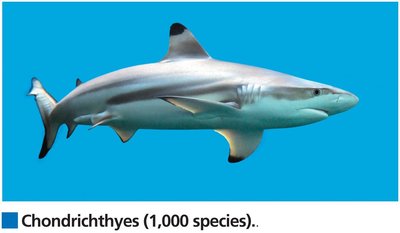
Vertebrates originated about 500 million years ago. Early vertebrates were jawless; jawed vertebrates (gnathostomes) are more numerous and successful. Major groups include Chondrichthyes (sharks, rays), ray-finned fishes, and tetrapods (amphibians, reptiles, mammals).
Chondrichthyes: Cartilaginous fishes, including sharks and rays.
Ray-finned Fishes: Bony endoskeleton, most vertebrate species.
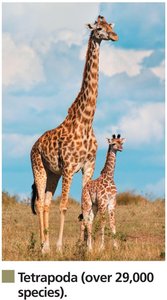
Tetrapoda: Limbs with digits; includes amphibians, reptiles, mammals.
Colonization of Land
Transition to Terrestrial Life
Arthropods were among the first animals to colonize land, followed by vertebrates. Adaptations included modified appendages, exoskeletons, and specialized organs for gas exchange.
Arthropod Adaptations: Jointed appendages, cuticle exoskeleton, specialized respiratory organs.
Insect Flight: Enabled rapid dispersal and ecological success.
Origin of Tetrapods
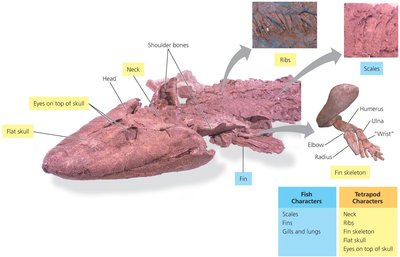
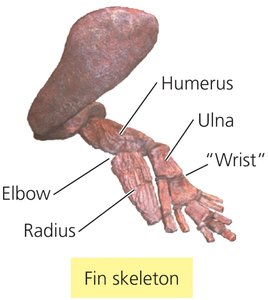
Tiktaalik is a transitional fossil with both fish and tetrapod characteristics, predating the oldest tetrapods. Fins became progressively more limb-like, leading to the first tetrapods 365 million years ago.
Tiktaalik: "Fishapod" with both aquatic and terrestrial features.
Tetrapod Limbs: Evolution of limbs with digits for walking on land.
Amphibians, Reptiles, and Mammals
Amphibians
Amphibians include salamanders, frogs, and caecilians. Many have aquatic larvae and terrestrial adults, and are restricted to moist habitats due to their skin and eggs.
Clade Urodela: Salamanders (tailed).
Clade Anura: Frogs (tailless).
Clade Apoda: Caecilians (legless).
Amniotes
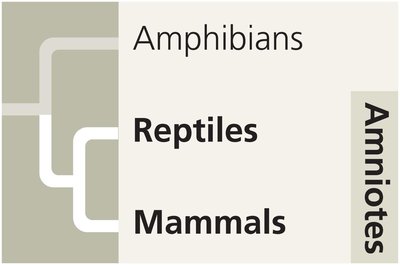
Amniotes are tetrapods with adaptations for life in dry habitats, including reptiles (birds included) and mammals. Key adaptations are the amniotic egg and rib cage ventilation.
Amniotic Egg: Four specialized membranes protect and nourish the embryo.
Rib Cage Ventilation: Efficient lung ventilation, less permeable skin.
Reptiles
Reptiles include tuataras, lizards, snakes, turtles, crocodilians, and birds. Most are ectothermic, except birds, which are endothermic. Birds evolved flight, enabling migration and predator avoidance.
Protective Scales: Contain keratin.
Internal Fertilization: Shelled eggs laid on land.
Birds: Endothermic, evolved from reptilian ancestors.
Mammals
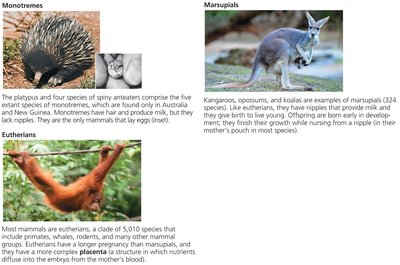
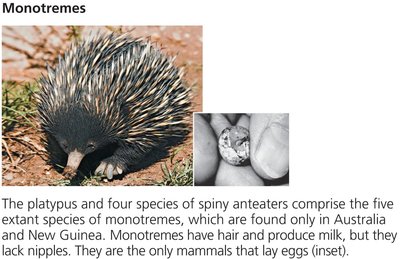
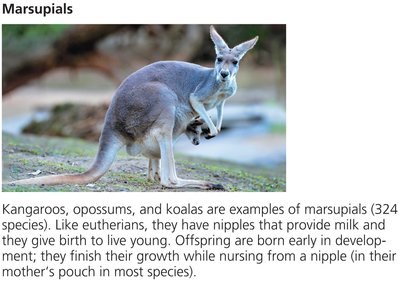
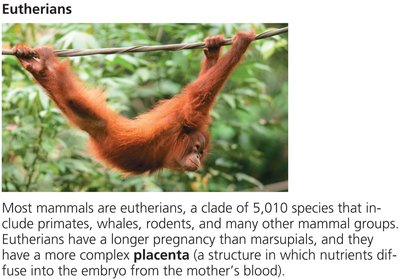
Mammals are named for their mammary glands. Adaptations include hair, insulating fat, kidneys, endothermy, large brains, and specialized teeth. Three lineages: monotremes (egg-laying), marsupials (pouch), and eutherians (placental).
Monotremes: Egg-laying mammals, produce milk but lack nipples.
Marsupials: Offspring develop in a pouch, complete development nursing from a nipple.
Eutherians: Placental mammals, longer pregnancy, complex placenta.
Primates and Human Evolution
Primates
Primates include lemurs, tarsiers, monkeys, and apes. Adaptations for arboreal life include grasping hands and feet, opposable thumbs, large brains, and forward-looking eyes.
Opposable Thumbs: Allow precise grasping.
Large Brains: Enable complex behavior and learning.
Social Organization: Varies among primate groups.
Human Evolution
Humans are primates distinguished by upright posture, bipedal locomotion, large brains, language, symbolic thought, artistic expression, and tool use.
Upright Posture: Bipedal locomotion.
Brain Size: Enables advanced cognitive abilities.
Additional info: These notes cover the main topics of animal diversity, evolution, and adaptations, as outlined in General Biology college courses. Images included are directly relevant to the explanation of each paragraph, reinforcing key concepts and examples.
