 Back
BackAnimal Diversity and Major Animal Phyla
Study Guide - Smart Notes
 Tailored notes based on your materials, expanded with key definitions, examples, and context.
Animal Diversity
Major Groups of Animals and What Defines an Animal
Animals are multicellular, eukaryotic, and heterotrophic organisms that form the Kingdom Animalia. They are distinguished by their lack of cell walls, unique cell junctions, and the presence of nervous and muscle tissue. Animal diversity is immense, with estimates ranging from 3 to 100 million species. Most animals are classified into several major phyla, each with unique characteristics and evolutionary histories.
Monophyletic: All animals share a common ancestor.
Choanoflagellates: The closest living relatives to animals.
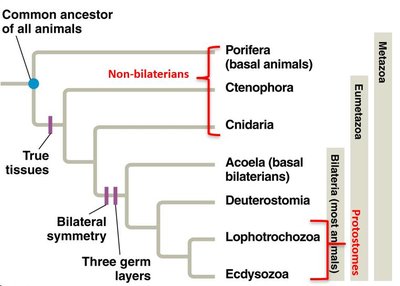
Major groups: Non-bilaterians, Protostomes (Lophotrochozoa, Ecdysozoa), and Deuterostomes.
Animal Body Plans
Key Features of Animal Body Plans
Animal body plans are defined by several fundamental aspects:
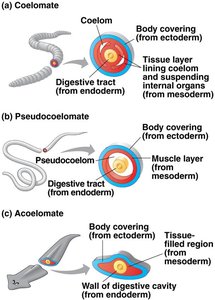
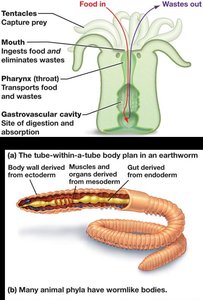
Embryonic tissue layers (germ layers): Diploblasts (two layers: ectoderm and endoderm) and triploblasts (three layers: ectoderm, mesoderm, endoderm).
Symmetry: Asymmetrical (e.g., sponges), radial (e.g., cnidarians), or bilateral (most animals).
Coelom (body cavity): Coelomates (true coelom), pseudocoelomates, and acoelomates.
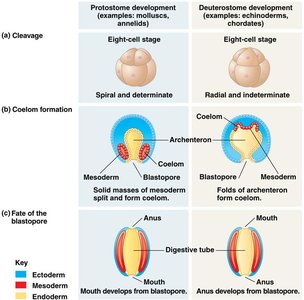
Developmental patterns: Protostome (mouth develops first) vs. deuterostome (anus develops first).

Animal Symmetry and Nervous System Organization
Symmetry and Nervous System Evolution
Symmetry is a key feature in animal classification:
Asymmetry: No plane of symmetry (e.g., sponges).
Radial symmetry: Multiple planes of symmetry (e.g., cnidarians).
Bilateral symmetry: Single plane of symmetry, associated with cephalization (formation of a head region).
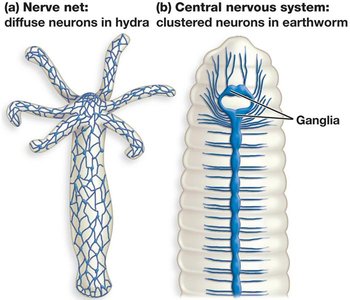
Nervous system organization correlates with symmetry:
Nerve nets: Found in radially symmetrical animals (e.g., hydra).
Central nervous system (CNS): Found in bilaterians, with ganglia and brain formation.
Animal Phylogeny and Major Clades
Phylogenetic Relationships Among Major Animal Groups
Animal phylogeny is based on morphological, molecular, genetic, and fossil data. The major clades include:
Non-bilaterians: Porifera, Ctenophora, Cnidaria
Bilateria: Lophotrochozoa, Ecdysozoa, Deuterostomia
Feeding, Movement, and Sensory Strategies
Animal Feeding Methods
Animals have evolved diverse feeding strategies, often correlated with mouthpart structure:
Suspension feeding: Filter small particles from water (e.g., sponges, baleen whales).
Substrate feeding: Live in or on their food source (e.g., maggots).
Fluid feeding: Suck fluids from other organisms (e.g., mosquitoes, leeches).
Bulk feeding: Eat large pieces of food (e.g., humans, snakes).
Animal Locomotion
Animal movement is highly variable and serves functions such as finding food, mates, and escaping predation. Limbs (jointed or unjointed) are a major evolutionary innovation.
Animal Sensory Systems
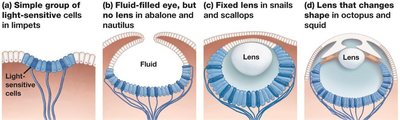
Animals possess a variety of sensory systems, including touch, taste, smell, hearing, and sight. Some have specialized senses such as magnetoreception, electroreception, and baroreception.
Animal Reproduction
Modes of Reproduction
Animals exhibit diverse reproductive strategies:
Asexual reproduction: Fission, budding, fragmentation, parthenogenesis.
Sexual reproduction: Internal or external fertilization.
Egg-laying modes: Oviparous (eggs laid outside), ovoviviparous (eggs hatch inside), viviparous (live birth).
Non-Bilateral Phyla
Phylum Porifera (Sponges)
Sponges are basal animals with no symmetry and no true tissues. They are multicellular, have bodies full of pores, and are mostly marine. Sponges have totipotent cells and can reproduce both sexually and asexually.
Cell types: Epithelial, amoebocytes, choanocytes.
Skeleton: Composed of spicules (silica, calcium carbonate, or spongin).
Phylum Cnidaria
Cnidarians include jellyfish, corals, and anemones. They are radially symmetric, diploblastic, and possess specialized stinging cells called cnidocytes. They alternate between polyp (sessile) and medusa (motile) forms and can reproduce both sexually and asexually.
Phylum Ctenophora (Comb Jellies)
Ctenophores are radially symmetric, diploblastic, and marine. They move using rows of cilia and capture prey with colloblasts (adhesive cells). They reproduce sexually, often by self-fertilization.
Summary Table: Major Animal Groups and Key Features
Phylum | Symmetry | Tissue Layers | Body Cavity | Key Features |
|---|---|---|---|---|
Porifera | Asymmetrical | None | None | Pores, choanocytes, spicules |
Cnidaria | Radial | Diploblastic | None | Cnidocytes, polyp/medusa forms |
Ctenophora | Radial | Diploblastic | None | Comb rows, colloblasts |
Bilateria | Bilateral | Triploblastic | Coelomate/Pseudocoelomate/Acoelomate | Central nervous system, cephalization |
