 Back
BackAnimal Diversity and Major Animal Phyla: Structure, Function, and Evolution
Study Guide - Smart Notes
 Tailored notes based on your materials, expanded with key definitions, examples, and context.
Animal Diversity
Major Groups of Animals and What Defines an Animal
Animals are multicellular, eukaryotic organisms within Kingdom Animalia. They are heterotrophic, meaning they obtain energy by consuming other organisms. Most animals are grouped into several major phyla, with estimates ranging from 3 to 100 million species on Earth. Fossil evidence shows animals have existed for over half a billion years, and their closest living relatives are choanoflagellates.
Monophyletic: All animals share a common ancestor.
Multicellular: Composed of multiple cells with specialized functions.
Heterotrophic: Obtain food by ingestion.
Diversity: Includes both living and extinct species.
Major Characteristics for Divisions of Animals
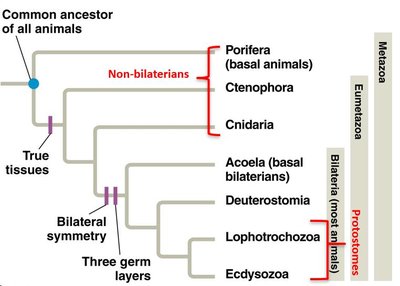
Animal phyla are divided based on fundamental body plan features:
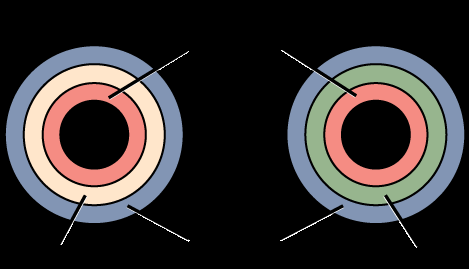
Embryonic tissue layer number: Diploblasts (two layers) vs. Triploblasts (three layers).
Body symmetry: Asymmetrical, radial, or bilateral.
Presence/absence of coelom: Fluid-filled body cavity.
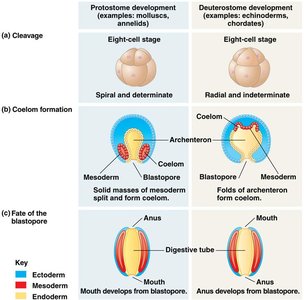
Embryonic development: Protostome vs. Deuterostome.
Animal Body Plans
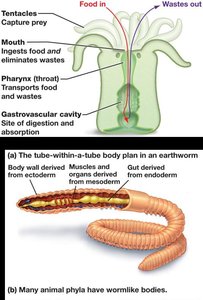
Animals exhibit two basic body plans:
Sac body plan: Mouth leads into an undifferentiated digestive bag (no alimentary canal or anus).
Tube-within-a-tube plan: Outer tube forms the body wall, inner tube forms the gut, often with specialized compartments.
Animal Phylogeny and Evolution
Animal Phylogeny
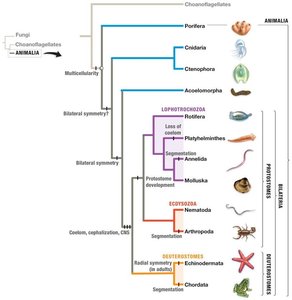
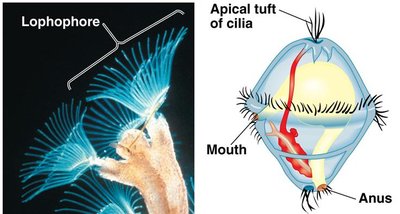
Animal phylogeny is constructed using morphological, molecular, genetic, and fossil data. It reflects monophyly, basal position of Porifera, presence of true tissues in Eumetazoa, and three major bilaterian clades: Protostomes (Lophotrochozoa and Ecdysozoa) and Deuterostomes.
Cambrian Explosion Hypotheses
The Cambrian Explosion was a period of rapid animal diversification. Four main hypotheses explain this event:
Increased oxygen levels enabled efficient aerobic respiration.
Evolution of predation drove morphological divergence.
New ecological niches promoted speciation and diversification.
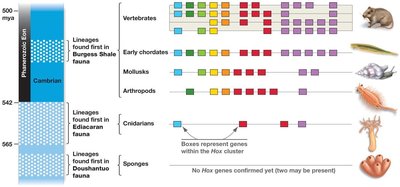
Expansion of Hox genes allowed evolution of complex body plans.
Animal Structure and Function
Embryonic Tissue Layers
Animals are classified by their germ layers:
Porifera: Lack true tissues.
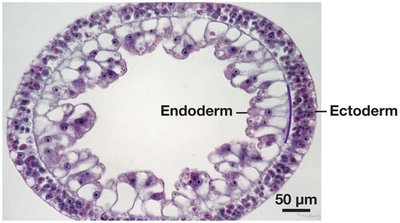
Diploblasts: Two germ layers (ectoderm and endoderm).
Triploblasts: Three germ layers (ectoderm, endoderm, mesoderm).
Animal Symmetry and Nervous System Organization
Symmetry is a key feature:
Asymmetrical: No symmetry (e.g., Porifera).
Radial symmetry: Multiple planes of symmetry (e.g., Cnidaria).
Bilateral symmetry: Single plane of symmetry (most animals).
Nervous system organization:
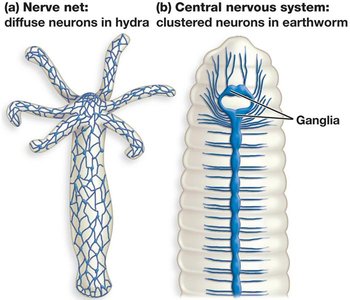
Nerve net: Diffuse neurons (radial animals).
Central nervous system: Clustered neurons (bilateral animals).
Coelom and Body Cavities
Body cavities are important for circulation and movement:
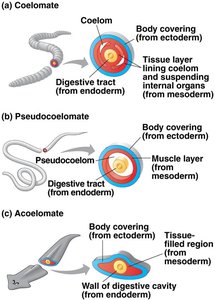
Coelomates: Coelom fully lined by mesoderm.
Acoelomates: No coelom.
Pseudocoelomates: Coelom partially lined by mesoderm.
Protostome vs. Deuterostome Development
Two major developmental modes:
Protostomes: Mouth develops from blastopore, spiral and determinate cleavage.
Deuterostomes: Anus develops from blastopore, radial and indeterminate cleavage.
Animal Feeding, Movement, and Sensory Strategies
Feeding Methods
Animal feeding methods are closely tied to mouthpart structure:
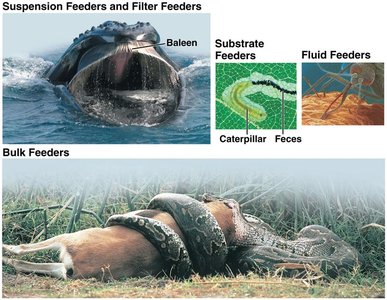
Suspension feeding: Filter particles from water (e.g., sponges, baleen whales).
Substrate feeding: Live on/in food source (e.g., maggots).
Fluid feeding: Consume fluids (e.g., mosquitoes, leeches).
Bulk feeding: Eat large pieces of food (e.g., humans, snakes).
Food Sources
Herbivores: Eat plants.
Carnivores: Eat flesh; includes parasites (endoparasites and ectoparasites).
Detritivores: Eat dead organic matter.
Omnivores: Eat both plants and flesh.
Locomotion
Animal movement is highly variable and serves key functions:
Finding food
Finding mates
Escaping predation
Movement methods include unjointed and jointed limbs, wings, and jet propulsion.
Reproduction
Animals exhibit diverse reproductive modes:
Asexual: Fission, budding, fragmentation, parthenogenesis.
Sexual: Internal or external fertilization.
Egg-laying modes: Oviparous, ovoviviparous, viviparous.
Non-Bilateral Phyla
Phylum Porifera (Sponges)
Sponges are basal animals with no symmetry and no distinct tissues. They are multicellular, have bodies full of pores, and are mostly marine. Sponges can reproduce both sexually and asexually, and possess totipotent cells.
Cell types: Epithelial, amoebocytes, choanocytes.
Skeleton: Spicules made of silica, calcium carbonate, or spongin.
Phylum Cnidaria (Jellyfish, Corals, Anemones)
Cnidarians are radially symmetric, diploblastic animals with specialized stinging cells called cnidocytes. They exhibit two body types: polyp (sessile, asexual) and medusa (free-floating, sexual).
Phylum Ctenophora (Comb Jellies)
Comb jellies are radially symmetric, diploblastic, and possess eight rows of fused cilia for locomotion. They use colloblasts to trap prey and can self-fertilize.
Summary Table: Major Animal Phyla and Characteristics
Phylum | Symmetry | Tissue Layers | Body Cavity | Key Features |
|---|---|---|---|---|
Porifera | None | None | None | Pores, totipotent cells, spicules |
Cnidaria | Radial | Diploblastic | None | Cnidocytes, polyp/medusa |
Ctenophora | Radial | Diploblastic | None | Comb rows, colloblasts |
Platyhelminthes | Bilateral | Triploblastic | Acoelomate | Flat bodies, sac plan |
Annelida | Bilateral | Triploblastic | Coelomate | Segmented, setae |
Mollusca | Bilateral | Triploblastic | Coelomate | Foot, mantle, radula |
Nematoda | Bilateral | Triploblastic | Pseudocoelomate | Cuticle, unsegmented |
Arthropoda | Bilateral | Triploblastic | Coelomate | Exoskeleton, jointed appendages |
Echinodermata | Pentaradial (adult) | Triploblastic | Coelomate | Water vascular system |
Chordata | Bilateral | Triploblastic | Coelomate | Notochord, dorsal nerve cord |
Conclusion
Animal diversity is vast, with major phyla distinguished by body plan, symmetry, tissue layers, and developmental modes. Understanding these features is fundamental to studying animal biology, evolution, and ecological roles.
