 Back
Animal Diversity II: Vertebrates – Structure, Evolution, and Major Groups
Study Guide - Smart Notes
 Tailored notes based on your materials, expanded with key definitions, examples, and context.
Animal Diversity II: Vertebrates
Introduction to Chordates
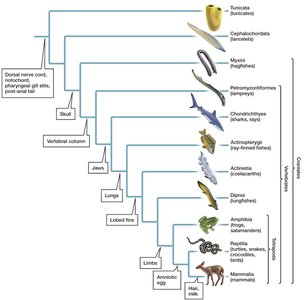
Vertebrates are a subgroup within the phylum Chordata, a group that also includes tunicates and lancelets. Chordates are united by four key anatomical features present at some stage in their development, as well as a shared pattern of embryonic development known as deuterostomy.
Dorsal nerve cord: A hollow, fluid-filled tube running along the back, which develops into the central nervous system.
Notochord: A flexible, rod-shaped structure that provides support and is replaced by the vertebral column in most vertebrates.
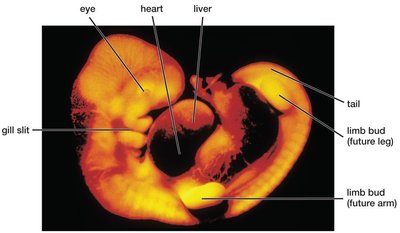
Pharyngeal gill slits: Openings in the pharynx that function in filter feeding or gas exchange in aquatic species; in terrestrial vertebrates, these are present only during embryonic development.
Post-anal tail: An extension of the body past the anal opening, containing muscle and nerve tissue.
Additional info: These features are best observed during embryonic development in many vertebrates, including humans.
Chordate Features in Embryos
During embryonic development, all chordates display the four defining features, even if they are lost or modified in adulthood. For example, human embryos possess a notochord, gill slits, and a post-anal tail, which are later modified or lost as development proceeds.
Main Clades of Chordates
Chordates are divided into three major clades:
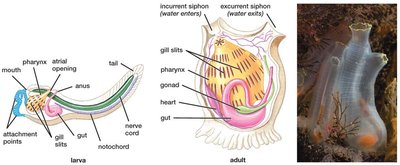
Tunicates (Urochordata): Marine invertebrates, such as sea squirts. Adults are sessile filter feeders, while larvae are free-swimming and possess all four chordate features.
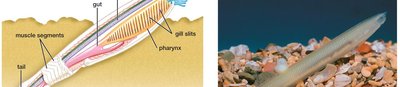
Lancelets (Cephalochordata): Small, fishlike invertebrates that retain all chordate features throughout life. They are filter feeders, living mostly buried in sand.
Craniates: Chordates with a skull. This group includes hagfishes and vertebrates.
Major Groups of Vertebrates
Craniates and Vertebrates
Craniates are chordates with a skull that encloses the brain. Vertebrates are a subgroup of craniates in which the notochord is replaced by a vertebral column (backbone) during development. The backbone provides structural support, protects the nerve cord, and allows for greater mobility and size.
Table: Comparison of Major Craniate Groups
Group | Fertilization | Respiration | Heart Chambers | Body Temperature Regulation |
|---|---|---|---|---|
Hagfishes (Myxini) | External | Gills | Two | Ectothermic |
Lampreys (Petromyzontiformes) | External | Gills | Two | Ectothermic |
Cartilaginous fishes (Chondrichthyes) | Internal | Gills | Two | Ectothermic |
Ray-finned fishes (Actinopterygii) | External1 | Gills | Two | Ectothermic |
Coelacanths (Actinistia) | Internal | Gills | Two | Ectothermic |
Lungfishes (Dipnoi) | External | Gills and lungs | Two | Ectothermic |
Amphibians (Amphibia) | External or internal2 | Skin, gills, and lungs | Three | Ectothermic |
Reptiles (Reptilia) | Internal | Lungs | Three3 | Ectothermic4 |
Mammals (Mammalia) | Internal | Lungs | Four | Endothermic |
Additional info: 1Some ray-finned fish have internal fertilization. 2External in most frogs and toads; internal in caecilians and most salamanders. 3Except for birds and crocodilians, which have four chambers. 4Except for birds, which are endothermic.
Jawless Fishes: Hagfishes and Lampreys
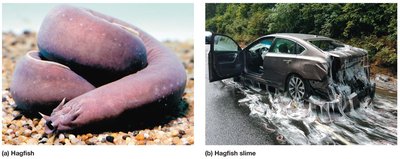
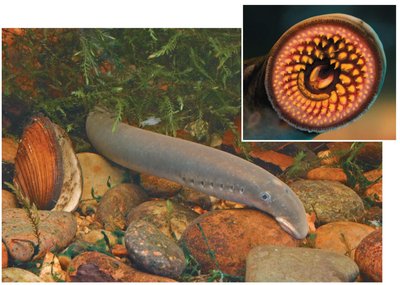
Hagfishes and lampreys are the only living jawless vertebrates. Hagfishes are marine scavengers that produce slime as a defense mechanism. Lampreys are often parasitic, attaching to other fish with a sucker-like mouth.
Cartilaginous Fishes (Chondrichthyes)
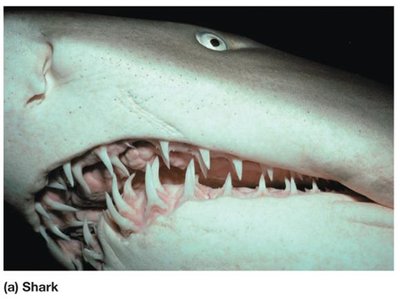
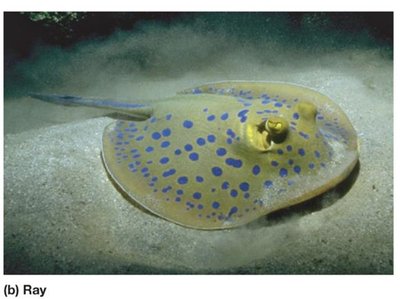
This group includes sharks, skates, and rays. They have skeletons made of cartilage, jaws, and internal fertilization. Their bodies are covered with tough, scale-like structures.
Ray-Finned Fishes (Actinopterygii)
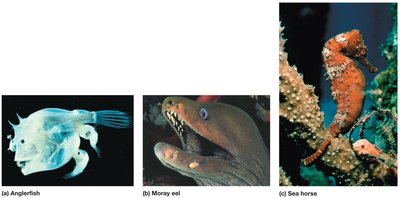
Ray-finned fishes are the most diverse group of vertebrates, with over 32,000 species. Their fins are supported by bony spines, and they possess a swim bladder for buoyancy. They are a major source of food for humans.
Lobed-Finned Fishes and Lungfishes
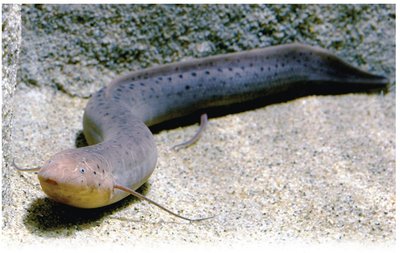
Lobed-finned fishes, including lungfishes, have fleshy, lobed fins that are precursors to the limbs of tetrapods. Lungfishes can breathe air using lungs and are adapted to low-oxygen environments.
Amphibians (Amphibia)
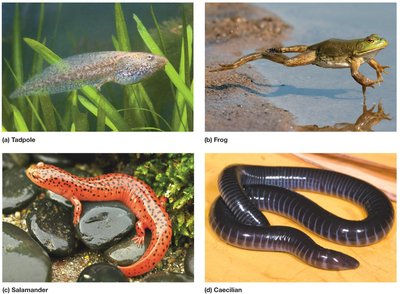
Amphibians were the first vertebrates to colonize land. They have a "double life," with aquatic larvae and terrestrial adults. Amphibians have moist skin for gas exchange and a three-chambered heart. Major groups include frogs, toads, salamanders, and caecilians.
Reptiles (Reptilia)
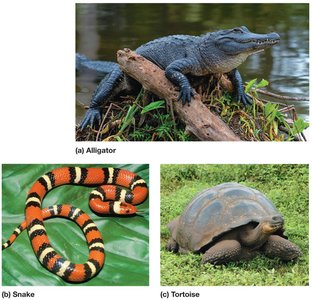
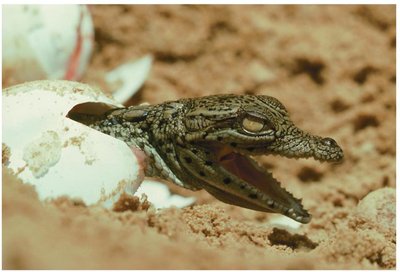
Reptiles are adapted for life on land with tough, scaly skin and amniotic eggs. This group includes lizards, snakes, turtles, alligators, crocodiles, and birds. Reptiles have more efficient lungs and circulatory systems than amphibians.
Birds: Feathered Reptiles
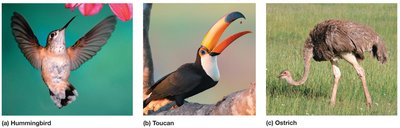
Birds are a subgroup of reptiles distinguished by feathers, adaptations for flight, and endothermy (warm-bloodedness). They have lightweight skeletons, efficient respiratory and circulatory systems, and lay amniotic eggs.
Mammals (Mammalia)
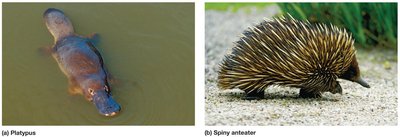
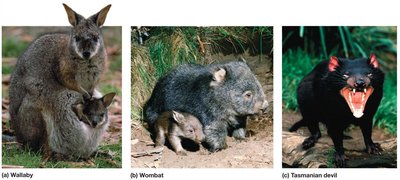
Mammals are vertebrates with hair and mammary glands that produce milk. They are endothermic and have a four-chambered heart. Mammals are divided into three main groups:
Monotremes: Egg-laying mammals (e.g., platypus, echidna).
Marsupials: Young develop in a pouch after a short gestation (e.g., kangaroos, Tasmanian devil).
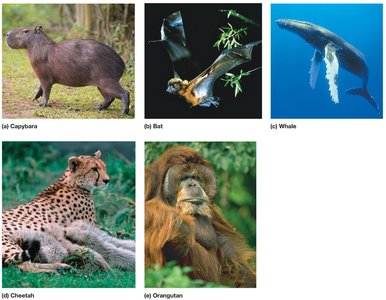
Placental mammals: Young develop inside the uterus, nourished by a placenta (e.g., rodents, bats, primates, whales).
Summary Table: Key Vertebrate Adaptations
Group | Key Adaptations |
|---|---|
Jawless fishes | No jaws, cartilage skeleton, slime defense (hagfish), parasitism (lamprey) |
Cartilaginous fishes | Jaws, cartilage skeleton, internal fertilization |
Ray-finned fishes | Bony skeleton, swim bladder, diverse fins |
Lobed-finned fishes | Lobed fins, lungs (lungfish) |
Amphibians | Moist skin, aquatic larvae, terrestrial adults |
Reptiles | Scaly skin, amniotic egg, efficient lungs |
Birds | Feathers, flight adaptations, endothermy |
Mammals | Hair, mammary glands, placenta (except monotremes) |
