 Back
BackAnimal Diversity: Invertebrates – Lophotrochozoa and Ecdysozoa
Study Guide - Smart Notes
 Tailored notes based on your materials, expanded with key definitions, examples, and context.
Introduction to Animal Diversity: Invertebrates
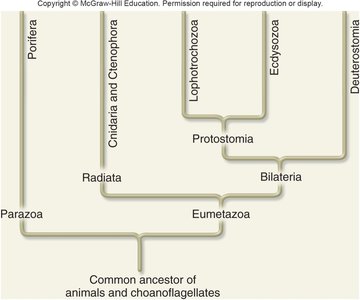
Overview of Animal Phylogeny
Animal diversity is organized into major clades based on developmental and morphological characteristics. The two largest groups of bilaterian invertebrates are the Lophotrochozoa and Ecdysozoa, both of which are protostomes. These groups are distinguished by unique features such as feeding structures, larval types, and molting behaviors.
Lophotrochozoa
Defining Features and Phylogeny
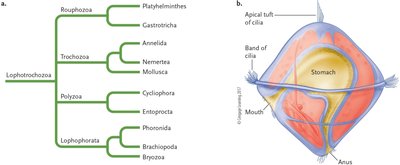
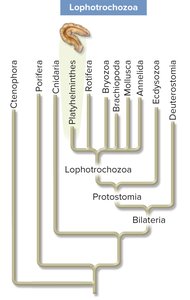
Lophotrochozoa is a diverse clade of protostome animals characterized by the presence of a lophophore (a crown of ciliated tentacles for feeding) or a trochophore larva (a free-swimming, ciliated larval stage). This group includes phyla such as Platyhelminthes, Rotifera, Bryozoa, Brachiopoda, Mollusca, and Annelida.
Lophophore Structure and Function
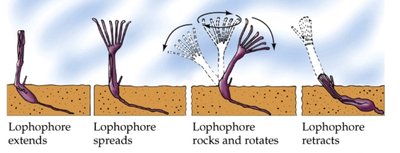
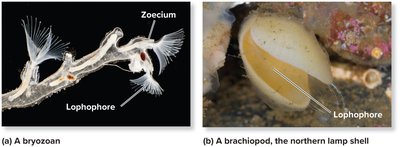
The lophophore is a specialized feeding structure found in several lophotrochozoan phyla. It consists of a ring of ciliated tentacles that surround the mouth and are used for both feeding and gas exchange. The lophophore can extend, spread, rock, rotate, and retract to optimize feeding efficiency.
Major Lophotrochozoan Phyla
Platyhelminthes (Flatworms): Acoelomate, free-living or parasitic, with three tissue layers (endoderm, mesoderm, ectoderm).
Rotifera: Microscopic, pseudocoelomate animals with a ciliated corona for feeding and locomotion.
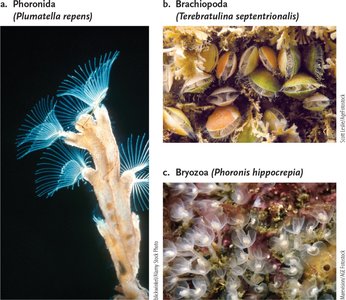
Bryozoa: Colonial, encrusting animals with lophophores, often found on rocks and boat hulls.
Brachiopoda: Marine animals with dorsal and ventral shells, attached to substrates by a pedicle.
Mollusca: Soft-bodied animals, often with a hard shell, including snails, clams, and cephalopods.
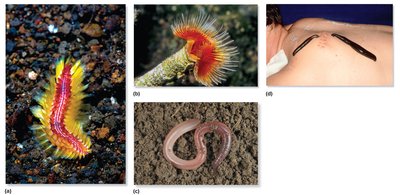
Annelida: Segmented worms such as earthworms and leeches.
Phylum Rotifera
Rotifers are small, mostly aquatic animals characterized by a ciliated structure called the corona, which is used for feeding and locomotion. They possess a complete digestive tract and a pseudocoelom.
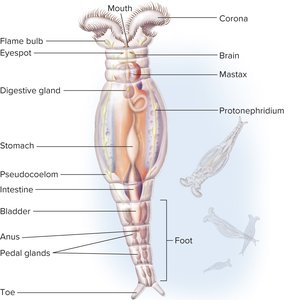
Bryozoans, Brachiopods, and Phoronids
These three phyla share the presence of a lophophore. Bryozoans are colonial and secrete a protective zoecium. Brachiopods have two shells and a muscular pedicle for attachment. Phoronids are worm-like and possess a horseshoe-shaped lophophore.
Phylum Mollusca
General Characteristics
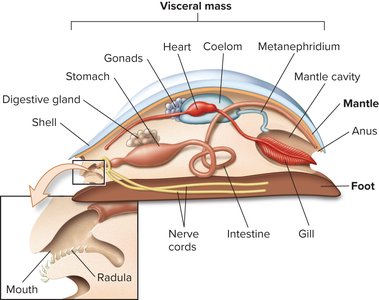
Mollusks are a highly diverse group with soft, unsegmented bodies, often protected by a hard shell. Key features include a muscular foot, visceral mass, mantle, and a radula (a toothed, scraping organ). They exhibit a range of reproductive strategies and body plans.
Major Classes of Mollusks
Class | Examples | Key Characteristics |
|---|---|---|
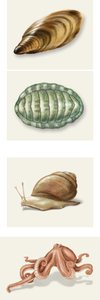
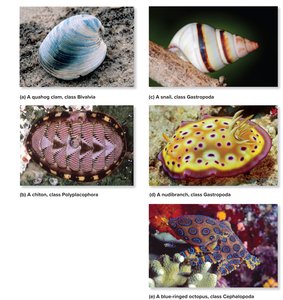
Bivalvia | Clams, mussels, oysters, scallops | Two shells (valves), filter feeders, siphons |
Polyplacophora | Chitons | Eight-plated shell, marine |
Gastropoda | Snails, slugs, nudibranchs | Coiled shell (often), radula, diverse habitats |
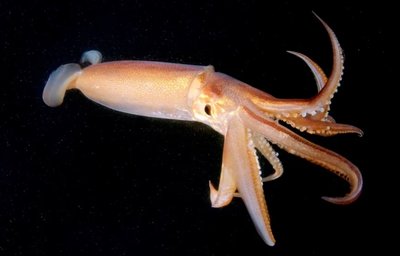
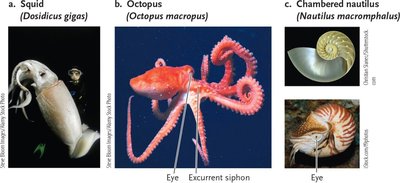
Cephalopoda | Octopuses, squids, nautiluses | Tentacles, closed circulatory system, jet propulsion |
Circulatory Systems in Mollusks
Most mollusks have an open circulatory system in which hemolymph bathes organs directly. Cephalopods are an exception, possessing a closed circulatory system for more efficient oxygen transport, supporting their active predatory lifestyle.
Bivalve and Cephalopod Body Plans
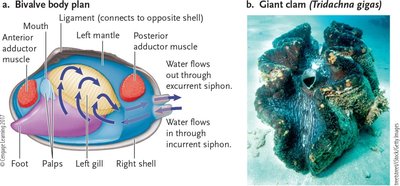
Bivalves have laterally compressed bodies enclosed by two shells and use siphons for filter feeding. Cephalopods are active predators with highly developed nervous systems, tentacles, and advanced locomotion via jet propulsion.
Phylum Annelida
Segmented Worms
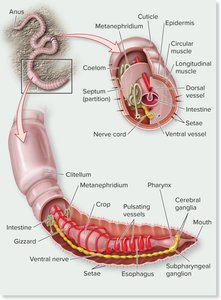
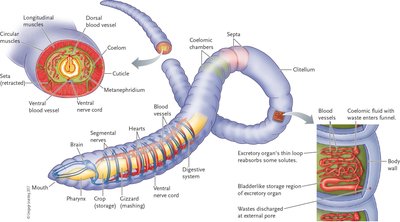
Annelids are coelomate, segmented worms with a body divided into repeated segments. They possess a closed circulatory system, a complete digestive tract, and specialized excretory structures called metanephridia.
Ecdysozoa
Defining Features
Ecdysozoans are protostome animals characterized by a cuticle that is periodically shed or molted (a process called ecdysis). This group includes the phyla Nematoda and Arthropoda, among others. The cuticle provides protection and support, enabling colonization of diverse environments.
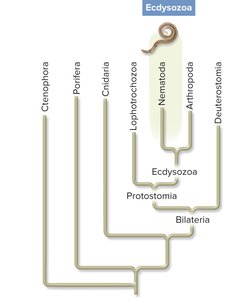
Phylum Nematoda (Roundworms)
Nematodes are pseudocoelomate, unsegmented worms with a complete digestive tract. They are abundant in soil and aquatic habitats, with many species being parasitic in plants and animals. The body is covered by a tough cuticle that is molted during growth.
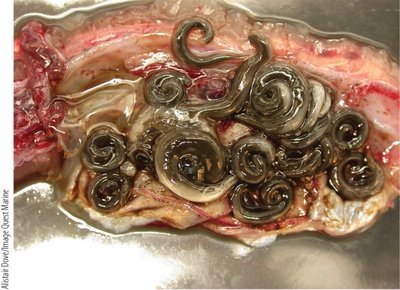
Parasitic Nematodes
Many nematodes are important parasites of humans and other vertebrates, causing diseases such as hookworm infection, pinworm, and elephantiasis.
Phylum Arthropoda
Arthropods are the most diverse and abundant animal phylum, characterized by jointed appendages, a segmented body, and a hard exoskeleton made of chitin. The exoskeleton provides protection, support, and prevents dehydration. Arthropods are divided into several subphyla based on body plan and appendage specialization.
Main Arthropod Subphyla
Subphylum | Examples | Key Characteristics |
|---|---|---|
Chelicerata | Spiders, scorpions, horseshoe crabs | Cephalothorax and abdomen, chelicerae, six pairs of appendages |
Myriapoda | Millipedes, centipedes | Head and segmented trunk, many legs |
Hexapoda | Insects | Head, thorax, abdomen, three pairs of legs, usually two pairs of wings |
Crustacea | Crabs, lobsters, shrimp | Two or three body regions, two pairs of antennae, mostly aquatic |
Subphylum Chelicerata
Chelicerates possess specialized mouthparts called chelicerae and a body divided into a cephalothorax and abdomen. This group includes spiders, scorpions, and horseshoe crabs.
Subphylum Myriapoda
Myriapods include millipedes and centipedes, characterized by elongated bodies with many segments and numerous legs.
Subphylum Crustacea
Crustaceans have a hardened exoskeleton, two pairs of antennae, and branched appendages. They are primarily aquatic and show great diversity in body form and function.
Subphylum Hexapoda
Hexapods, including insects, are the most diverse group of arthropods. They have three body regions (head, thorax, abdomen), three pairs of legs, and usually two pairs of wings. Insects occupy nearly every terrestrial and freshwater habitat.
Additional info: The notes above integrate and expand upon the provided lecture slides and images, ensuring coverage of all major invertebrate phyla within Lophotrochozoa and Ecdysozoa, as well as their evolutionary relationships and key anatomical features.
