 Back
BackAnimal Diversity: Origins, Characteristics, and Body Plans
Study Guide - Smart Notes
 Tailored notes based on your materials, expanded with key definitions, examples, and context.
Animal Diversity: Origins, Characteristics, and Body Plans
What Is an Animal?
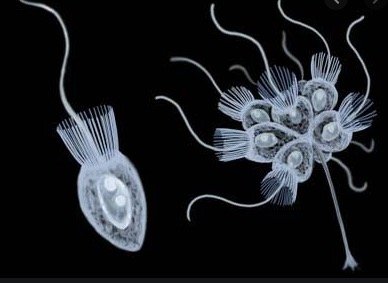
Animals are a diverse group of multicellular eukaryotic organisms that share several defining characteristics. They likely evolved from a protist ancestor similar to modern choanoflagellates.
Multicellularity: Animals are composed of multiple cells, unlike most protists which are unicellular.
Lack of Cell Walls: Animal cells do not have rigid cell walls, making them flexible compared to plants, fungi, and many protists.
Heterotrophy: Animals obtain energy by consuming other organisms or their products.
Motility: Most animals are capable of movement at some stage of their life cycle.
Reproduction: Animals reproduce sexually (most commonly) or asexually, with internal or external fertilization.
Extracellular Matrix: Animal cells are supported by an extensive extracellular matrix, often containing collagen.
Unique Cell Junctions: Animals possess anchoring, tight, and gap junctions for cell adhesion and communication.
Nervous and Muscle Tissue: Most animals have specialized tissues for rapid response and movement.
Modes of Nutrition
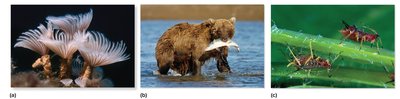
All animals are heterotrophs, but they exhibit diverse feeding strategies:
Suspension Feeding: Filtering small particles from water (e.g., sponges, some worms).
Bulk Feeding: Consuming large pieces of food (e.g., mammals, reptiles).
Fluid Feeding: Sucking fluids from plants or animals (e.g., mosquitoes, aphids).
Movement and Sensory Systems
Most animals possess muscle and nerve cells organized into tissues, enabling complex movement and rapid response to stimuli. Locomotion is essential for food acquisition, escaping predators, and finding mates. Even sessile species often have motile larval stages or moving appendages.
Reproduction and Development
Sexual reproduction is predominant in animals, involving the fusion of small, motile sperm with large eggs to form a zygote. Internal fertilization is common in terrestrial species, while aquatic species often use external fertilization. Some animals also reproduce asexually. Metamorphosis, a developmental process where juveniles transform into adults (e.g., tadpoles to frogs), reduces competition and aids dispersal.
Common Characteristics of Animals
Characteristic | Example/Explanation |
|---|---|
Multicellularity | Sponges are multicellular, unlike most protists. |
Heterotrophy | Animals eat other organisms; plants are mostly autotrophs. |
No cell walls | Animal cells are flexible; plant/fungal cells are rigid. |
Nervous tissue | Enables rapid response to stimuli. |
Movement | Muscle and nervous systems allow movement. |
Sexual reproduction | Fusion of sperm and egg forms a zygote. |
Extracellular matrix | Collagen and other proteins provide support. |
Characteristic cell junctions | Anchoring, tight, and gap junctions. |
Hox genes | Control body axis patterning. |
Similar SSU rRNA | Genetic similarity in ribosomal RNA genes. |
History of Animal Life
Origins and the Cambrian Explosion
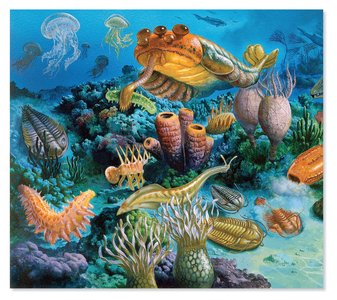
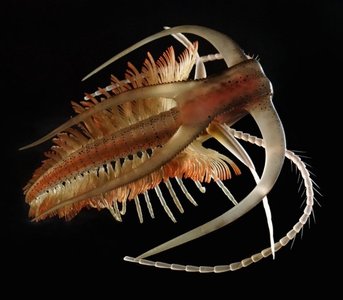
Multicellular animals first appeared over 600 million years ago, with the earliest forms being invertebrates. The Cambrian explosion (533–525 million years ago) marked a rapid diversification of animal life, resulting in the emergence of most major animal phyla.
Cambrian Period: Warm, wet climate; no polar ice; dramatic increase in animal diversity.
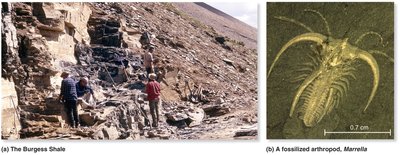
Burgess Shale: A famous fossil site in the Canadian Rockies preserving soft-bodied Cambrian animals.
Causes of the Cambrian Explosion
Evolution of Shells: Provided protection and allowed exploitation of new environments.
Increased Oxygen Levels: Supported more complex body plans; ozone layer reduced UV radiation.
Evolutionary Arms Race: Predation drove rapid adaptation and diversification.
Animal Classification and Phylogeny
Major Animal Groups
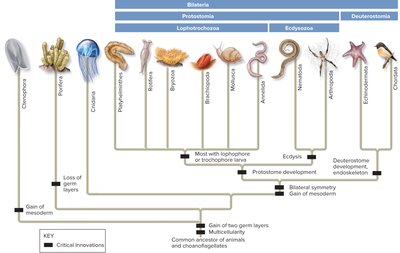
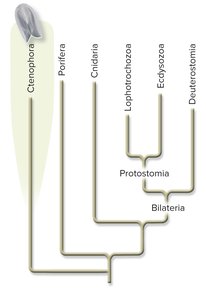
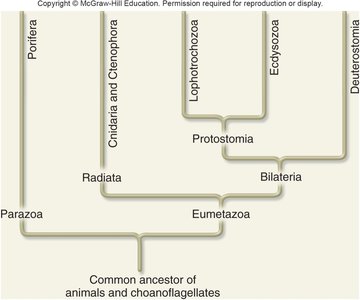
The animal kingdom is monophyletic, meaning all animals share a common ancestor. There are about 35 recognized animal phyla. Key evolutionary innovations include tissue development, body symmetry, body cavities, embryological development patterns, and segmentation.
Tissues and Germ Layers
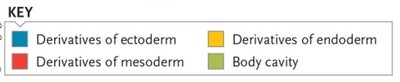
During development, most animals form two or three primary germ layers that give rise to specialized tissues:
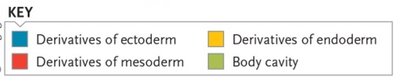
Endoderm: Innermost layer; forms the gut lining.
Ectoderm: Outermost layer; forms external covering and nervous system.
Mesoderm: Middle layer (in triploblastic animals); forms muscles and most internal organs.
Diploblastic animals (e.g., cnidarians) have two germ layers (endoderm and ectoderm), while triploblastic animals have all three.
Body Symmetry
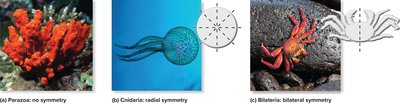
Animals exhibit different types of symmetry, which influence their body plans and lifestyles:
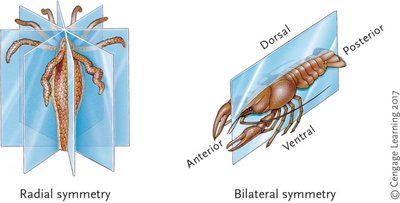
Radial Symmetry: Body parts arranged around a central axis; typical of cnidarians (e.g., jellyfish).
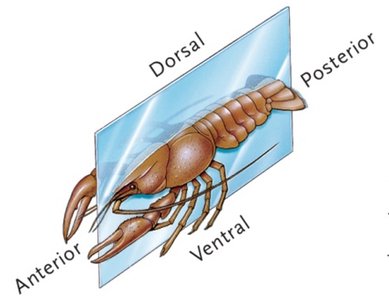
Bilateral Symmetry: Body divided into mirror-image halves along a single plane; associated with cephalization (development of a head), dorsal/ventral, and anterior/posterior orientation.
Animal Body Plans: Body Cavities
Types of Body Cavities
The presence and type of body cavity (coelom) is a major feature in animal classification:
Acoelomate: No body cavity; solid body (e.g., flatworms).
Pseudocoelomate: Body cavity not completely lined by mesoderm (e.g., roundworms).
Coelomate: True coelom, a fluid-filled cavity entirely lined by mesoderm (e.g., vertebrates).
In vertebrates, the coelom is lined by the peritoneum and supports internal organs via mesenteries.
Summary Table: Animal Body Plan Features
Feature | Acoelomate | Pseudocoelomate | Coelomate |
|---|---|---|---|
Body Cavity | Absent | Present, not fully lined by mesoderm | Present, fully lined by mesoderm |
Example | Flatworms | Roundworms | Vertebrates, annelids |
