 Back
BackAnimal Diversity, Physiology, and Homeostasis: Study Guide for BIOL 191A Exam 3
Study Guide - Smart Notes
 Tailored notes based on your materials, expanded with key definitions, examples, and context.
Chapter 27: The Rise of Animal Diversity
27.1 Early-Diverging Animal Lineages
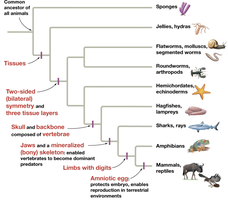
Early animal evolution is marked by the development of specialized tissues, symmetry, and complex body structures. These innovations allowed animals to diversify and adapt to various ecological niches.
Tissues: Groups of cells with a common structure and function, first appearing in Cnidarians and more complex animals.
Bilateral Symmetry: Two-sided symmetry associated with the development of three tissue layers (triploblasty).
Key Innovations: Development of jaws, limbs, and amniotic eggs enabled the colonization of new environments.
27.2 The Cambrian Explosion and Animal Evolution
The Cambrian explosion (~541 million years ago) was a period of rapid animal diversification. Major animal body plans appeared, and most Ediacaran lineages were replaced by more complex Cambrian animals.
Milestones: Hard body parts, predation, and increased mobility.
Hypotheses for Replacement: Ecological interactions (e.g., predation), genetic innovations, and environmental changes.
27.3 Animal Body Plans and Major Invertebrate Groups
Animal body plans are defined by symmetry, tissue organization, and developmental patterns. Invertebrates and chordates exhibit distinct traits and evolutionary adaptations.
Symmetry: Radial (e.g., cnidarians) vs. bilateral (e.g., most other animals); symmetry often relates to feeding strategies.
Arthropod and Mollusc Body Plans: Segmentation, exoskeletons, and specialized appendages provide evolutionary advantages.
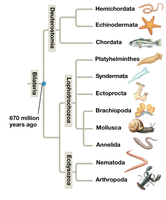
Major Clades: Lophotrochozoa (e.g., molluscs, annelids), Ecdysozoa (e.g., arthropods, nematodes), Deuterostomia (e.g., chordates, echinoderms). humans are cordates
27.4 Origin and Evolution of Aquatic Vertebrates
Vertebrates originated in aquatic environments, evolving key adaptations such as jaws, mineralized skeletons, and paired fins.
Key Adaptations: Jaws for predation, bony skeletons for support, and gills for respiration.
27.5 Colonization of Land by Arthropods and Tetrapods
The transition to land required adaptations for support, locomotion, and water conservation.
Arthropods: Exoskeletons, jointed appendages, and internal fertilization.
Tetrapods: Limbs with digits, lungs, and amniotic eggs. (humans)
27.6 Adaptations of Amniotes
Amniotes (reptiles, birds, mammals) possess adaptations for terrestrial life, including the amniotic egg, waterproof skin, and efficient respiratory systems.
Amniotic Egg: Protects the embryo and enables reproduction in dry environments.
outermost layer of egg is chorion
Modern Traits: Endothermy in birds and mammals, diverse reproductive strategies.
Chapter 32: The Internal Environment of Animals: Organization and Regulation
32.1 Levels of Organization and Animal Tissues
Animals exhibit hierarchical organization, from cells to organ systems. There are four major tissue types, each with specialized functions.
Levels of Organization: Cells → Tissues → Organs → Organ Systems → Organism
Major Tissue Types:
Epithelial: Covers body surfaces; e.g., skin, lining of the gut.
Connective: Supports and binds tissues; e.g., bone, blood, cartilage.
Muscle: Enables movement; e.g., skeletal, cardiac, smooth muscle.
Nervous: Transmits signals; e.g., brain, nerves.
32.2 Coordination and Control: Endocrine vs. Nervous Systems
Animals coordinate responses to stimuli using the endocrine and nervous systems, which differ in speed and mechanism.
Endocrine System: Uses hormones for slow, long-lasting regulation.
Nervous System: Uses electrical signals for rapid, short-term responses.
Feedback Regulation:
Negative Feedback: Reduces the stimulus (e.g., temperature regulation).
Positive Feedback: Amplifies the stimulus (e.g., childbirth contractions).
Signaling Types: Simple (direct) vs. neuroendocrine (involving both systems).
Hormone Types: Water-soluble (act on cell surface) vs. lipid-soluble (act inside cells).
32.3 Regulators, Conformers, and Thermoregulation
Animals maintain internal balance through regulation or conformity. Thermoregulation is crucial for survival in varying environments.
Regulators: Maintain constant internal conditions (e.g., humans).
Conformers: Allow internal conditions to vary with the environment (e.g., fish).
Thermoregulation: Endotherms generate heat internally; ectotherms rely on external sources.
Circulatory Adaptations: Countercurrent exchange, vasodilation/constriction, insulation.
32.4 Osmoregulation and Excretion
Osmoregulation maintains water and solute balance; excretion removes metabolic wastes. The kidney plays a central role in homeostasis.
Osmoregulators: Actively control internal osmolarity (e.g., freshwater fish).
Osmoconformers: Match internal osmolarity to the environment (e.g., marine invertebrates).
Excretory Process Steps: Filtration, reabsorption, secretion, excretion.
Kidney: Filters blood, regulates water/salt balance, removes wastes as urine.
Chapter 33: Animal Nutrition
33.1 Nutritional Needs and Essential Nutrients
Animals require food for energy, organic molecules, and essential nutrients. Deficiencies can lead to malnutrition.
Major Nutritional Needs: Chemical energy, organic building blocks, essential nutrients.
Essential Nutrients: Amino acids, fatty acids, vitamins, minerals.
Malnutrition: Lack of one or more essential nutrients.
33.2 Food Processing and Digestion
Food processing occurs in four stages: ingestion, digestion, absorption, and elimination. Digestion can be mechanical or chemical.
Stages: Ingestion → Digestion → Absorption → Elimination
Mechanical Digestion: Physical breakdown (e.g., chewing).
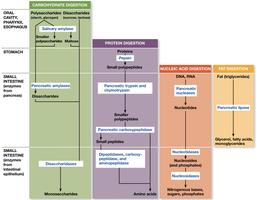
Chemical Digestion: Enzymatic breakdown of macromolecules.
Modes of Resource Extraction: Suspension feeding, substrate feeding, fluid feeding, bulk feeding.
33.3 Digestion Types and Structures
Animals use intracellular or extracellular digestion. The gastrovascular cavity and alimentary canal are two main digestive system types.
Intracellular Digestion: Occurs within cells (e.g., sponges).
Extracellular Digestion: Occurs in compartments (e.g., stomach, intestines).
Gastrovascular Cavity: Single opening for ingestion and elimination (e.g., cnidarians).
Alimentary Canal: Complete digestive tract with separate mouth and anus (e.g., most animals).
Small Intestine: Main site of nutrient absorption.
Large Intestine: Absorbs water, forms feces.
33.4 Adaptations to Diet
Animals have evolved digestive adaptations to match their diets, such as specialized teeth, stomachs, and symbiotic relationships with microbes.
33.5 Glucose Homeostasis
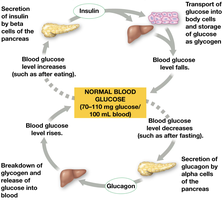
Blood glucose is regulated by insulin and glucagon, maintaining homeostasis.
Insulin: Lowers blood glucose by promoting uptake and storage.
Glucagon: Raises blood glucose by stimulating glycogen breakdown.
Chapter 34: Circulation and Gas Exchange
34.1 Circulatory System Structure and Function
The circulatory system transports nutrients, gases, and wastes. It consists of the heart, blood vessels, and blood.
Open Circulatory System: Hemolymph bathes organs directly (e.g., arthropods).
Closed Circulatory System: Blood confined to vessels (e.g., vertebrates).
Blood Vessels:
Arteries: Carry blood away from the heart.
Capillaries: Exchange substances with tissues.
Veins: Return blood to the heart.
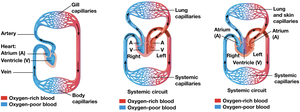
Single Circulation: Blood passes through the heart once per circuit (e.g., fish).
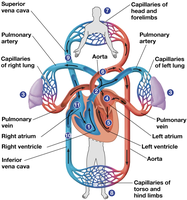
Double Circulation: Blood passes through the heart twice per circuit (e.g., mammals, birds).
34.2 The Cardiac Cycle
The cardiac cycle describes the sequence of events during one heartbeat, including contraction (systole) and relaxation (diastole).
34.3 Blood Vessel Function and Hemodynamics
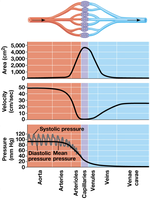
Blood vessel diameter, area, velocity, and pressure vary throughout the circulatory system, affecting blood flow and exchange.
Arteries: High pressure, fast flow.
Capillaries: Large area, slow flow, low pressure—optimal for exchange.
Veins: Low pressure, return blood to heart.
34.4 Blood Composition
Blood consists of plasma, erythrocytes (red blood cells), leukocytes (white blood cells), and platelets, each with specialized roles.
34.5 Gas Exchange
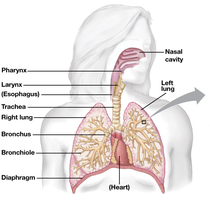
Gas exchange supplies oxygen and removes carbon dioxide. Structures such as gills, tracheae, and lungs facilitate this process.
Gills: Use countercurrent exchange for efficient oxygen uptake.
Tracheal System: Delivers air directly to tissues (e.g., insects).
34.6 Breathing in Animals
Breathing mechanisms vary among animal groups, from simple diffusion to complex lungs.
Chapter 35: The Immune System
35.1 Innate and Adaptive Immunity
Animals possess innate (nonspecific) and adaptive (specific) immune defenses. Innate immunity is found in all animals; adaptive immunity is unique to vertebrates.
Innate Immunity: Barrier defenses (skin, mucous), phagocytic cells, inflammatory response.
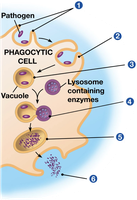
Phagocytosis: Immune cells engulf and destroy pathogens.
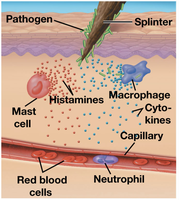
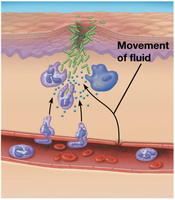
Inflammatory Response: Localized response to injury or infection, involving histamines, cytokines, and immune cells.
35.2 Adaptive Immunity: T Cells and B Cells
Adaptive immunity relies on lymphocytes (B cells and T cells) that recognize specific antigens. Key features include diversity, self-tolerance, proliferation, and memory.
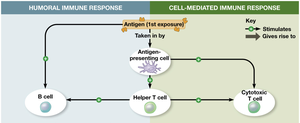
B Cells: Produce antibodies for humoral immunity.
T Cells: Mediate cellular immunity; helper T cells activate other cells, cytotoxic T cells kill infected cells.
MHC: Major histocompatibility complex presents antigens to T cells.
35.3 Humoral and Cell-Mediated Responses
The adaptive immune response is divided into humoral (antibody-mediated) and cell-mediated (cytotoxic T cell) branches.
Chapter 36: Reproduction and Development
36.1 Asexual and Sexual Reproduction
Animals reproduce asexually or sexually, each with advantages and disadvantages. Asexual reproduction includes budding, fission, and parthenogenesis; sexual reproduction increases genetic diversity.
Asexual Reproduction: Offspring genetically identical to parent; efficient but less variation.
Sexual Reproduction: Involves gametes; increases genetic diversity but requires more energy.
Fertilization: Internal (terrestrial) vs. external (aquatic); each has pros and cons.
Cleavage: rapid mitotic division of zygote
36.2 Reproductive Cells and Organs
Major reproductive organs include gonads (testes, ovaries), which produce gametes. Gametogenesis differs between males (spermatogenesis) and females (oogenesis).
Spermatogenesis: Continuous production of sperm.
Oogenesis: Cyclical production of eggs, with pauses at certain stages.
36.3 Human Ovarian and Uterine Cycles
The ovarian and uterine (menstrual) cycles coordinate the release of eggs and preparation of the uterus for pregnancy.
