 Back
BackAnimal Form and Function: Correlation, Adaptation, and Organization
Study Guide - Smart Notes
 Tailored notes based on your materials, expanded with key definitions, examples, and context.
Animal Form and Function
Correlation of Structure and Function
Animal form and function are closely linked at all levels of biological organization. The diversity of animal anatomy is shaped by evolutionary adaptation, with natural selection favoring traits that enhance survival and reproductive success in specific environments. This results in a close match between anatomical structure and physiological function.
Form (Anatomy): The biological structure of an organism.
Function (Physiology): The biological processes and activities carried out by anatomical structures.
Natural Selection: Favors variations that increase fitness, leading to adaptations that match form to function.
Evolution of Animal Size and Shape
Physical laws constrain the evolution of animal body plans, particularly regarding size, shape, and movement. For example, aquatic animals that swim rapidly, such as seals, penguins, and tuna, have evolved a streamlined, fusiform body shape to minimize drag in water—a result of convergent evolution.
Convergent Evolution: Independent evolution of similar features in species of different lineages due to similar environmental pressures.
Physical Constraints: Laws of physics (e.g., drag, support, diffusion) limit possible body forms and sizes.
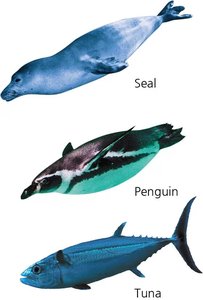
Example: The fusiform shape of seals, penguins, and tuna allows efficient swimming by reducing resistance in water.
Exchange with the Environment
All animals must exchange nutrients, gases, and wastes with their environment. The efficiency of exchange depends on the surface area-to-volume ratio. Simple animals (e.g., amoebas, hydras) have body plans that maximize direct exchange, while complex animals have specialized internal exchange surfaces.
Single-celled organisms: Direct exchange across the plasma membrane.
Simple multicellular animals: Thin body walls or flat shapes maximize exposure to the environment.
Complex animals: Internal exchange surfaces (e.g., lungs, intestines) are highly folded or branched to increase surface area.
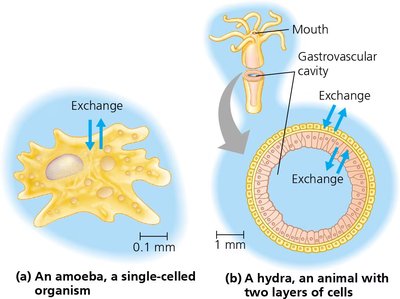
Example: An amoeba exchanges materials directly with its environment, while a hydra's two-layered body allows exchange with pond water.
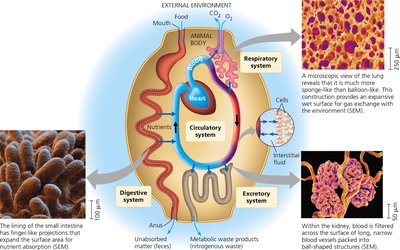
Additional info: In complex animals, circulatory and interstitial fluids link internal cells to exchange surfaces, ensuring all cells receive nutrients and oxygen.
Hierarchical Organization of Animal Bodies
Levels of Organization
Animal bodies are organized hierarchically, with each level building on the previous one:
Cells: Basic unit of structure and function.
Tissues: Groups of similar cells with a common function.
Organs: Structures composed of multiple tissue types performing specific functions.
Organ Systems: Groups of organs working together to carry out major body functions.
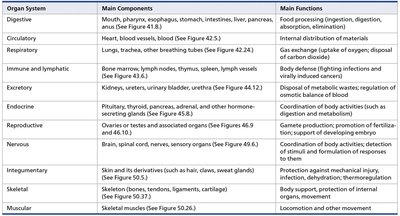
Organ System | Main Components | Main Functions |
|---|---|---|
Digestive | Mouth, pharynx, esophagus, stomach, intestines, liver, pancreas, anus | Food processing (ingestion, digestion, absorption, elimination) |
Circulatory | Heart, blood vessels, blood | Internal distribution of materials |
Respiratory | Lungs, trachea, other breathing tubes | Gas exchange (uptake of O2, disposal of CO2) |
Immune and lymphatic | Bone marrow, lymph nodes, thymus, spleen, lymph vessels, white blood cells | Defense against infection and disease |
Excretory | Kidneys, ureters, urinary bladder, urethra | Disposal of metabolic wastes, regulation of osmotic balance |
Endocrine | Pituitary, thyroid, pancreas, adrenal, other hormone-secreting glands | Coordination of body activities (e.g., digestion, metabolism) |
Reproductive | Ovaries or testes and associated organs | Reproduction |
Nervous | Brain, spinal cord, nerves, sensory organs | Coordination of body activities, detection of stimuli, response to stimuli |
Integumentary | Skin and derivatives (hair, claws, glands) | Protection, thermoregulation |
Skeletal | Skeleton (bones, tendons, ligaments, cartilage) | Support, protection, movement |
Muscular | Skeletal muscles | Movement |
Animal Tissues
There are four main types of animal tissues, each with specialized structure and function:
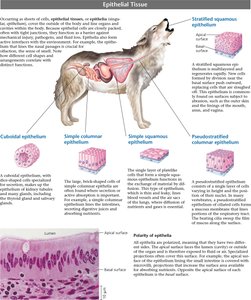
Epithelial Tissue: Covers body surfaces and lines organs/cavities; functions in protection, secretion, and absorption.
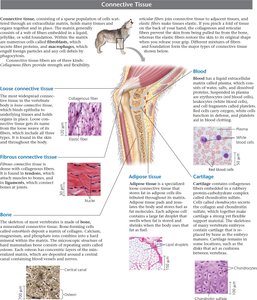
Connective Tissue: Binds and supports other tissues; includes bone, blood, cartilage, adipose, and fibrous tissues.
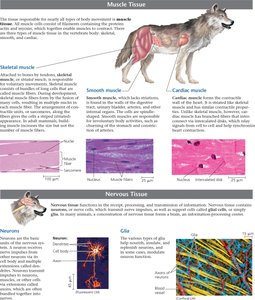
Muscle Tissue: Responsible for movement; includes skeletal, cardiac, and smooth muscle.
Nervous Tissue: Senses stimuli and transmits signals; composed of neurons and glial cells.
Coordination and Control: Endocrine and Nervous Systems
Major Communication Systems
Animals coordinate and control body functions using two major systems: the endocrine system and the nervous system. These systems differ in their signaling mechanisms, speed, and duration of response.
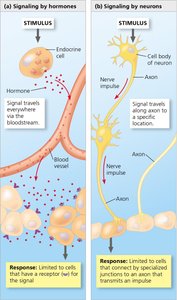
Endocrine System: Uses hormones (chemical messengers) released into the bloodstream to reach target cells throughout the body. Effects are generally slower but longer-lasting.
Nervous System: Uses electrical impulses transmitted by neurons along specific pathways. Effects are rapid and short-lived, targeting specific cells.
Key Differences:
Hormones can affect multiple tissues if those tissues have the appropriate receptors.
Nerve impulses travel along defined routes to specific target cells.
Example: The fight-or-flight response involves both systems: the nervous system triggers immediate muscle action, while the endocrine system sustains the response by releasing hormones like adrenaline and glucose into the bloodstream.
Summary Table: Animal Tissue Types
Tissue Type | Main Function | Example |
|---|---|---|
Epithelial | Protection, secretion, absorption | Skin, lining of gut |
Connective | Support, binding, transport | Bone, blood, cartilage |
Muscle | Movement | Skeletal muscle, heart muscle |
Nervous | Signal transmission | Brain, nerves |
Concept Check
All epithelia share polarity (apical and basal surfaces), closely packed cells, and attachment to a basement membrane.
In complex animals, oxygen must cross the respiratory surface, circulatory system, and plasma membrane of the target cell.
The fight-or-flight response requires both systems: the nervous system for immediate action and the endocrine system for sustained physiological changes.
