 Back
BackAnimal Nutrition and Digestive Systems: Essential Concepts and Mechanisms
Study Guide - Smart Notes
 Tailored notes based on your materials, expanded with key definitions, examples, and context.
Animal Nutrition
Types of Animal Diets
Animals are classified based on their dietary habits, which reflect their evolutionary adaptations for obtaining nutrients and energy.
Herbivores: Eat mainly autotrophs such as plants and algae.
Carnivores: Eat other animals exclusively.
Omnivores: Regularly consume both animal and plant/algal matter.
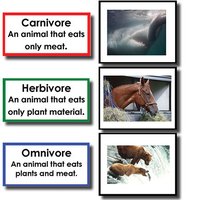
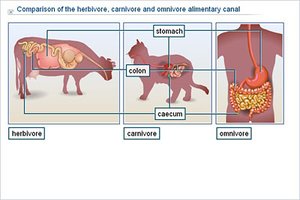
These dietary categories are associated with distinct anatomical and physiological adaptations, particularly in the structure of the alimentary canal.
Nutritional Requirements
Basic Nutritional Needs
Animals require a diet that provides:
Chemical energy (for ATP production)
Organic molecules (for biosynthesis, including organic carbon and nitrogen)
Essential nutrients (substances that cannot be synthesized by the organism and must be obtained from the diet)
Classes of Essential Nutrients
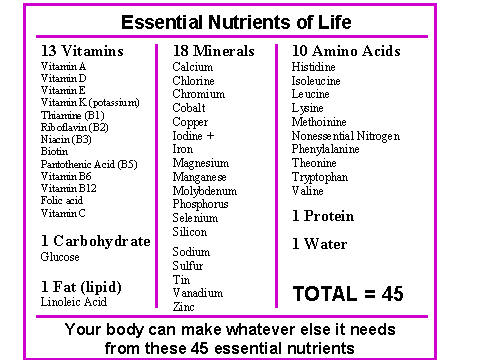
There are four main classes of essential nutrients:
Essential amino acids
Essential fatty acids
Vitamins
Minerals
Essential Amino Acids
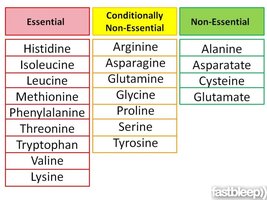
Animals require 20 amino acids, but can synthesize only about half. The remainder, called essential amino acids, must be obtained preassembled from food. In humans, there are 9 (sometimes considered 10) essential amino acids:
Histidine
Methionine
Threonine
Valine
Isoleucine
Lysine
Phenylalanine
Tryptophan
Leucine
Lack of essential amino acids leads to protein deficiency and malnutrition.
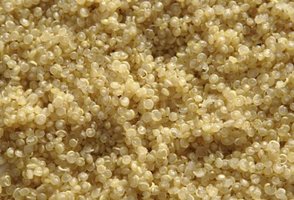
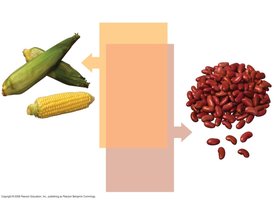
Animal products (meat, eggs, cheese) provide all essential amino acids and are called complete proteins. Most plant proteins are incomplete, but some (e.g., quinoa, soy) are exceptions.
Essential Fatty Acids
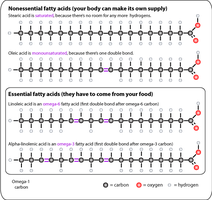
Most animals can synthesize many fatty acids, but some unsaturated fatty acids (e.g., omega-3 and omega-6) are essential and must be obtained from the diet. Deficiencies are rare but can occur.
Vitamins
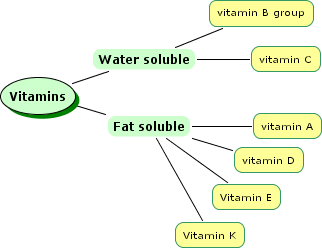
Vitamins are organic molecules required in small amounts. Humans require 13-14 essential vitamins, which are grouped as:
Water-soluble: B vitamins, vitamin C
Fat-soluble: Vitamins A, D, E, K
Minerals
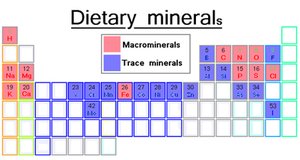
Minerals are simple inorganic nutrients required in small amounts. Examples include calcium, iron, potassium, sodium, and zinc. They are classified as macrominerals or trace minerals based on the required quantity.
Dietary Deficiencies
Types of Nutritional Deficiencies
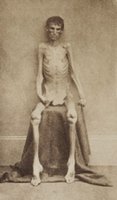
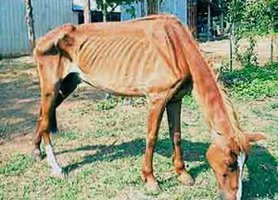
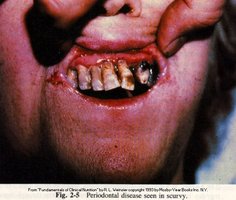
Undernourishment: Insufficient chemical energy intake, leading to the use of stored fat and carbohydrates, muscle loss, and potentially death.
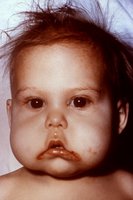
Malnourishment: Long-term absence of one or more essential nutrients, causing deformities, disease, and death. Can be corrected by dietary changes.
Food Processing in Animals
Stages of Food Processing
Food processing in animals involves four main stages:
Ingestion: The act of eating
Digestion: Breaking down food into absorbable molecules (mechanical and chemical)
Absorption: Uptake of nutrients by body cells
Elimination: Removal of undigested material
Feeding Mechanisms
Animals have evolved various feeding mechanisms:
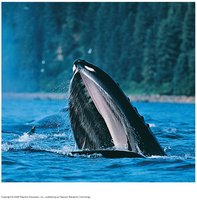
Suspension feeders: Sift small food particles from water (e.g., whales)
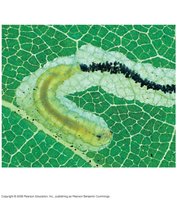
Substrate feeders: Live in or on their food source (e.g., caterpillars)
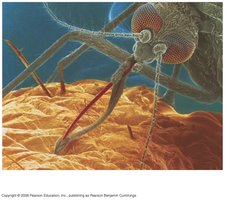
Fluid feeders: Suck nutrient-rich fluid from a host (e.g., mosquitoes, hummingbirds)
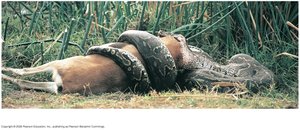
Bulk feeders: Eat relatively large pieces of food (e.g., snakes)
Digestive Compartments and Mechanisms
Digestive Compartments
Most animals process food in specialized compartments, such as the mouth, stomach, and intestines. This reduces the risk of self-digestion.
Intracellular vs. Extracellular Digestion
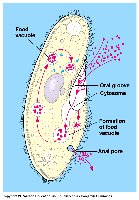
Intracellular digestion: Food particles are engulfed by endocytosis and digested within food vacuoles (e.g., sponges, some protists).
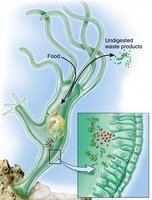
Extracellular digestion: Breakdown of food occurs outside cells, in compartments continuous with the body exterior (e.g., gastrovascular cavity, alimentary canal).
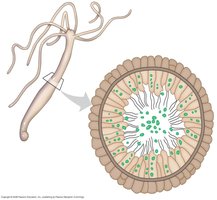
Alimentary Canal
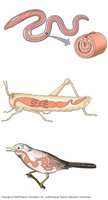
More complex animals possess a complete digestive tract (alimentary canal) with two openings (mouth and anus) and specialized regions for digestion and absorption.
Mammalian Digestive System
Overview and Accessory Glands
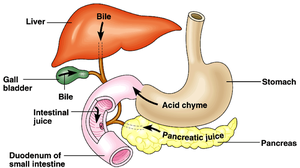
The mammalian digestive system consists of the alimentary canal and accessory glands (salivary glands, pancreas, liver, gallbladder) that secrete digestive juices via ducts.
Peristalsis and Sphincters
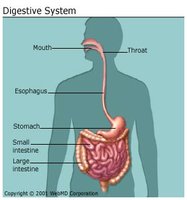
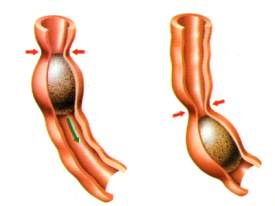
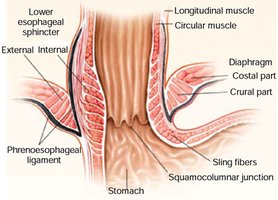
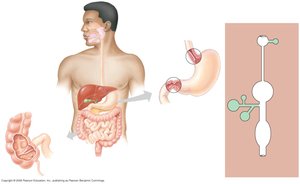
Food is moved along the alimentary canal by peristalsis (rhythmic muscle contractions). Sphincters are muscular valves that regulate movement between compartments.
Digestive System Diagram
Oral Cavity, Pharynx, and Esophagus
Initial Digestion
Digestion begins in the oral cavity, where mechanical and chemical processes occur. Salivary glands secrete saliva containing salivary amylase to begin carbohydrate digestion. The tongue shapes food into a bolus for swallowing.
Swallowing and Food Transport
The pharynx is a junction for the esophagus and trachea. Swallowing triggers the epiglottis to block the trachea, guiding food into the esophagus, which moves it to the stomach via peristalsis.
Digestion in the Stomach
Stomach Function
The stomach stores food and secretes gastric juice (containing hydrochloric acid and pepsin) to convert food into acid chyme. Parietal cells secrete H+ and Cl- ions, while chief cells secrete pepsinogen, which is activated to pepsin in acidic conditions. Mucus protects the stomach lining.
Gastric Ulcers
Gastric ulcers are lesions in the stomach lining, often caused by the bacterium Helicobacter pylori.
Digestion in the Small Intestine
Major Site of Digestion and Absorption
The small intestine is the longest section of the alimentary canal and the primary site for digestion and absorption. The duodenum receives acid chyme from the stomach and digestive enzymes from the pancreas, liver, gallbladder, and its own lining.
Enzymatic Digestion
Different enzymes break down carbohydrates, proteins, nucleic acids, and fats at various points in the digestive tract. Bile from the liver emulsifies fats, and pancreatic enzymes further digest macromolecules.
Absorption Mechanisms
The small intestine's surface area is greatly increased by villi and microvilli, enhancing nutrient absorption. Amino acids and sugars enter the bloodstream, while fats are absorbed into lymphatic vessels called lacteals as chylomicrons.
Absorption in the Large Intestine
Colon Function
The colon recovers water from indigestible food residues, forming feces. The cecum aids in plant material fermentation, and the appendix plays a minor immune role. The colon houses beneficial bacteria (e.g., Escherichia coli) that produce vitamins such as vitamin K.
Evolutionary Adaptations of Digestive Systems
Dentition and Digestive Tract Length
Digestive systems show adaptations related to diet. Herbivores typically have longer alimentary canals and specialized teeth for grinding plant material, while carnivores have shorter tracts and teeth adapted for tearing flesh. Ruminants (e.g., cattle, deer) have complex stomachs for fermenting cellulose with symbiotic microorganisms.
Regulation of Food Intake and Body Weight
Hormonal Regulation
Body weight and appetite are regulated by hormones such as leptin (appetite suppressant), ghrelin (hunger signal), insulin, and PYY, which act on the brain's satiety center. Homeostatic mechanisms maintain energy balance over the long term.
Summary Table: Essential Nutrients
Class | Examples | Function |
|---|---|---|
Essential Amino Acids | Histidine, Methionine, Threonine, Valine, Isoleucine, Lysine, Phenylalanine, Tryptophan, Leucine | Protein synthesis, enzyme function |
Essential Fatty Acids | Omega-3, Omega-6 | Membrane structure, signaling molecules |
Vitamins | A, B-complex, C, D, E, K | Cofactors, antioxidants, vision, bone health |
Minerals | Calcium, Iron, Potassium, Sodium, Zinc | Osmoregulation, nerve function, enzyme cofactors |
