 Back
BackAnimal Nutrition and Digestive Systems: Study Guide
Study Guide - Smart Notes
 Tailored notes based on your materials, expanded with key definitions, examples, and context.
Animal Nutrition and Digestive Systems
Concept 41.1: An Animal’s Diet Must Supply Chemical Energy, Organic Building Blocks, and Essential Nutrients
An adequate diet is essential for animal health and must fulfill three primary needs: chemical energy for cellular processes, organic building blocks for macromolecules, and essential nutrients that cannot be synthesized by the organism.
Chemical Energy: Required for cellular work and metabolic processes.
Organic Building Blocks: Used to construct macromolecules such as proteins, nucleic acids, and lipids.
Essential Nutrients: Nutrients that must be obtained from the diet because the organism cannot synthesize them.
Essential Nutrients
Essential Amino Acids: Animals require 20 amino acids; only some are essential because animals can synthesize the rest. Essential amino acids must be obtained from food, especially in 'complete' proteins like meat, eggs, and cheese.
Essential Fatty Acids: Certain unsaturated fatty acids must be obtained from the diet, commonly found in seeds, grains, and vegetables.
Vitamins: Organic molecules required in small amounts; grouped as fat-soluble or water-soluble. Deficiency can lead to disease.
Minerals: Inorganic nutrients required in small amounts; excess can disrupt homeostasis.
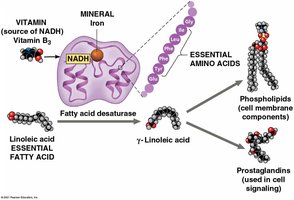
Dietary Deficiencies
Malnutrition: Failure to obtain adequate nutrition, leading to health issues.
Undernourishment: Insufficient chemical energy intake, resulting in depletion of fat, carbohydrates, and muscle mass.
Neural Tube Defects: Caused by folic acid deficiency during pregnancy.
Concept 41.2: Food Processing Involves Ingestion, Digestion, Absorption, and Elimination
Food processing in animals consists of four main stages: ingestion, digestion, absorption, and elimination. Each stage is specialized and essential for nutrient acquisition.
Forms of Ingestion
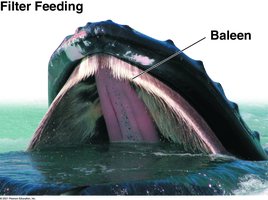
Filter Feeders: Sift small food particles from the surrounding medium. Example: Baleen whales.
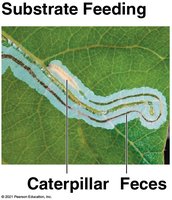
Substrate Feeders: Live in or on their food source. Example: Caterpillars eating leaves.
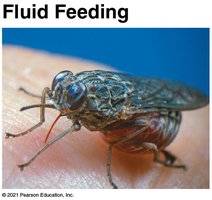
Fluid Feeders: Suck nutrient-rich fluid from a living host. Example: Mosquitoes, flies.
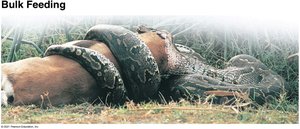
Bulk Feeders: Eat large pieces of food. Example: Snakes eating prey.
Digestion
Mechanical Digestion: Physical breakdown of food (chewing, grinding).
Chemical Digestion: Enzymatic hydrolysis splits food into absorbable molecules.
Digestive Compartments
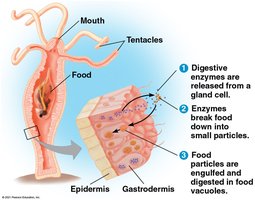
Intracellular Digestion: Food particles are engulfed and digested within cells.
Extracellular Digestion: Breakdown occurs outside cells, often in specialized compartments.
Alimentary Canal
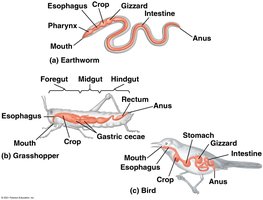
Complex animals possess a complete digestive tract (alimentary canal) with specialized regions for digestion and absorption.
Concept 41.3: Mammalian Digestive System
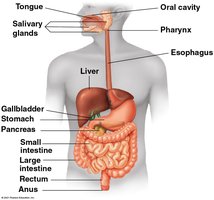
Mammals have specialized organs and accessory glands for sequential stages of food processing. The alimentary canal includes the oral cavity, pharynx, esophagus, stomach, small intestine, large intestine, rectum, and anus.
Accessory Glands: Salivary glands, pancreas, liver, gallbladder.
Oral Cavity: Mechanical digestion by teeth; saliva lubricates and contains amylase for starch breakdown.
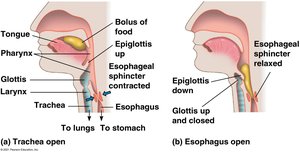
Swallowing and Peristalsis
Pharynx: Junction for esophagus and trachea.
Epiglottis: Prevents food from entering the trachea during swallowing.
Peristalsis: Alternating muscle contractions move food through the esophagus.
Stomach Digestion
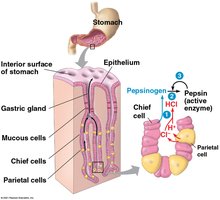
Gastric Juice: Contains hydrochloric acid (HCl) and pepsin; low pH kills bacteria and denatures proteins.
Pepsin: Protease enzyme that breaks down proteins.
Mucus: Protects stomach lining.
Digestion in the Small Intestine
Duodenum: First section; mixes chyme with digestive juices from pancreas, liver, gallbladder.
Pancreas: Produces proteases (trypsin, chymotrypsin) and alkaline solution.
Liver: Produces bile; bile salts aid fat digestion.
Gallbladder: Stores and concentrates bile.
Absorption in the Small Intestine
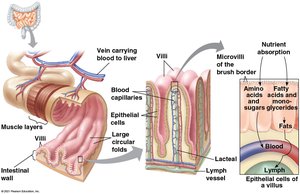
Villi and Microvilli: Increase surface area for absorption.
Hepatic Portal Vein: Transports nutrient-rich blood to the liver.
Chylomicrons: Transport fats via lymphatic system.
Processing in the Large Intestine
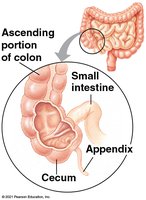
Colon: Recovers water, forms feces.
Cecum: Fermentation chamber; appendix plays minor immune role.
Rectum and Anus: Store and eliminate feces.
Concept 41.4: Evolutionary Adaptations of Vertebrate Digestive Systems
Digestive systems are adapted to diet, with structural and functional variations among vertebrates.
Dentition
Specialized Teeth: Mammals have varied teeth for different diets; carnivores, herbivores, and omnivores show distinct patterns.
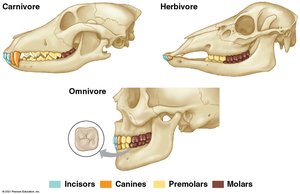
Stomach and Intestinal Adaptations
Carnivores: Large, expandable stomachs.
Herbivores/Omnivores: Longer alimentary canals for plant digestion.
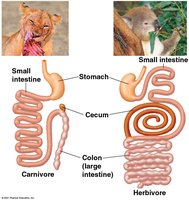
Mutualistic Adaptations
Microbiome: Collection of microorganisms in the digestive system; aids in vitamin production and immune regulation.
Fermentation Chambers: Herbivores have specialized chambers for cellulose digestion.
Ruminants: Animals with complex stomachs for plant digestion.
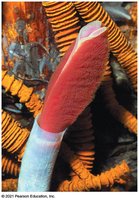
Giant Tubeworms: Obtain nutrients from mutualistic bacteria.
Concept 41.5: Regulation of Digestion, Energy Storage, and Appetite
Digestive processes are regulated by nervous and endocrine systems, ensuring nutrient acquisition matches energy needs.
Regulation of Digestion
Enteric Nervous System: Controls digestive organ activity.
Endocrine System: Hormones regulate digestive steps.
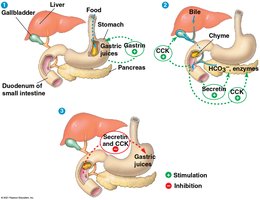
Regulation of Energy Storage
Glycogen: Stored in liver and muscle cells.
Fat: Excess energy stored in adipose tissue.
Glucose Homeostasis
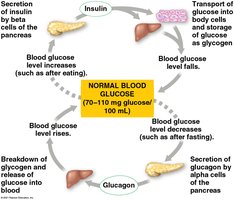
Insulin: Stimulates glucose uptake; produced by beta cells in pancreas.
Glucagon: Stimulates glycogen breakdown; produced by alpha cells in pancreas.
Normal Blood Glucose: 70–110 mg glucose/100 mL.
Equation for glucose homeostasis:
Diabetes Mellitus
Type 1 Diabetes: Autoimmune destruction of beta cells; requires insulin injections.
Type 2 Diabetes: Decreased response to insulin; associated with obesity.
Regulation of Appetite and Consumption
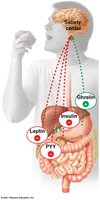
Hormones: Ghrelin (hunger), Insulin and PYY (satiety), Leptin (fat regulation).
Satiety Center: Located in the brain; integrates hormonal signals.
Additional info: These notes cover the main concepts of animal nutrition and digestive systems, including dietary requirements, digestive anatomy and physiology, evolutionary adaptations, and regulatory mechanisms. The included images directly illustrate key processes and structures discussed in each section.
