 Back
BackAnimal Nutrition and the Digestive System: Structure, Function, and Regulation
Study Guide - Smart Notes
 Tailored notes based on your materials, expanded with key definitions, examples, and context.
Animal Nutrition
Introduction to Animal Nutrition
Animal nutrition is the process by which organisms consume, utilize, and store food substances to meet their energy and biosynthetic needs. The right balance and type of food are essential for survival, growth, and reproduction. Diet provides chemical energy, building blocks for biosynthesis, and essential nutrients that cannot be synthesized by the organism.
Chemical energy is converted into ATP to power cellular processes.
Building blocks (e.g., organic carbon and nitrogen) are used to synthesize macromolecules.
Essential nutrients (certain amino acids, fatty acids, vitamins, and minerals) must be obtained from the diet.
Micronutrients (vitamins and minerals) play roles as substrates, coenzymes, and cofactors in enzymatic reactions.
Essential Nutrients
Animals require four main classes of essential nutrients: amino acids, fatty acids, vitamins, and minerals.
Amino Acids (AA): Of the 20 amino acids required, animals can synthesize about half; the rest are essential amino acids and must be obtained preassembled from the diet. Complete proteins (e.g., meat, eggs, cheese) provide all essential amino acids, while most plant proteins are incomplete. A varied plant-based diet can supply all essential amino acids.
Fatty Acids (FA): Most fatty acids can be synthesized, but essential fatty acids (certain unsaturated fatty acids) must come from the diet. Deficiencies are rare due to their abundance in grains, seeds, and vegetables.
Vitamins: Organic molecules required in small amounts, often as coenzymes. Humans require 13 essential vitamins.
Minerals: Inorganic nutrients (e.g., Fe, S, Na, P, K, Mg, Ca, I, F) required in small amounts for various physiological functions, including enzyme activity, nerve function, and ionic balance. Imbalances can disrupt homeostasis.
Food Processing in Animals
Main Stages of Food Processing
Food processing in animals occurs in four main stages:
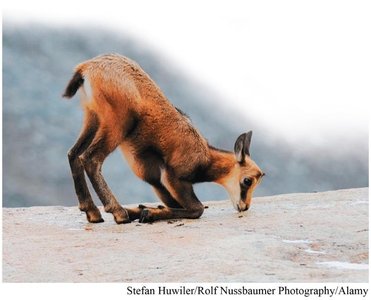
Ingestion: The act of eating or feeding.
Digestion: Breaking down large food molecules into smaller components for absorption. Includes mechanical digestion (e.g., chewing) and chemical digestion (enzymatic hydrolysis).
Absorption: Uptake of small molecules by cells lining the digestive tract.
Elimination: Removal of undigested material from the digestive system.
Feeding Mechanisms
Animals have evolved various feeding mechanisms to obtain food:
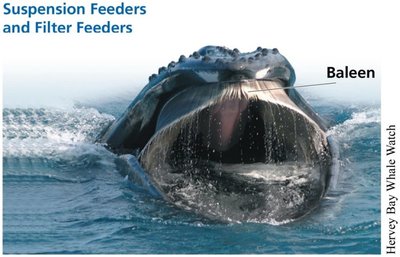
Suspension/Filter Feeders: Strain small food particles from water (e.g., baleen whales).
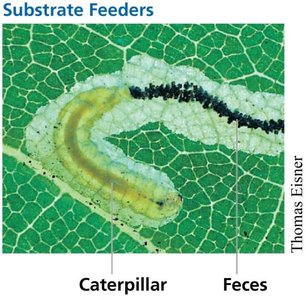
Substrate Feeders: Live in or on their food source (e.g., caterpillars).
Bulk Feeders: Eat relatively large pieces of food (e.g., most vertebrates).
Digestion: Mechanical and Chemical
Digestion involves both mechanical and chemical processes:
Mechanical digestion increases surface area for enzymes (e.g., chewing).
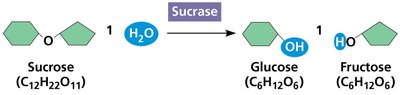
Chemical digestion uses enzymes to break down macromolecules via hydrolysis.
Example of enzymatic hydrolysis:
Intracellular and Extracellular Digestion
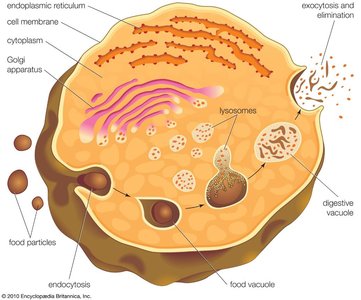
Intracellular digestion: Food particles are engulfed by phagocytosis and digested within food vacuoles that fuse with lysosomes (e.g., sponges).
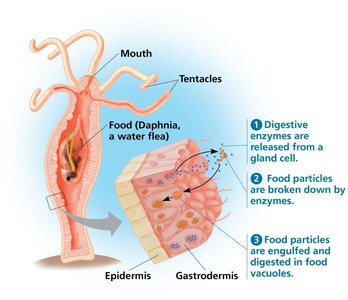
Extracellular digestion: Breakdown of food occurs in compartments continuous with the outside of the body (e.g., gastrovascular cavity in hydra).
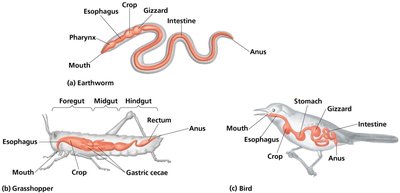
Most complex animals have a complete digestive tract (alimentary canal) with specialized regions for stepwise digestion and absorption.
Mammalian Digestive System
Overview and Structure
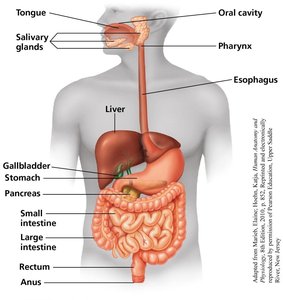
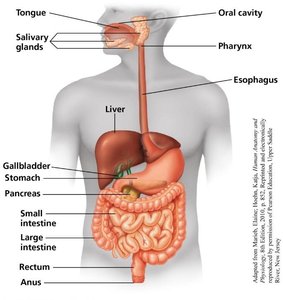
The mammalian digestive system consists of the alimentary canal and accessory glands (salivary glands, pancreas, liver, gallbladder). Food is moved by peristalsis, and sphincters regulate passage between compartments.
Oral Cavity, Pharynx, and Esophagus
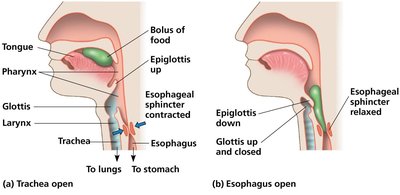
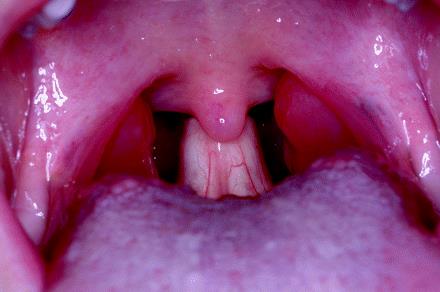
Mechanical digestion begins in the oral cavity, where saliva lubricates food and salivary amylase initiates starch and glycogen breakdown. The tongue shapes food into a bolus for swallowing. The pharynx connects to both the esophagus and trachea; swallowing closes the epiglottis to prevent food from entering the airway. Peristalsis moves food to the stomach.
Digestion in the Stomach
The stomach stores food and begins protein digestion. Gastric juice (HCl and pepsin) is secreted to form chyme. HCl lowers pH, killing bacteria and denaturing proteins, while pepsin cleaves proteins into peptides. Mucus protects the stomach lining, and epithelial cells are regularly replaced.
Small Intestine (SI)
The small intestine is the main site for enzymatic digestion and nutrient absorption. In the duodenum, chyme mixes with digestive juices from the pancreas, liver, gallbladder, and the intestine itself. Most digestion occurs in the duodenum, while the jejunum and ileum are specialized for absorption.
Accessory Organs: Pancreas, Liver, Gallbladder
Pancreas: Releases bicarbonate to neutralize acidic chyme and produces proteases activated in the duodenum.
Liver: Produces bile, which emulsifies fats for digestion and absorption.
Gallbladder: Stores and releases bile into the small intestine.
Absorption in the Small Intestine
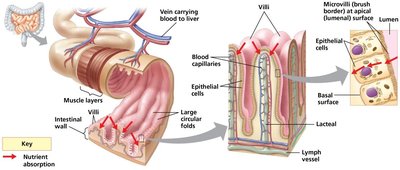
The small intestine has a large surface area due to folds, villi, and microvilli, forming a brush border that maximizes nutrient absorption. Transport across epithelial cells can be passive or active. Absorbed nutrients are transported to the liver for processing before entering systemic circulation.
Large Intestine (Colon) and Elimination
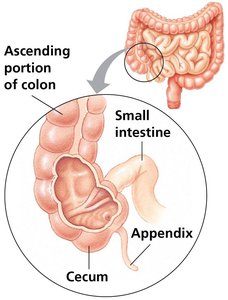
The colon recovers water by osmosis and houses bacteria that ferment unabsorbed material. The cecum aids in fermentation, especially of cellulose. The appendix may play a role in immunity and as a reservoir for beneficial bacteria. Feces are stored in the rectum and eliminated through the anus.
Digestive System Adaptations and Regulation
Digestive System Adaptations to Diet
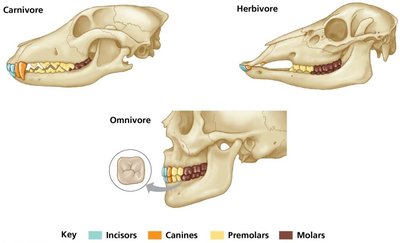
Vertebrate digestive systems show adaptations related to diet. Dentition (teeth structure) varies among carnivores, herbivores, and omnivores. Nonmammalian vertebrates generally have less specialized teeth.
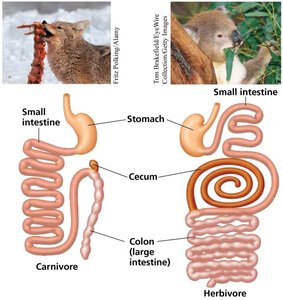
Carnivores often have large, expandable stomachs for infrequent meals, while herbivores and omnivores have longer alimentary canals to digest plant material.
Mutualistic Adaptations
Intestinal bacteria (gut microbiome) aid in digestion, vitamin production, gut development, and immunity. The composition of the gut microbiome varies with age and health status.
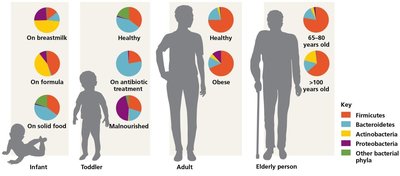
Herbivores often have specialized chambers (e.g., cecum, fermentation chambers) housing mutualistic microbes to digest cellulose. Ruminants have the most elaborate adaptations for cellulose digestion.
Regulation of Energy Storage and Homeostasis
Animals store excess energy as glycogen (in liver and muscle) and fat (in adipose tissue). When energy intake is less than expenditure, glycogen stores are used first, followed by fat. Blood glucose homeostasis is regulated by the hormones insulin and glucagon, which control glycogen synthesis and breakdown in the liver.
Insulin: Released after a carbohydrate-rich meal; stimulates glycogen synthesis and glucose uptake.
Glucagon: Released when blood sugar is low; stimulates glycogen breakdown and glucose release.
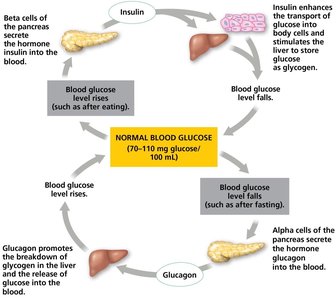
Example: After eating, blood glucose rises, triggering insulin release and glycogen storage. During fasting, blood glucose falls, triggering glucagon release and glycogen breakdown.
Additional info: This guide covers the structure, function, and regulation of animal digestive systems, with emphasis on mammalian systems and adaptations to diet. It integrates key concepts from Campbell Biology, Fourth Canadian Edition, Chapter 41.
