 Back
Animal Nutrition: Digestive Organs, Macromolecule Digestion, and Glucose Homeostasis
Study Guide - Smart Notes
 Tailored notes based on your materials, expanded with key definitions, examples, and context.
Animal Nutrition
Overview of Animal Nutrition
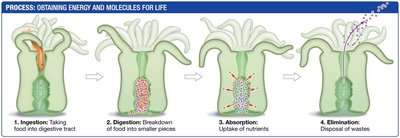
Animal nutrition encompasses the processes by which animals obtain, digest, absorb, and utilize nutrients for energy, growth, and maintenance. The digestive system is specialized to break down food into absorbable molecules and eliminate waste.
Ingestion: Intake of food into the digestive tract.
Digestion: Breakdown of food into smaller, absorbable molecules.
Absorption: Uptake of nutrients into the body.
Elimination: Removal of indigestible waste products.
Nutrient Intake and Macromolecules
Macronutrients: Carbohydrates, Proteins, and Lipids
Animals require three main types of macronutrients: carbohydrates, proteins, and lipids. Each plays a distinct role in metabolism and energy storage.
Carbohydrates: Primary energy source; include monosaccharides, disaccharides, and polysaccharides.
Proteins: Provide amino acids for growth and repair.
Lipids: Long-term energy storage and structural components of membranes.
Carbohydrates
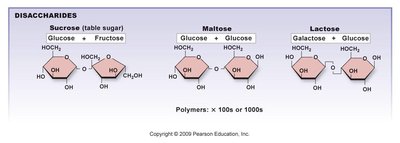
Monosaccharides are simple sugars such as glucose, fructose, and galactose. Their structural differences are based on the arrangement of hydroxyl groups. 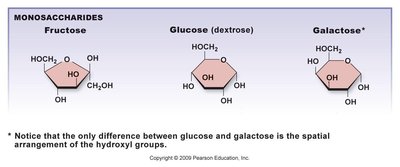 Disaccharides are formed by joining two monosaccharides. Examples include sucrose (glucose + fructose), maltose (glucose + glucose), and lactose (galactose + glucose).
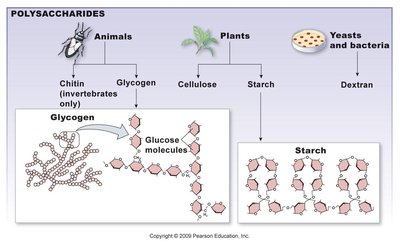
 Polysaccharides are long chains of monosaccharides. Animals store energy as glycogen, plants as starch, and invertebrates as chitin.
Protein Digestion
Proteins are broken down into amino acids by proteases such as pepsin, trypsin, chymotrypsin, and carboxypeptidase. 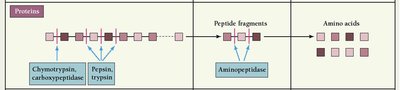
Lipids
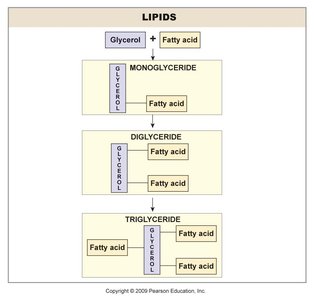
Lipids consist of glycerol and fatty acids. Fatty acids can be saturated, monounsaturated, or polyunsaturated. 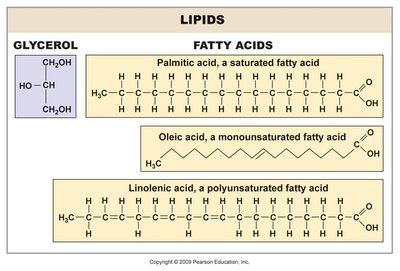 Lipids are assembled as mono-, di-, and triglycerides.
Digestive System Anatomy and Function
Vertebrate Gastrointestinal Tract
The digestive tract consists of several organs, each with specialized functions.
Mouth: Mechanical and chemical digestion begins; saliva contains amylase.
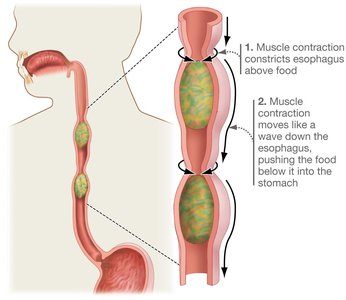
Esophagus: Transports food via peristalsis.
Stomach: Initiates protein digestion, mechanical breakdown, and sterilization.
Small Intestine: Major site for digestion and absorption.
Large Intestine: Absorbs water and ions; houses microbiome.
Accessory Organs: Salivary glands, liver, gall bladder, pancreas.
GI Tract Cross-Section
The GI tract wall consists of four layers: mucosa, submucosa, muscularis externa, and serosa. 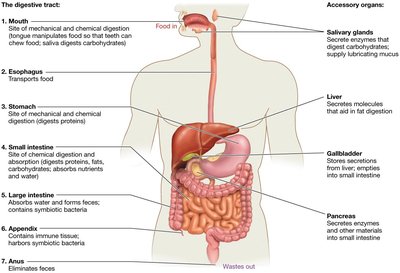
Steps of Digestion
Mouth: Mastication and secretion of saliva (contains amylase).
Esophagus: Peristalsis moves food to stomach; birds and invertebrates may have a crop.
Stomach: Holds food, initiates protein digestion, mechanical breakdown, sterilizes food; sphincters control entry and exit.
Ruminant Stomachs
Ruminants (e.g., cows) have a four-chambered stomach: rumen, reticulum, omasum, abomasum. This adaptation allows digestion of cellulose by symbiotic microbes. 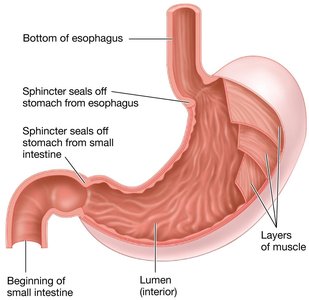
Small Intestine
The small intestine is the primary site for digestion and absorption. It receives secretions from the pancreas (amylases, lipases, proteases) and liver/gall bladder (bile). 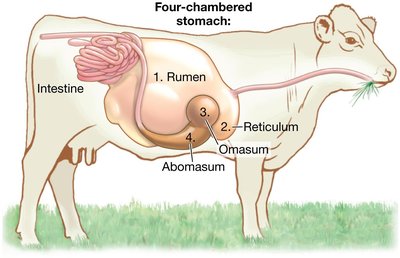
Digestion and Absorption of Macromolecules
Carbohydrate Digestion
Carbohydrates are digested by amylase (mouth, pancreas), sucrase, maltase, and lactase (small intestine). The end products are monosaccharides (glucose, galactose, fructose). 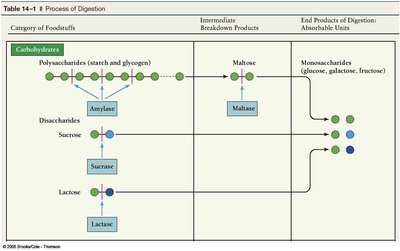
Protein Digestion
Proteins are digested by pepsin (stomach), trypsin, chymotrypsin, carboxypeptidase (pancreas), and aminopeptidase (small intestine). The end products are amino acids.
Lipid Digestion
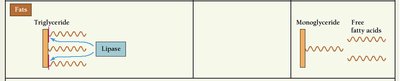
Lipids are emulsified by bile salts and digested by lipases into fatty acids and monoglycerides. 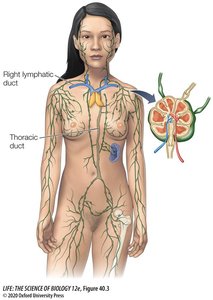
Absorption Mechanisms
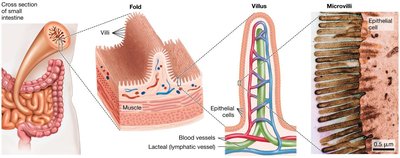
Carbohydrates and Proteins: Absorbed by epithelial cells and transported to capillaries.
Fats: Fatty acids pass through epithelial cells, are reassembled into fats, and move into lacteals of the lymphatic system.
Large Intestine and Microbiome
Functions of the Large Intestine
The large intestine absorbs additional water and ions, houses the microbiome, and forms feces. The microbiome provides essential vitamins and fatty acids and prevents colonization by pathogens.
Colon: Main site of water absorption and microbiome activity.
Rectum: Stores feces before elimination.
Appendix: Immune function and microbiome reservoir.
Defecation: Controlled by internal and external anal sphincters.
States of Nutrient Influx and Energy Storage
Absorptive vs. Post-Absorptive States
Absorptive State: Nutrients enter blood from GI tract; anabolic and catabolic activities occur; energy is stored.
Post-Absorptive State: No nutrients enter from GI tract; mainly catabolic activity; energy is released from stores.
Energy Storage
Carbohydrates: Stored as glycogen; 1.5 kcal/g.
Proteins: 4.5 kcal/g.
Fats: Most efficient storage; 9 kcal/g.
Glucose: Stored mainly for CNS use; converted to glycogen or fat.
Glucose Homeostasis
Hormonal Control of Blood Glucose
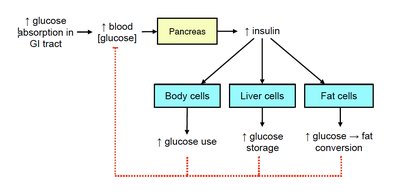
Blood glucose levels are regulated by insulin and glucagon, both released by the pancreas.
Insulin: Promotes energy storage and glucose use during the absorptive phase.
Glucagon: Promotes release of stored fuels during the post-absorptive phase.
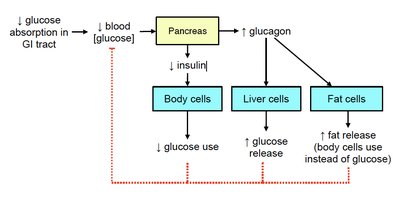
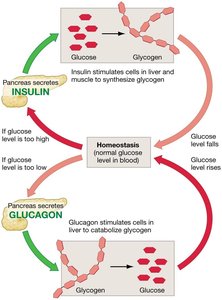
Homeostasis of Blood Glucose
Insulin and glucagon act in opposition to maintain blood glucose homeostasis.
When glucose is high, insulin stimulates glycogen synthesis.
When glucose is low, glucagon stimulates glycogen breakdown.
Summary Table: Digestion of Macromolecules
Macromolecule | Enzymes | Breakdown Products | Absorption |
|---|---|---|---|
Carbohydrates | Amylase, sucrase, maltase, lactase | Monosaccharides | Capillaries |
Proteins | Pepsin, trypsin, chymotrypsin, carboxypeptidase, aminopeptidase | Amino acids | Capillaries |
Lipids | Bile salts, lipase | Fatty acids, monoglycerides | Lacteals (lymphatic system) |
Additional info: Some details about enzyme action and absorption mechanisms were inferred for completeness and clarity.
