 Back
Animal Nutrition: Food Processing and the Digestive System
Study Guide - Smart Notes
 Tailored notes based on your materials, expanded with key definitions, examples, and context.
Animal Nutrition
Main Stages of Food Processing
Animal nutrition involves the acquisition and processing of food to obtain energy and essential nutrients. The main stages of food processing are:
Ingestion: The act of eating or taking in food.
Digestion: The breakdown of food into molecules small enough for absorption. This includes both mechanical and chemical digestion.
Absorption: The uptake of small nutrient molecules by cells lining the digestive tract.
Elimination: The removal of undigested material from the digestive system.
Examples of Food Processing and Feeding Adaptations
Animals have evolved various feeding mechanisms and adaptations in their mouthparts and digestive systems to process different types of food:
Filter feeders: Strain small organisms or food particles from the surrounding medium.
Substrate feeders: Live in or on their food source and eat their way through it.
Fluid feeders: Suck nutrient-rich fluid from a living host.
Bulk feeders: Eat relatively large pieces of food.
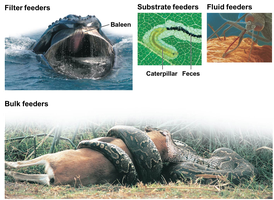
Food Processing: Digestion
Mechanical and Chemical Digestion
Digestion is the process of breaking down food into molecules small enough to be absorbed. It occurs in two main forms:
Mechanical digestion: Physical breakdown of food (e.g., chewing) to increase surface area for enzymes.
Chemical digestion: Enzymatic hydrolysis of macromolecules into monomers.
Digestion can occur:
Intracellularly: Food is engulfed by phagocytosis and digested within lysosomes (e.g., sponges).
Extracellularly: Enzymes are secreted into a digestive cavity; food is broken down outside cells (e.g., most animals).
Digestive System Organization
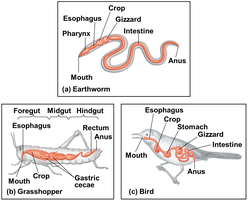
Most animals have a digestive system specialized for sequential food processing. The alimentary canal is a complete digestive tract with two openings (mouth and anus), often accompanied by accessory glands that secrete digestive juices.
Human Digestive System
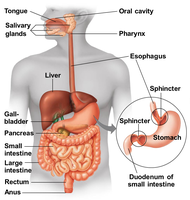
Overview of the Alimentary Canal and Accessory Organs
The human digestive system consists of the alimentary canal and accessory glands (salivary glands, liver, pancreas, gallbladder). Food passes through the oral cavity, pharynx, esophagus, stomach, small intestine, large intestine (colon), rectum, and anus.
Oral Cavity: Start of Mechanical and Chemical Digestion
Digestion begins in the oral cavity:
Mechanical digestion: Chewing by teeth increases surface area of food.
Chemical digestion: Salivary glands secrete saliva containing amylase (breaks down starch) and mucus (lubricates food).
Specialized Structures in Digestion
Crop: Storage organ in birds and some invertebrates.
Gizzard: Muscular organ for grinding food (birds, some invertebrates).
Stomach: Muscular sac with low pH (1.5–3) for short-term storage and processing of food in mammals.
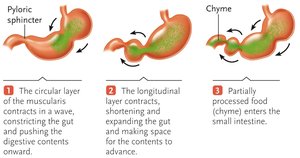
Peristalsis: Coordinated smooth muscle contractions that move food through the digestive tract.
Sphincters: Muscular valves that regulate passage of food between compartments.
Chemical Digestion in the Stomach
Gastric Juices and Enzymatic Breakdown
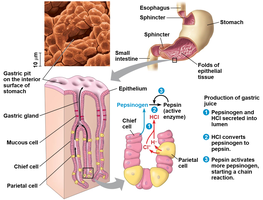
The stomach secretes gastric juice containing:
Hydrochloric acid (HCl): Lowers pH, kills bacteria, denatures proteins.
Pepsin: Enzyme that cleaves proteins into smaller peptides.
The mixture of food and gastric juice is called chyme, which is moved by peristalsis into the small intestine.
Digestion in the Small Intestine
Duodenum and Accessory Glands
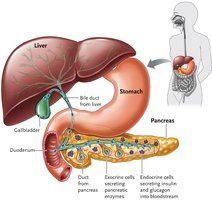
Chyme enters the duodenum (first segment of the small intestine), where it mixes with digestive juices from the pancreas, liver, gallbladder, and intestinal wall:
Pancreas: Secretes enzymes and bicarbonate to neutralize stomach acid.
Liver: Produces bile, which emulsifies fats.
Gallbladder: Stores and releases bile.
Absorption in the Small Intestine
Structure and Function
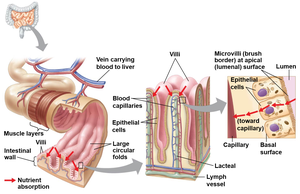
Absorption of nutrients occurs primarily in the small intestine. The surface area is greatly increased by:
Villi: Large finger-like projections of the intestinal wall.
Microvilli: Tiny extensions of epithelial cell membranes (brush border).
This adaptation maximizes nutrient absorption into blood and lymphatic vessels.
Absorption in the Large Intestine
Water Recovery and Formation of Feces
The large intestine (colon) recovers water from undigested food and houses bacteria that produce vitamins. The cecum aids in fermentation of plant material (small in humans, forming the appendix). Feces are formed as water is absorbed and are stored in the rectum until elimination.
Comparative Digestive Anatomy: Carnivores vs. Herbivores
Differences in Digestive Tract Structure
Carnivores and herbivores have distinct digestive tract adaptations:
Carnivores: Shorter digestive tracts, small cecum, suited for protein-rich diets.
Herbivores: Longer digestive tracts, larger cecum for fermenting plant material, adaptations for cellulose digestion.
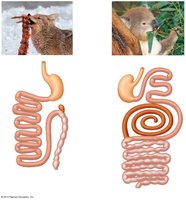
Additional info: Herbivores often rely on symbiotic bacteria to break down cellulose, while carnivores have simpler digestive systems due to the ease of protein digestion.
