 Back
BackAnimal Nutrition: Structure, Function, and Regulation
Study Guide - Smart Notes
 Tailored notes based on your materials, expanded with key definitions, examples, and context.
Animal Nutrition
Overview of Nutrition
Nutrition is the process by which organisms take in and utilize food substances to support growth, development, and reproduction. Animal nutrition involves obtaining chemical energy, organic building blocks, and essential nutrients from the diet.
Chemical energy: Used to produce ATP for cellular processes.
Organic building blocks: Organic carbon and nitrogen for synthesizing macromolecules.
Essential nutrients: Required for growth and cannot be synthesized by the organism.
Classes of Essential Nutrients
Essential nutrients must be obtained from the diet and are classified into four main groups:
Essential amino acids
Essential fatty acids
Vitamins
Minerals
Macronutrients vs. Micronutrients
Macronutrients are required in large amounts, while micronutrients are needed only in small quantities. Both are vital for proper physiological function.
Essential Nutrients
Vitamins
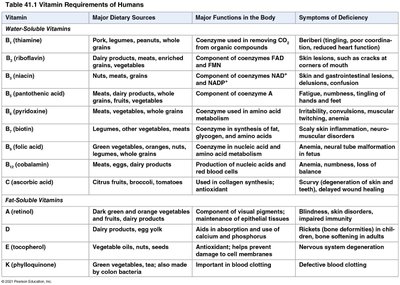
Vitamins are organic molecules required in small amounts. Humans need thirteen essential vitamins, which are categorized as fat-soluble or water-soluble.
Fat-soluble vitamins: Stored in body fat; excess can be toxic.
Water-soluble vitamins: Excess is excreted in urine.
Many water-soluble vitamins function as cofactors for enzymes, such as Vitamin B5 (pantothenic acid), a component of Coenzyme A.
Minerals
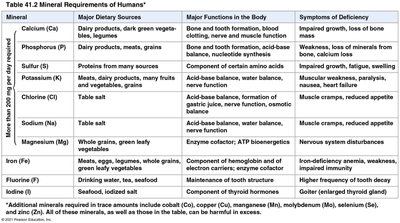
Minerals are inorganic nutrients required in small amounts. Excessive intake can disrupt homeostasis.
Essential Amino Acids
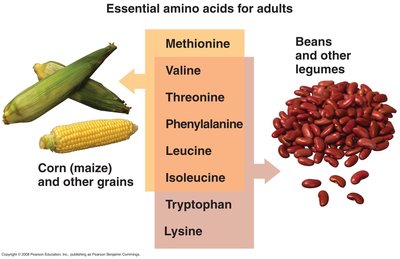
Animals require 20 amino acids; about half can be synthesized, while the rest must be obtained from food. Complete proteins (meat, eggs, cheese) provide all essential amino acids. Plant proteins are often incomplete, but a varied plant-based diet can supply all essential amino acids.
Essential Fatty Acids
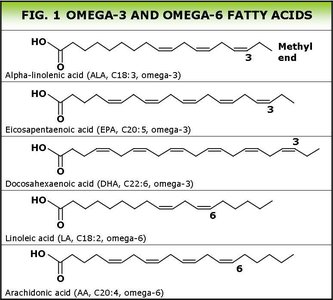
Essential fatty acids are unsaturated fatty acids that animals cannot synthesize and must obtain from their diet. Sources include seeds, grains, and vegetables.
Dietary Deficiencies
Types of Deficiency
Overnourishment: Excess energy intake, stored as fat.
Undernourishment: Insufficient calorie intake, leading to tissue breakdown.
Malnourishment: Adequate calories but lacking essential nutrients.
Deficiencies in essential nutrients can cause deformities, disease, and death. Protein deficiency is common in children when their diet shifts from breast milk to low-protein foods.
Feeding Mechanisms
Types of Feeders
Animals employ four major feeding mechanisms:
Suspension (filter) feeders: Filter small particles from water.
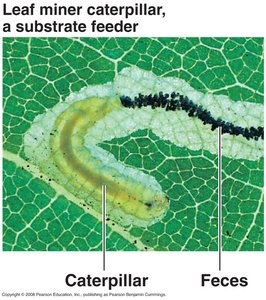
Substrate feeders: Live in or on their food source.
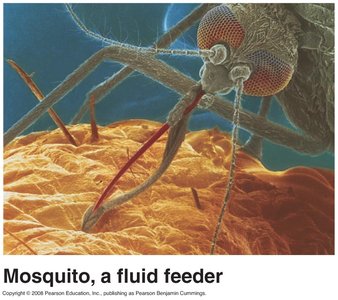
Fluid feeders: Suck nutrient-rich fluid from a host.
Bulk feeders: Eat large pieces of food.
Food Processing and Digestion
Steps of Food Processing
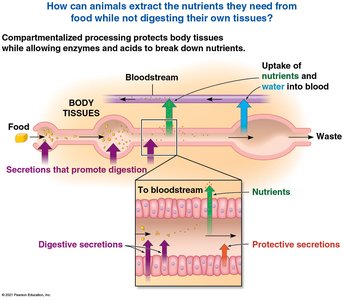
Food processing involves ingestion, digestion, absorption, and elimination. Digestion is both mechanical (breaking food into smaller pieces) and chemical (enzymatic breakdown of macromolecules).
Mechanical digestion: Begins in the mouth.
Chemical digestion: Begins with enzymes in saliva and continues in the stomach and small intestine.
Digestive System Anatomy
The human digestive system is specialized for efficient breakdown and absorption of nutrients. The small intestine is highly folded, with villi and microvilli increasing surface area for absorption.
Absorption of Nutrients
Monomers such as amino acids and simple sugars are absorbed directly into the bloodstream. Fatty acids are packaged into chylomicrons and enter the lymphatic system before reaching the blood.
Digestive System Adaptations
Diet and Digestive System Structure
The structure of an animal's digestive system reflects its diet. Carnivores have sharp teeth and expandable stomachs, while herbivores have longer digestive tracts and specialized stomachs for processing fibrous plant material.
Symbiotic Relationships
Herbivores often rely on symbiotic microorganisms to digest cellulose, which vertebrates cannot break down on their own.
Regulation of Digestion and Energy Storage
Feedback Circuits
Digestion and energy allocation are regulated by feedback circuits involving the nervous and endocrine systems. Hormones such as gastrin, secretin, and CCK coordinate digestive processes.
Metabolic Rate and Energy Allocation
Metabolic rate is the energy used per unit time and can be measured by heat loss, O2 consumption, or CO2 production. Basal metabolic rate (BMR) is the minimum rate for endotherms at rest; standard metabolic rate (SMR) applies to ectotherms.
Glucose Homeostasis
Insulin and glucagon regulate blood glucose levels. Insulin promotes glucose uptake and storage as glycogen; glucagon stimulates glycogen breakdown and glucose release.
Diseases Related to Nutrition
Diabetes Mellitus
Diabetes mellitus results from insulin deficiency or decreased response to insulin. Type 1 diabetes is an autoimmune disorder destroying pancreatic beta cells; Type 2 diabetes involves target cell resistance to insulin.
Regulation of Appetite
Appetite is regulated by hormones such as ghrelin (stimulates hunger), insulin and PYY (suppress appetite), and leptin (regulates body fat levels).
Summary Table: Vitamin Requirements
Summary Table: Mineral Requirements
