 Back
Animal Reproduction and Development: Mechanisms, Structures, and Hormonal Regulation
Study Guide - Smart Notes
 Tailored notes based on your materials, expanded with key definitions, examples, and context.
Animal Reproduction
Introduction to Animal Reproduction
Animal reproductive systems display remarkable diversity, with species utilizing asexual, sexual, or both modes of reproduction. The mode of reproduction influences genetic diversity and evolutionary adaptation.
Asexual reproduction: Offspring are genetically identical to the parent, produced via mitosis.
Sexual reproduction: Offspring are genetically different, produced via meiosis and fusion of gametes.
Alternation of modes: Some animals, such as Daphnia, can switch between asexual and sexual reproduction depending on environmental conditions.
Mechanisms of Asexual Reproduction
Asexual reproduction occurs through several mechanisms, each resulting in offspring genetically identical to the parent.
Budding: Offspring forms in or on the parent and breaks away when fully developed.
Fission: An individual splits into two organisms.
Parthenogenesis: Females produce offspring without fertilization from a male; eggs may be produced by mitosis or meiosis.
Mechanisms of Sexual Reproduction
Sexual reproduction involves the formation of gametes (eggs or sperm) through gametogenesis, which occurs in specialized organs called gonads.
Spermatogenesis: Formation of sperm in male gonads (testes).
Oogenesis: Formation of eggs in female gonads (ovaries).
Gametogenesis
Spermatogenesis in Mammals
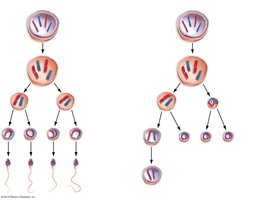
Spermatogenesis is the process by which sperm are produced in the testes. Diploid spermatogonia divide by mitosis to form primary spermatocytes, which undergo meiosis to produce haploid sperm cells.
Spermatogonia (2n): Divide by mitosis.
Primary spermatocytes (2n): Undergo meiosis I.
Secondary spermatocytes (n): Undergo meiosis II.
Spermatids (n): Differentiate into mature sperm.
The Structure of Mammalian Sperm
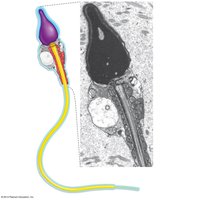
Mammalian sperm are specialized for motility and fertilization, consisting of four main components:
Head: Contains the nucleus and acrosome (enzymes for egg penetration).
Midpiece: Packed with mitochondria for energy.
Neck: Contains the centriole.
Tail (flagellum): Provides motility.
Oogenesis in Mammals
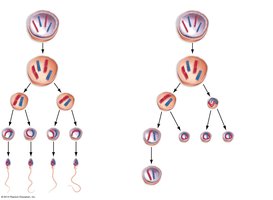
Oogenesis is the process by which eggs are produced in the ovaries. Diploid oogonia divide by mitosis to form primary oocytes, which undergo unequal meiotic divisions to produce one large egg and three polar bodies.
Oogonia (2n): Divide by mitosis.
Primary oocytes (2n): Undergo meiosis I.
Secondary oocyte (n): Undergo meiosis II.
Ootid (n): Matures into the ovum.
Polar bodies (n): Non-functional, discarded.
The Structure of the Mammalian Egg
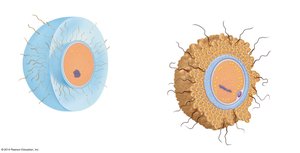
The mammalian egg contains not only genetic material but also nutrients essential for early embryonic development. It is surrounded by protective layers such as the zona pellucida and corona radiata.
Zona pellucida: Glycoprotein layer surrounding the plasma membrane.
Corona radiata: Layer of follicle cells.
Yolk granules: Provide nutrients.
Fertilization and Egg Development
Fertilization
Fertilization is the union of sperm and egg to form a diploid zygote. It can occur externally or internally, depending on the species.
External fertilization: Gametes are released into the environment, common in aquatic animals.
Internal fertilization: Sperm is deposited directly into the female reproductive tract.
External Fertilization
External fertilization is typical in aquatic environments, where large numbers of gametes are produced and released in response to environmental and species-specific cues, such as pheromones.
Internal Fertilization
Internal fertilization is common in terrestrial and some aquatic animals. It occurs via copulation or the transfer of spermatophores.
Copulation: Direct transfer of sperm using a copulatory organ.
Spermatophore: Sperm package placed in the female reproductive tract.
Embryo Development Post-Fertilization
After fertilization, embryos may be laid as eggs or retained within the mother. Modes of development include:
Oviparous: Eggs laid outside the mother; embryo develops externally.
Viviparous: Embryo develops inside the mother, receiving nutrition directly.
Ovoviviparous: Embryo develops inside the mother but is nourished by yolk.
Anatomy of Human Reproductive Organs
Male Reproductive System
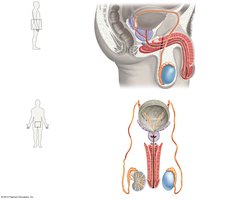
The male reproductive system includes organs for sperm production, storage, and delivery, as well as accessory glands that produce fluids for semen.
Testis: Site of spermatogenesis.
Epididymis: Sperm storage.
Vas deferens: Transports sperm.
Seminal vesicle, prostate gland, bulbourethral gland: Produce accessory fluids.
Female Reproductive System
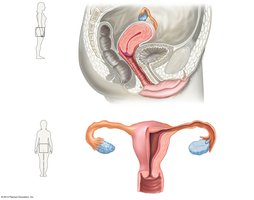
The female reproductive system includes organs for egg production, fertilization, and embryonic development.
Ovary: Produces eggs.
Oviduct (fallopian tube): Site of fertilization.
Uterus: Site of embryonic development.
Cervix and vagina: Pathways for sperm entry and birth.
Sex Hormones and Regulation
The Role of Sex Hormones in Mammalian Reproduction
Sex hormones regulate reproductive development, gametogenesis, and sexual maturation.
Testosterone: Main male sex hormone, produced in testes.
Estradiol: Main female sex hormone, produced in ovarian follicles.
Gonadal hormones: Include testosterone and estradiol.
Control of Puberty
Puberty is initiated by increased levels of sex hormones, regulated by gonadotropin-releasing hormone (GnRH) from the hypothalamus.
GnRH: Stimulates release of LH and FSH from the anterior pituitary.
LH and FSH: Stimulate gonadal hormone production.
Regulation of Gonadal Hormones
GnRH release triggers puberty and gametogenesis. Nutritional state and hormones such as leptin may influence the timing of puberty.
Menstrual Cycle
Hormonal Control of the Menstrual Cycle
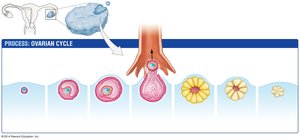
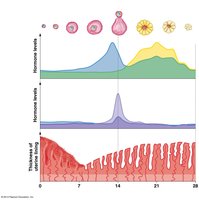
The menstrual cycle is a monthly process involving the ovary and uterus, regulated by hormones. It consists of two phases: follicular and luteal.
Follicular phase: Follicle growth and maturation; ends with ovulation.
Luteal phase: Formation and degeneration of corpus luteum.
Hormonal Changes During the Menstrual Cycle
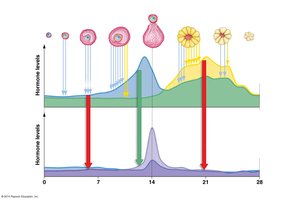
LH and FSH are produced in response to GnRH, while estradiol and progesterone are produced in the ovaries. Feedback mechanisms regulate hormone levels.
Negative feedback: Suppresses LH and FSH production.
Positive feedback: Triggers LH surge and ovulation.
Manipulating Hormone Levels to Prevent Pregnancy
Hormone-based birth control methods deliver synthetic hormones to suppress ovulation by inhibiting GnRH, LH, and FSH release.
Pregnancy and Birth in Mammals
Mammalian Lineages and Modes of Reproduction
Mammals are classified by their reproductive strategies:
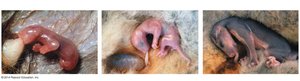
Monotremes: Lay eggs.
Eutherians: Placental mammals; offspring develop internally.
Marsupials: Offspring develop externally in a pouch.
Major Events During Human Pregnancy
Human pregnancy involves fertilization, implantation, gestation, and birth. The egg is viable for less than 24 hours, while sperm can fertilize for up to 5 days.
Implantation
The zygote moves to the uterus and implants in the uterine wall. The embryo secretes human chorionic gonadotropin (hCG), which maintains the corpus luteum and progesterone production, arresting the menstrual cycle.
Gestation
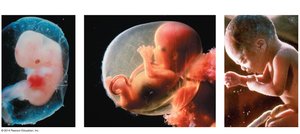
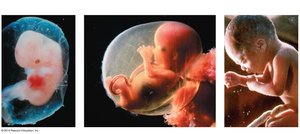
Gestation is divided into three trimesters, each with distinct developmental milestones.
First trimester: Formation of embryonic tissues and organs; embryo becomes a fetus.
Second and third trimesters: Growth and maturation, especially of the brain and lungs.
Maternal Adaptations During Pregnancy
Maternal respiratory and circulatory systems adapt to meet the oxygen and nutritional demands of the fetus. Fetal blood has a higher affinity for oxygen than maternal blood.
Toxic Chemicals Transfer from Mother to Fetus
Substances such as alcohol can cross the placenta and affect fetal development, leading to conditions like fetal alcohol syndrome (FAS).
Human Birth
Birth is initiated by oxytocin, which stimulates uterine contractions. The process involves dilation of the cervix, delivery of the infant, and delivery of the placenta.
----------------------------------------
