 Back
BackAnimal Reproduction and Hormonal Regulation Study Guide
Study Guide - Smart Notes
 Tailored notes based on your materials, expanded with key definitions, examples, and context.
Q1. Which hormone is secreted from the pineal gland in the brain and promotes sleep?
Background
Topic: Endocrine System and Hormonal Regulation
This question tests your knowledge of the hormones produced by various glands in the brain, specifically the pineal gland, and their physiological effects.

Key Terms:
Pineal gland: A small endocrine gland in the brain that regulates sleep-wake cycles.
Melatonin: A hormone produced by the pineal gland, involved in regulating circadian rhythms and promoting sleep.
Oxytocin: A hormone involved in social bonding and childbirth, produced by the hypothalamus and released by the pituitary gland.
Melanocyte stimulating hormone (MSH): A hormone produced by the pituitary gland, involved in skin pigmentation.
T4 (thyroxine): A hormone produced by the thyroid gland, involved in metabolism.
Step-by-Step Guidance
Recall the location and function of the pineal gland in the brain.
Identify which hormone is specifically associated with sleep regulation and circadian rhythms.
Compare the functions of the listed hormones to determine which one matches the description.
Eliminate the hormones that are not produced by the pineal gland or do not promote sleep.
Try solving on your own before revealing the answer!
Final Answer: Melatonin
Melatonin is secreted by the pineal gland and is responsible for regulating sleep and circadian rhythms.
Q2. How do most animals reproduce?
Background
Topic: Animal Reproduction
This question tests your understanding of the primary modes of reproduction in the animal kingdom, including sexual, asexual, and hermaphroditic reproduction.
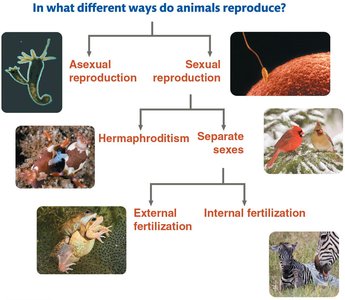
Key Terms:
Sexual reproduction: Involves the fusion of gametes (egg and sperm) from two parents.
Asexual reproduction: Involves a single parent and produces offspring genetically identical to the parent.
Hermaphroditism: Each individual has both male and female reproductive systems.
Step-by-Step Guidance
Recall the main types of reproduction found in animals.
Consider which mode is most common among animal species.
Think about the advantages of sexual reproduction, such as genetic diversity.
Eliminate options that are less common or only occur in specific groups.
Try solving on your own before revealing the answer!
Final Answer: Sexually
Most animals reproduce sexually, which allows for genetic variation and adaptation.
Q3. In humans, sexual reproduction is regulated by hormones from the:
Background
Topic: Hormonal Control of Reproductive Cycles
This question tests your understanding of the endocrine system's role in regulating human sexual reproduction, including the hypothalamus, pituitary gland, and gonads.
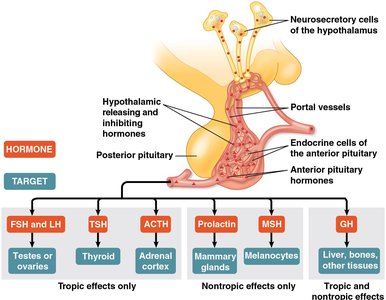
Key Terms:
Hypothalamus: Secretes GnRH (gonadotropin releasing hormone).
Pituitary gland: Releases FSH (follicle-stimulating hormone) and LH (luteinizing hormone).
Gonads: Produce sex hormones (testosterone, estrogen, progesterone).
Step-by-Step Guidance
Recall the sequence of hormonal control in human reproduction.
Identify the role of each gland in the regulation of reproductive hormones.
Consider whether all listed glands contribute to the regulation of sexual reproduction.
Eliminate options that do not include all relevant glands.
Try solving on your own before revealing the answer!
Final Answer: All of the above
Sexual reproduction in humans is regulated by hormones from the hypothalamus, pituitary gland, and gonads.
