 Back
Animal Reproduction and Human Reproductive Systems: Study Notes
Study Guide - Smart Notes
 Tailored notes based on your materials, expanded with key definitions, examples, and context.
Animal Reproduction
Modes of Animal Reproduction
Animals reproduce by either asexual or sexual means, each with distinct biological and evolutionary implications.
Asexual reproduction: Involves a single parent producing offspring by mitotic division. Offspring are usually genetically identical to the parent.
Sexual reproduction: Involves the fusion of sperm and egg to form a diploid zygote. Offspring inherit genes from both parents, increasing genetic variation.
Asexual Reproduction Mechanisms
Asexual reproduction is efficient and does not require finding a mate. Several mechanisms are observed in animals:
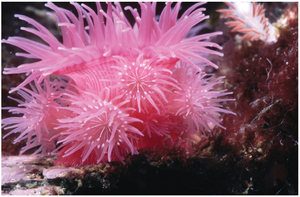
Budding: A small bud grows on the parent’s body, develops into a miniature animal, then detaches and grows independently. Common in sponges and cnidarians, including corals and anemones.
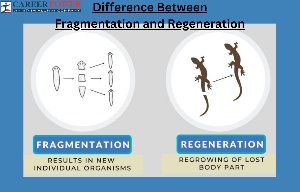
Fragmentation and Regeneration: Fragmentation occurs when an animal’s body splits at specific locations. Regeneration follows, with each fragment regrowing missing body parts.
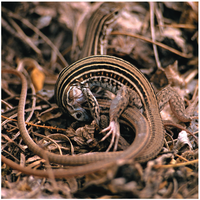
Parthenogenesis: Eggs develop into offspring without fertilization. In honeybees, unfertilized haploid eggs develop into males. Some fish, amphibians, and reptiles produce diploid offspring by doubling egg chromosomes.
Parthenogenesis Across Species
Parthenogenesis is widespread in certain animal groups and can result in all-female populations.
Many parthenogenetic vertebrates produce only females, such as whiptail lizards.
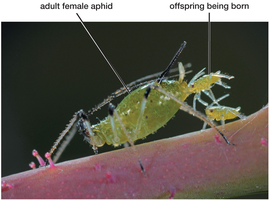
Some aphids switch between sexual reproduction and parthenogenesis depending on environmental conditions.
Sexual Reproduction and Variation
Sexual reproduction combines genetic material from two parents, increasing genetic diversity among offspring.
Most species have distinct males and females, defined by the type of gamete produced.
Sperm: Produced by testes, small and motile, with little cytoplasm.
Eggs: Produced by ovaries, larger, and contain food reserves for early development.
Fertilization restores the diploid chromosome number.
Embryos and Hermaphrodites
An embryo is an offspring in its early developmental stages. Hermaphrodites produce both sperm and eggs, often exchanging sperm with a partner.
Examples include earthworms and many snails.
Fertilization Strategies
Animals use external or internal fertilization, depending on their environment and reproductive adaptations.
External fertilization: Sperm and eggs unite outside the parents’ bodies, often in water. Spawning is coordinated by environmental cues and courtship rituals.
Internal fertilization: Sperm are placed in the female’s reproductive tract, protecting them from desiccation and increasing fertilization success.
Some animals use spermatophores, which are sperm packets transferred to the female.
Human Reproductive Systems
Hormonal Regulation of Reproduction
Human reproductive function is regulated by hormones and specialized organs.
The hypothalamus releases gonadotropin-releasing hormone (GnRH).
GnRH signals the anterior pituitary to release follicle-stimulating hormone (FSH) and luteinizing hormone (LH).
FSH and LH stimulate the gonads to produce gametes and sex hormones.
Testes produce testosterone; ovaries produce estrogen and progesterone.
Male Reproductive System
The male reproductive system produces sperm and testosterone, and transports sperm for fertilization.
The scrotum holds the testes outside the body, providing a cooler environment for sperm development.
Each testis contains seminiferous tubules, where sperm form, and interstitial cells that produce testosterone.
Spermatogonia are stem cells that give rise to sperm; Sertoli cells nourish developing sperm.
Spermatogenesis involves mitosis and meiosis, producing haploid sperm cells.
Sperm structure: head (haploid nucleus, acrosome), midpiece (mitochondria), tail (motility).
Semen combines sperm with secretions from accessory glands (seminal vesicles, prostate, bulbourethral glands).
Female Reproductive System
The female reproductive system produces eggs and supports embryo development.
Ovaries produce eggs, estrogen, and progesterone.
Fimbriae and uterine tubes guide the egg; fertilization usually occurs in a uterine tube.
The uterus supports embryo development; the cervix opens into the vagina.
Oogenesis begins before birth; primary oocytes pause in meiosis until ovulation.
The ovarian and menstrual cycles are regulated by GnRH, FSH, LH, estrogen, and progesterone.
If fertilization occurs, chorionic gonadotropin (CG) maintains the corpus luteum, supporting the endometrium.
Fertilization Process
Fertilization involves the fusion of sperm and egg, restoring the diploid chromosome number.
The secondary oocyte is surrounded by the corona radiata and zona pellucida.
Acrosomal enzymes help sperm penetrate these barriers.
Once a sperm fuses with the egg, meiosis II completes and nuclei fuse to form a zygote.
Pregnancy Prevention (Contraception)
Contraceptive Methods
Contraception prevents pregnancy by blocking ovulation, sperm-egg contact, or implantation.
Permanent methods: Sterilization (vasectomy, tubal ligation) blocks gamete pathways.
Temporary methods: Hormonal methods (pills, patches, rings, injections, implants) mainly prevent ovulation; barriers prevent sperm from reaching the egg; IUDs and emergency contraception work in other ways.
Most methods do not protect against STDs; abstinence prevents both pregnancy and STDs.
Male contraceptive methods are under development.
Hormonal Contraception
Hormonal contraceptives use synthetic hormones to regulate ovulation and prevent pregnancy.
Estrogen suppresses FSH; progesterone suppresses the LH surge and thickens cervical mucus.
Progesterone-only methods may inhibit ovulation; effectiveness and schedules vary.
Summary Table: Asexual Reproduction Mechanisms
Mechanism | Description | Examples |
|---|---|---|
Budding | Growth of a new individual from a bud on the parent | Sponges, cnidarians |
Fragmentation & Regeneration | Body splits and fragments regrow missing parts | Starfish, some worms |
Parthenogenesis | Eggs develop without fertilization | Honeybees, whiptail lizards, aphids |
Summary Table: Human Reproductive Hormones
Hormone | Source | Main Function |
|---|---|---|
GnRH | Hypothalamus | Stimulates release of FSH and LH |
FSH | Pituitary | Stimulates gamete production |
LH | Pituitary | Triggers ovulation and testosterone production |
Testosterone | Testes | Male puberty, sperm production |
Estrogen | Ovaries | Female puberty, uterine lining growth |
Progesterone | Ovaries | Maintains uterine lining |
Key Equations
Meiosis (Gamete Formation):
Diploid cells (2n) undergo meiosis to produce haploid gametes (n).
Fertilization:
Fusion of two haploid gametes restores the diploid chromosome number.
Additional info: Academic context was added to clarify mechanisms, hormone functions, and reproductive strategies. Tables were inferred and expanded for completeness. Images were included only when directly relevant to the explanation of budding, fragmentation/regeneration, parthenogenesis, and aphid birth.
