 Back
BackAnimal Reproduction: Mechanisms, Anatomy, and Regulation
Study Guide - Smart Notes
 Tailored notes based on your materials, expanded with key definitions, examples, and context.
Animal Reproduction
Overview of Animal Reproduction
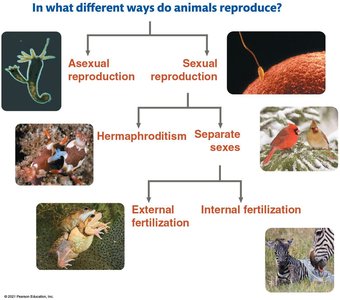
Animal reproduction encompasses a variety of mechanisms that ensure the continuation of species. These mechanisms include both asexual and sexual reproduction, each with distinct biological processes and evolutionary implications.
Sexual reproduction: Involves the fusion of haploid gametes (sperm and egg) to form a diploid zygote, resulting in genetically diverse offspring.
Asexual reproduction: Offspring are produced without the fusion of gametes, resulting in genetically identical individuals to the parent.
Mechanisms of Asexual Reproduction
Types of Asexual Reproduction
Asexual reproduction is common among invertebrates and involves several distinct mechanisms:
Budding: New individuals arise from outgrowths of existing ones (e.g., Hydra).
Fission: Parent separates into two or more individuals of similar size.
Fragmentation and Regeneration: Body breaks into pieces, each capable of developing into an adult, provided regeneration occurs.
Parthenogenesis: Development of a new individual from an unfertilized egg, observed mainly in invertebrates and rarely in vertebrates.
Variation in Patterns of Sexual Reproduction
Hermaphroditism and Sex Change
Sexual reproduction in animals can involve complex strategies to maximize reproductive success:
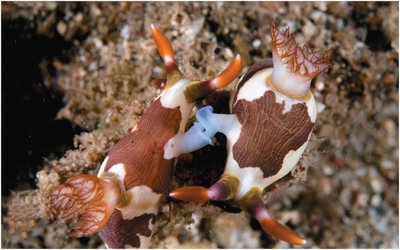
Hermaphroditism: Individuals possess both male and female reproductive systems, allowing any two individuals to mate or self-fertilize in some species.
Sex Change: Some species can change sex in response to environmental or social cues.
Reproductive Cycles and Environmental Influence
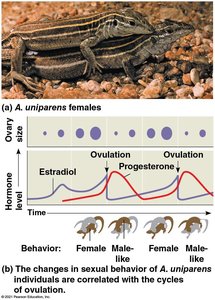
Most animals exhibit reproductive cycles influenced by environmental cues such as seasons and temperature. Hormones regulate these cycles, and ovulation marks the midpoint of the female cycle. Climate change can disrupt these cues, reducing reproductive success.
Flexible Reproductive Strategies
Some species can reproduce both sexually and asexually depending on environmental conditions. For example, Daphnia reproduce asexually in favorable conditions and sexually during stress. Whiptail lizards, which are all female, display courtship and mating behaviors correlated with hormone cycles.
Evolutionary Perspectives on Sexual Reproduction
Costs and Benefits
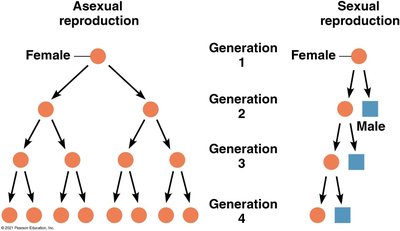
Sexual reproduction has a “twofold cost” because sexual females produce half as many daughters as asexual females. However, sexual reproduction persists because it generates genetic diversity, which is advantageous in changing environments. Asexual reproduction is favored in stable, favorable environments.
Fertilization Mechanisms
External vs. Internal Fertilization
Fertilization, the union of egg and sperm, can occur externally or internally:
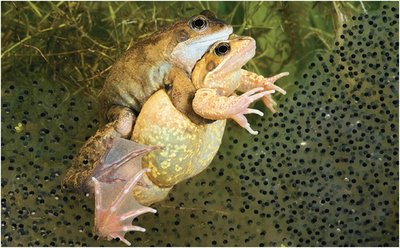
External fertilization: Eggs are released into the environment and fertilized outside the body, requiring moist habitats to prevent desiccation and allow sperm motility.
Internal fertilization: Sperm are deposited within or near the female reproductive tract, an adaptation to terrestrial life. It often involves complex mating behaviors and pheromones.
Parental Investment and Offspring Survival
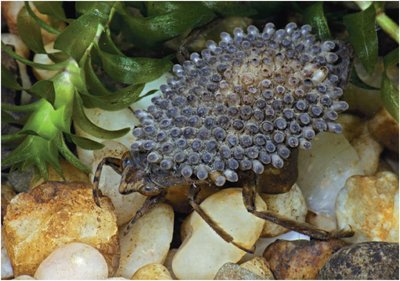
Internal fertilization is typically associated with fewer gametes but higher survival rates due to protective mechanisms (e.g., shells, membranes, parental care). Parental care strategies vary widely among species.
Reproductive Anatomy and Gamete Production
Gonads and Accessory Structures
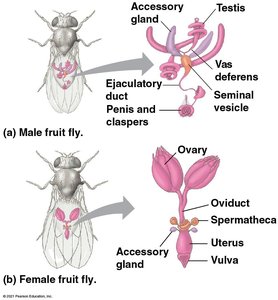
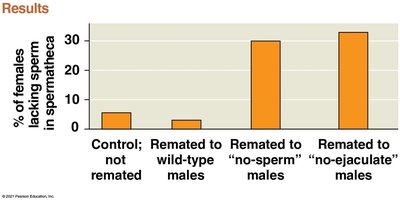
Most animals have specialized organs called gonads for gamete production. Accessory tubes and glands support gamete transport, nourishment, and protection. Insects often have complex reproductive systems, including spermathecae for sperm storage.
Specialized Openings and Mating Systems
Nonmammalian vertebrates often have a cloaca, a common opening for digestive, excretory, and reproductive systems. Monogamy is rare, and both sexes may evolve strategies to maximize reproductive success.
Human Reproductive Anatomy
Male Reproductive System
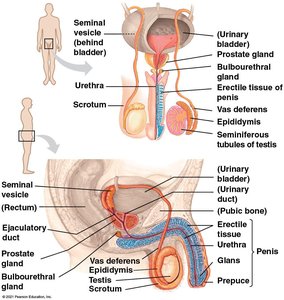
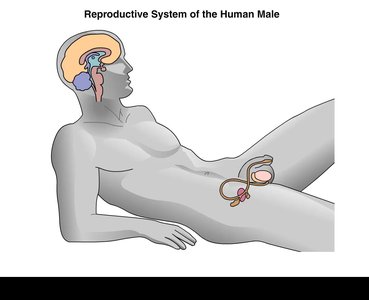
The human male reproductive system includes external organs (scrotum, penis) and internal structures (testes, ducts, accessory glands):
Testes: Produce sperm in seminiferous tubules; located in the scrotum for optimal temperature.
Ducts: Sperm travel from seminiferous tubules to epididymis, then through vas deferens and urethra during ejaculation.
Accessory glands: Seminal vesicles, prostate gland, and bulbourethral glands contribute to semen composition.
Penis: Contains erectile tissue and is involved in copulation and sperm delivery.
Female Reproductive System
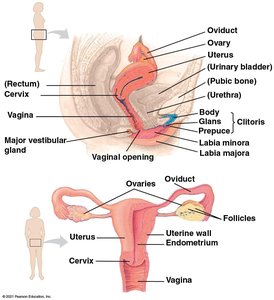
The human female reproductive system includes external structures (clitoris, labia) and internal organs (ovaries, oviducts, uterus, vagina):
Ovaries: Contain follicles with developing oocytes.
Oviducts (fallopian tubes): Transport eggs from ovaries to uterus; site of fertilization.
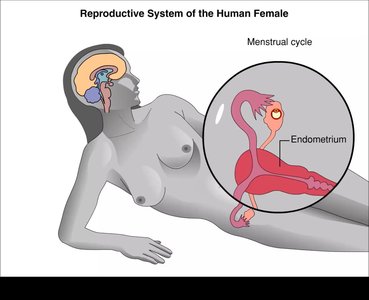
Uterus: Site of embryo implantation and fetal development; lined by endometrium.
Vagina: Muscular chamber for sperm reception and birth canal.
Mammary glands: Produce milk for offspring (not part of reproductive tract but essential for mammalian reproduction).
Gametogenesis
Spermatogenesis
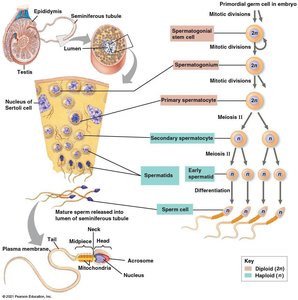
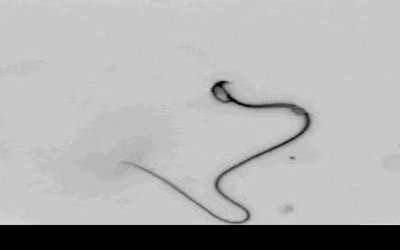
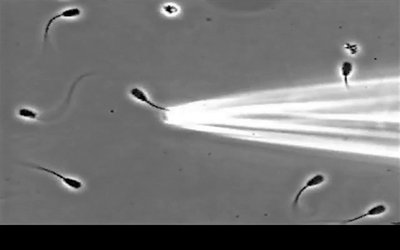
Spermatogenesis is the continuous and prolific production of sperm in males. It occurs in the seminiferous tubules and involves mitosis, meiosis, and differentiation.
All four products of meiosis become sperm.
Occurs throughout adolescence and adulthood without prolonged interruptions.
Oogenesis
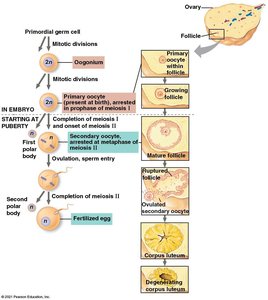
Oogenesis is the prolonged process of egg development in females. Immature eggs form during embryonic development but complete maturation years later.
Only one of the four meiotic products becomes a mature egg; the rest form polar bodies.
Oogenesis has long interruptions and is not continuous.
Hormonal Regulation of Reproduction
Hormonal Control in Mammals
Reproductive processes are regulated by hormones from the hypothalamus, anterior pituitary, and gonads:
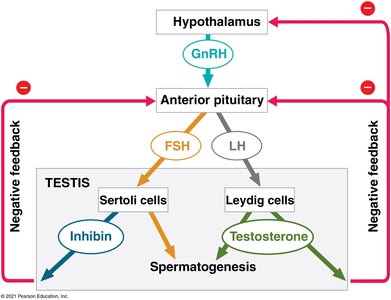
GnRH (gonadotropin-releasing hormone): Released by hypothalamus, stimulates anterior pituitary to secrete FSH and LH.
FSH (follicle-stimulating hormone) and LH (luteinizing hormone): Stimulate gonadal hormone production and gametogenesis.
Sex hormones: Androgens (testosterone), estrogens (estradiol), and progesterone regulate sexual development and function.

Hormonal Control of Male Reproductive System
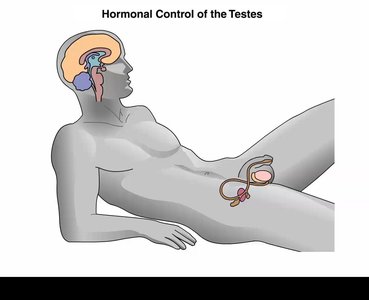
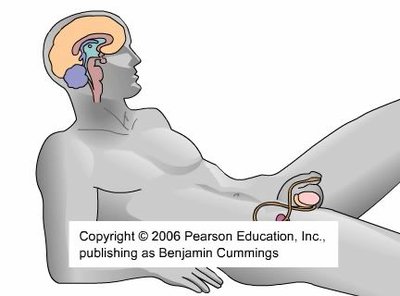
FSH stimulates Sertoli cells for sperm nourishment; LH stimulates Leydig cells to produce testosterone, which promotes spermatogenesis. Negative feedback by testosterone and inhibin regulates hormone levels.
Hormonal Control of Female Reproductive Cycles
Female reproductive cycles are regulated by coordinated hormonal changes:
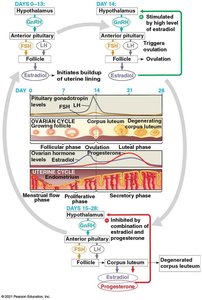
Ovarian cycle: Follicle growth, ovulation, and corpus luteum formation regulated by FSH, LH, and estradiol.
Uterine (menstrual) cycle: Endometrial thickening, maintenance, and shedding coordinated with ovarian hormones.
Human Sexuality and Reproductive Health
Biological Sex, Gender Identity, and Sexual Orientation
Biological sex is determined by genitals and chromosomes at birth. Gender identity is an individual's internal sense of gender, which may or may not align with biological sex. Sexual orientation refers to the gender(s) to whom an individual is attracted.
Menstrual and Estrous Cycles
Humans and some primates have menstrual cycles, characterized by shedding of the endometrium and continuous sexual receptivity. Most mammals have estrous cycles, where the endometrium is reabsorbed and sexual receptivity is limited to estrus (“heat”).
Embryonic Development and Birth
Conception and Early Development
Fertilization (conception) occurs in the oviduct, followed by cleavage and formation of a blastocyst. The embryo implants in the endometrium, initiating pregnancy (gestation).
Pregnancy and Birth
Human gestation lasts about nine months, divided into three trimesters. The placenta forms to nourish the embryo. Labor involves uterine contractions regulated by hormones, resulting in birth and delivery of the placenta. Lactation provides postnatal nourishment.
Contraception, Abortion, and Reproductive Technologies
Contraceptive Methods
Contraception prevents pregnancy by inhibiting gamete release, blocking fertilization, or preventing implantation. Methods include hormonal pills, IUDs, barrier devices, sterilization, and natural family planning. Only latex condoms prevent sexually transmitted diseases.
Infertility and Assisted Reproductive Technologies
Infertility can affect both sexes and may be treated with in vitro fertilization (IVF) or direct sperm injection. Genetic testing of embryos is possible but raises ethical concerns.
Summary Table: Comparison of Asexual and Sexual Reproduction
Feature | Asexual Reproduction | Sexual Reproduction |
|---|---|---|
Genetic Variation | Low (clones) | High (recombination) |
Energy Cost | Low | High |
Speed | Fast | Slower |
Adaptation to Environment | Stable environments | Changing environments |
