 Back
BackAnimal Structure and Function: Form, Physiology, Thermoregulation, and Bioenergetics
Study Guide - Smart Notes
 Tailored notes based on your materials, expanded with key definitions, examples, and context.
Animal Structure and Function
Form and Function
The study of animal structure and function encompasses both anatomy (the biological form of an organism) and physiology (the biological functions an organism performs). Comparative studies reveal that form and function are closely correlated, and animal body plans are determined by the genome. The size and shape of animals affect their interaction with the environment and are subject to physical constraints and evolutionary adaptation.
Anatomy: Study of structure.
Physiology: Study of function.
Comparative study: Reveals correlation between form and function.
Genome: Determines body plan.
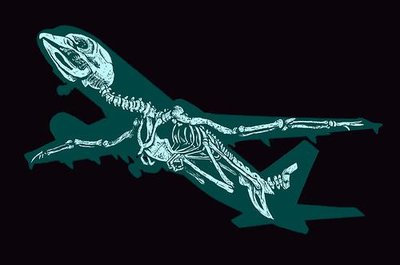
Physical Constraints and Convergent Evolution
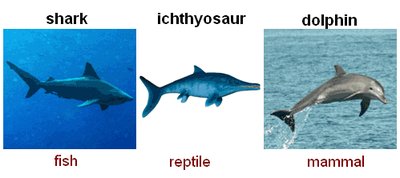
Physical laws impose constraints on animal size and shape, affecting their ability to perform certain actions. Convergent evolution occurs when different species independently evolve similar adaptations to similar environmental challenges.
Examples: Birds and bats (flight), dolphins and fish (streamlined bodies), marsupial wolf and canids (similar predatory adaptations).
Physical constraints: Shape, size, and environment limit possible adaptations.
Exchange with the Environment
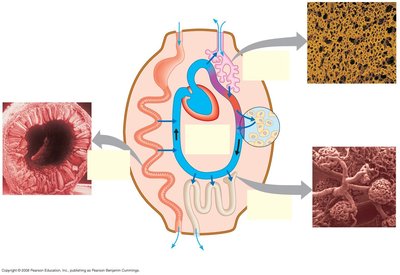
Animal size and shape affect exchanges of energy and materials with their surroundings. Exchange occurs via diffusion and active transport, and is influenced by the surface-to-volume ratio. Single-celled organisms have sufficient surface area for exchange, while multicellular animals require specialized systems.
Surface-to-volume ratio: Limits efficiency of exchange in larger organisms.
Specialized systems: Digestive, circulatory, respiratory, and excretory systems facilitate exchange.
Example: Lining of the small intestine increases surface area for nutrient absorption.
Tissue Structure and Function
Types of Animal Tissues
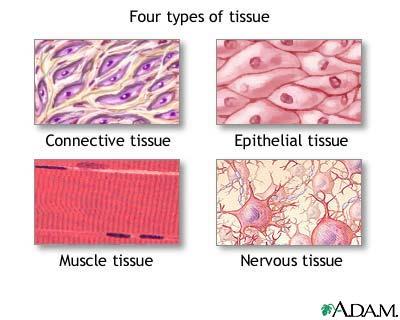
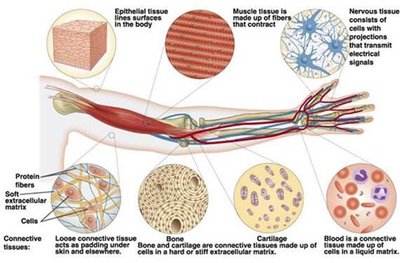
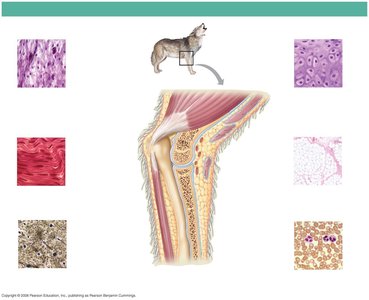
Animal tissues are classified into four main categories: connective, muscle, epithelial, and nervous tissue. Each type has distinct structures suited to their functions.
Connective tissue: Supports and binds other tissues.
Muscle tissue: Contracts for movement.
Epithelial tissue: Covers surfaces and lines cavities.
Nervous tissue: Transmits signals.
Epithelial Tissue
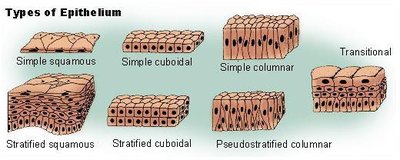
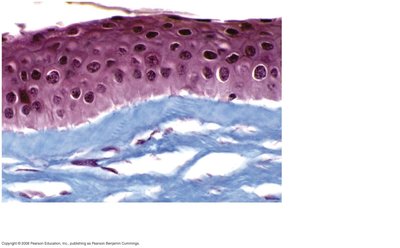
Epithelial tissue covers the outside of the body and lines organs and cavities. Cells are closely joined and avascular. Epithelial cells are classified by shape: cuboidal, columnar, or squamous, and by arrangement: simple, stratified, or pseudostratified.
Functions: Protection, absorption, secretion.
Shapes: Cuboidal (cube-like), columnar (tall), squamous (flat).
Arrangements: Simple (single layer), stratified (multiple layers), pseudostratified (appears layered).
Connective Tissue
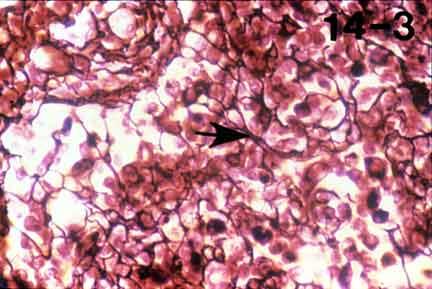
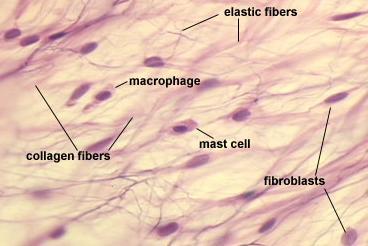
Connective tissue consists of cells in an extracellular matrix, which may be liquid, jellylike, or solid. It binds and supports other tissues. There are three types of connective tissue fibers: collagen (strength and flexibility), elastic (stretch and recoil), and reticular (connects tissues).
Cells: Fibroblasts (secrete fibers), macrophages (immune function).
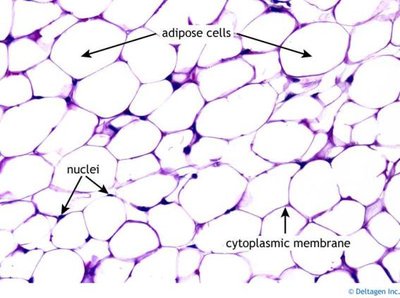
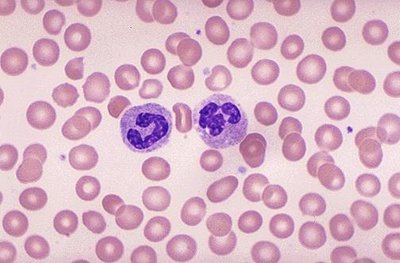
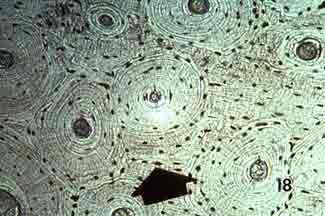
Types: Loose connective, cartilage, fibrous connective (tendons, ligaments), adipose, blood, bone.
Muscle Tissue
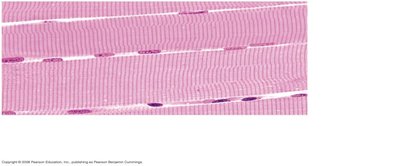
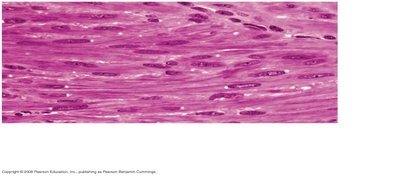
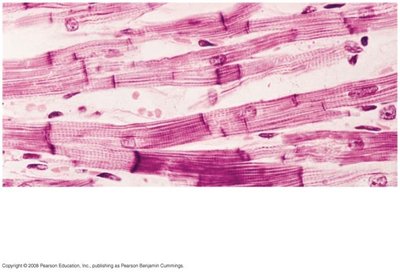
Muscle tissue consists of long cells called muscle fibers that contract in response to nerve signals. There are three types: skeletal (voluntary movement), smooth (involuntary activities), and cardiac (heart contraction).
Skeletal muscle: Striated, multiple nuclei, voluntary.
Smooth muscle: Non-striated, single nucleus, involuntary.
Cardiac muscle: Striated, intercalated disks, involuntary.
Nervous Tissue
Nervous tissue senses stimuli and transmits signals throughout the animal. It contains neurons (transmit impulses) and glial cells (support neurons).
Neurons: Specialized for communication.
Glial cells: Nourish, insulate, and replenish neurons.
Coordination and Control
Nervous vs. Endocrine Systems
Animals coordinate internal functions using the nervous and endocrine systems. The nervous system provides fast, targeted signaling via action potentials, while the endocrine system uses hormones for slower, widespread signaling.
Nervous system: Fast, specific, uses action potentials.
Endocrine system: Slow, broad, uses hormones.
Hormones: Chemical signals affecting target organs.
Regulation and Homeostasis
Regulators vs. Conformers
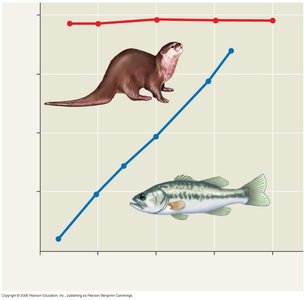
Animals manage their internal environment by regulating or conforming to external conditions. Regulators use internal mechanisms to maintain stability, while conformers allow internal conditions to vary with the environment.
Regulator: Maintains internal stability.
Conformer: Internal conditions change with environment.
Homeostasis
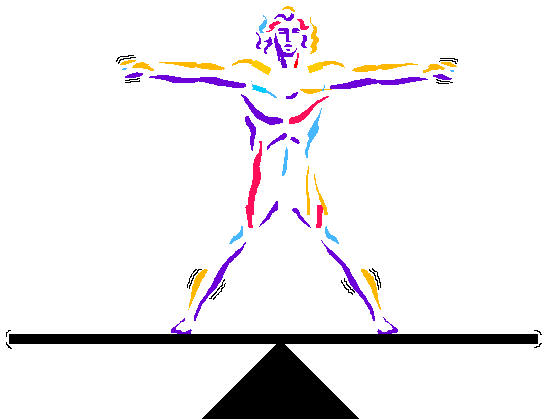
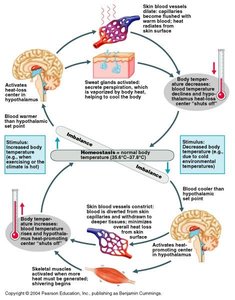
Homeostasis is the maintenance of a steady internal state regardless of external environment. Mechanisms moderate changes, using sensors and control centers to return variables to set points.
Examples: Body temperature, blood pH, glucose concentration.
Mechanism: Sensor detects stimulus, triggers response, returns variable to set point.
Feedback Loops
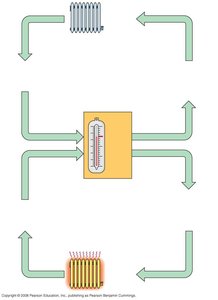
Homeostasis is maintained by negative feedback loops, which return variables to normal range. Positive feedback loops are rare and amplify changes.
Negative feedback: Buildup of end product shuts system off.
Positive feedback: Amplifies change, not usually homeostatic.
Alterations and Acclimatization
Set points and normal ranges can change with age or cyclic variation. Acclimatization is the adjustment of homeostasis to changes in the external environment.
Thermoregulation
Endothermy vs. Ectothermy
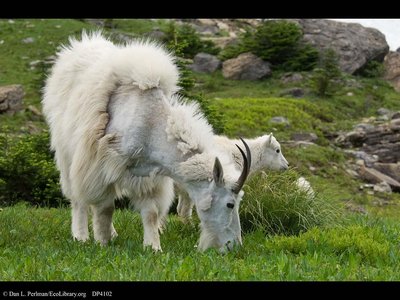
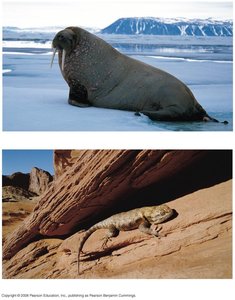
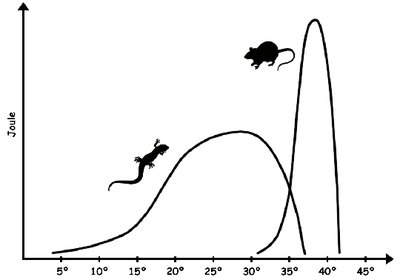
Thermoregulation is the maintenance of internal temperature within a tolerable range. Endotherms generate heat by metabolism (birds, mammals), while ectotherms gain heat from external sources (invertebrates, fishes, amphibians, reptiles).
Endothermy: Allows activity at wider temperature range, energetically expensive.
Ectothermy: Tolerates greater variation, less energy required.
Variation in Body Temperature
Poikilotherms have body temperature that varies with the environment, while homeotherms maintain a relatively constant internal temperature.
Balancing Heat Loss and Gain
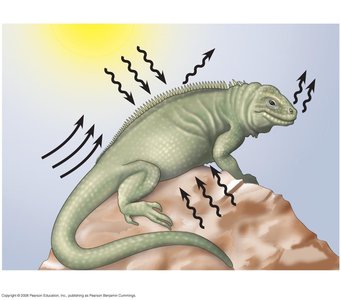
Organisms exchange heat with their environment by conduction, convection, radiation, and evaporation. Five general adaptations help animals thermoregulate: insulation, circulatory adaptations, evaporative cooling, behavioral responses, and metabolic heat production.
Conduction: Direct transfer of heat.
Convection: Heat transfer by fluid movement.
Radiation: Emission of electromagnetic waves.
Evaporation: Loss of heat via water vapor.
Insulation
Insulation is a major thermoregulatory adaptation in mammals and birds. Skin, feathers, fur, and blubber reduce heat flow between the animal and its environment.
Circulatory Adaptations
Regulation of blood flow near the body surface affects thermoregulation. Vasodilation increases blood flow and heat loss; vasoconstriction decreases blood flow and heat loss. Countercurrent exchange allows transfer of heat between fluids flowing in opposite directions, reducing heat loss.
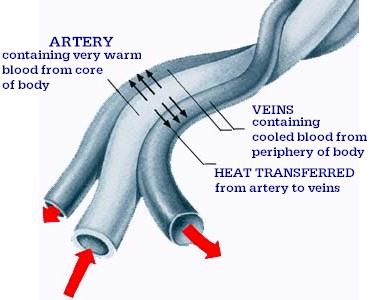
Cooling by Evaporative Heat Loss
Many animals lose heat through evaporation of water in sweat. Panting increases cooling in birds and mammals.
Behavioral Responses
Both endotherms and ectotherms use behavioral responses to control body temperature, such as seeking shade or sun, changing posture, or migrating.
Adjusting Metabolic Heat Production
Some animals regulate body temperature by adjusting their rate of metabolic heat production. Heat production can be increased by muscle activity, such as shivering.
Acclimatization in Thermoregulation
Birds and mammals can vary their insulation to acclimatize to seasonal temperature changes. Some ectotherms produce antifreeze compounds to prevent ice formation in cells.
Physiological Thermostats and Fever
Thermoregulation is controlled by the hypothalamus, which triggers heat loss or heat-generating mechanisms. Fever is a result of a change to the set point for a biological thermostat.
Bioenergetics and Metabolic Rate
Bioenergetics
Bioenergetics is the overall flow and transformation of energy in an animal. It determines how much food an animal needs and relates to size, activity, and environment.
ATP: Produced from chemical energy in food.
Biosynthesis: Growth, repair, storage, gamete production.
Metabolic Rate
Metabolic rate is the amount of energy an animal uses in a unit of time. It is measured by oxygen consumption or carbon dioxide production.
Basal metabolic rate (BMR): Endotherm at rest at comfortable temperature.
Standard metabolic rate (SMR): Ectotherm at rest at specific temperature.
Factors: Size, activity, environment.
Energy Budgets
Different species use energy and materials in food in different ways, depending on their environment. Energy is partitioned to BMR/SMR, activity, thermoregulation, growth, and reproduction.
Torpor and Energy Conservation
Torpor is a physiological state of low activity and decreased metabolism, enabling animals to save energy. Hibernation is long-term torpor for winter survival; estivation is summer-long torpor for surviving high temperatures and scarce water. Daily torpor is exhibited by many small mammals and birds.
Key Terms and Comparisons
Fiber Types in Connective Tissue
Collagenous fibers: Strength and flexibility.
Elastic fibers: Stretch and recoil.
Reticular fibers: Connect tissues.
Regulator vs. Conformer
Regulator: Maintains internal stability.
Conformer: Internal conditions change with environment.
Positive vs. Negative Feedback
Negative feedback: Returns variable to set point.
Positive feedback: Amplifies change.
Basal vs. Standard Metabolic Rate
BMR: Endotherm at rest.
SMR: Ectotherm at rest.
Torpor, Hibernation, Estivation, Daily Torpor
Torpor: Short-term low metabolism.
Hibernation: Long-term torpor (winter).
Estivation: Long-term torpor (summer).
Daily torpor: Short-term, daily cycle.
Summary Table: Animal Tissue Types
Tissue Type | Main Function | Example |
|---|---|---|
Connective | Support, bind | Bone, blood, cartilage |
Muscle | Movement | Skeletal, cardiac, smooth |
Epithelial | Cover, line | Skin, lining of intestine |
Nervous | Signal transmission | Brain, nerves |
Additional info: All explanations have been expanded for academic completeness and clarity. Images included are only those directly relevant to the adjacent content.
