 Back
AP Biology Chapter 1: Evolution & Foundations of Biology - Structured Study Notes
Study Guide - Smart Notes
 Tailored notes based on your materials, expanded with key definitions, examples, and context.
Introduction to Biology
Key Concepts and Themes
Biology is the scientific study of life, encompassing a vast array of topics from molecular to global scales. The discipline is unified by several core themes that help organize and explain the complexity of living systems.
Evolution: Drives the diversity and unity of life.
Energy and Matter: Biological systems utilize free energy and molecular building blocks to grow, reproduce, and maintain homeostasis.
Information: Living systems store, retrieve, transmit, and respond to information essential to life processes.
Interactions: Biological systems interact, and these interactions possess complex properties.
Organization: Life is structured in hierarchical levels, each with emergent properties.
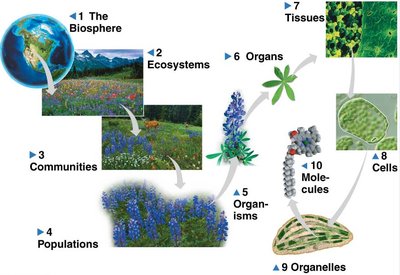
Levels of Biological Organization
Hierarchy and Emergent Properties
Biological organization ranges from molecules and cells to the biosphere. Each level exhibits emergent properties—characteristics that arise from the arrangement and interaction of parts within a system.
Reductionism: Breaking down complex systems into simpler components for study.
Systems Biology: Modeling interactions within biological systems to predict outcomes.
Structure & Function: The form of biological structures is closely related to their function.
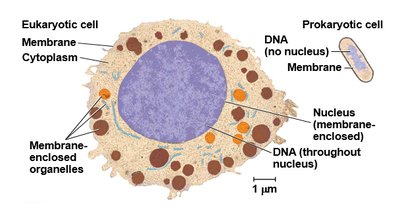
Cell Components
The Cell: Basic Unit of Life
Cells are the fundamental units of structure and function in living organisms. All cells share certain features, but are classified as prokaryotic or eukaryotic based on their internal structure.
Cell Theory:
All living things are made of one or more cells.
Cells are the basic unit of structure and function in all organisms.
All cells arise from pre-existing cells by division.
Prokaryotic Cells: Lack membrane-bound organelles and nucleus (e.g., Eubacteria, Archaebacteria).
Eukaryotic Cells: Have a membrane-bound nucleus and organelles (e.g., Paramecium, Mushroom, Dandelion, Human).
All cells contain DNA, plasma membrane, ribosomes, and cytosol.
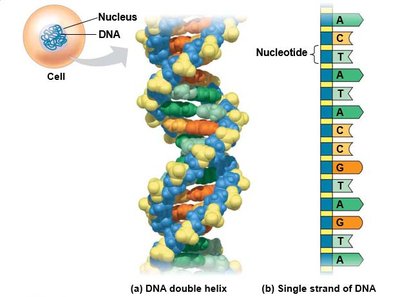
Gene Expression and Information Flow
DNA, Genes, and Protein Synthesis
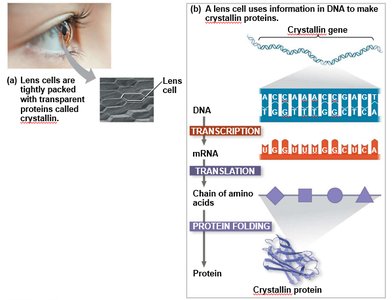
Genetic information is stored in DNA and transmitted through generations. The process of gene expression involves transcription and translation, resulting in the synthesis of proteins.
Chromosomes: Structures containing DNA.
Nucleotides: Building blocks of DNA.
Gene Expression: The process by which information in a gene directs the production of a cellular product.
Protein Synthesis:
DNA is transcribed into mRNA.
mRNA is translated into a polypeptide chain.
The polypeptide folds into a functional protein.
The universality of the genetic code supports the idea that all life is related.
Energy and Metabolism
Energy Flow and Chemical Cycling
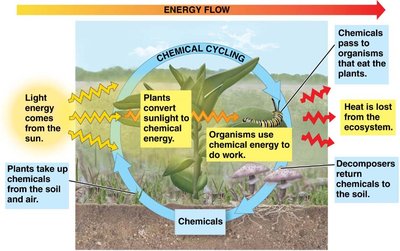
Life requires the transfer and transformation of energy and matter. Energy flows one-way through ecosystems, while nutrients are cycled.
Producers: Organisms that convert light energy to chemical energy via photosynthesis (autotrophs).
Consumers: Organisms that obtain energy by feeding on other organisms (heterotrophs).
Energy enters as sunlight, is converted to chemical energy (e.g., glucose), and is lost as heat.
Nutrients are cycled within ecosystems, primarily through decomposition.
Evolution
Unity and Diversity of Life
Evolution is the central theme of biology, explaining both the unity and diversity of life. All organisms are connected through common ancestry and have been modified over time.
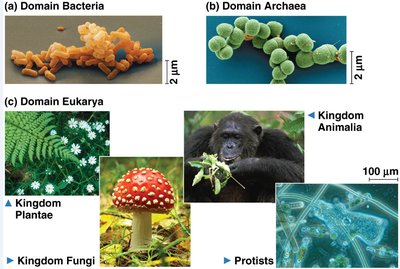
Three Domains: Bacteria, Archaea, Eukarya (which includes Protista, Fungi, Plantae, Animalia).
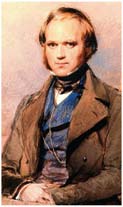
Descent with Modification: Darwin's phrase for evolution.
Evidence for Evolution: Fossil record, biogeography, DNA similarities, embryology, structural comparison.
Natural Selection
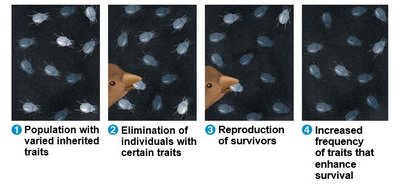
Natural selection is the mechanism by which evolution occurs. It is based on variation, competition, and adaptation within populations.
Variation of heritable traits within populations.
Competition for survival due to overproduction of offspring.
Adaptation to environments.
Individuals with advantageous traits are more likely to survive and reproduce.
Fitness is defined as contribution to the next generation.
Adaptive Radiation and Common Ancestry
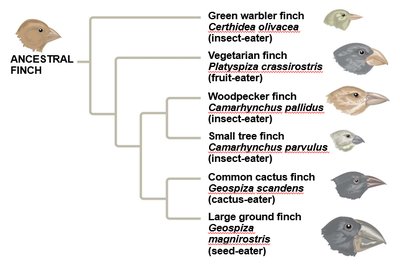
Adaptive radiation occurs when new species evolve from a common ancestor, often due to geographic isolation. The family tree of finches illustrates this concept.
Species sharing a recent common ancestor are more similar.
Universal genetic code is evidence of common ancestry.
Unity Within Diversity
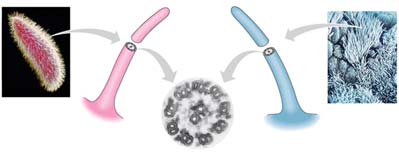
Similar structures in diverse organisms, such as cilia in protists and humans, demonstrate unity within diversity and evidence of common ancestry.
Scientific Inquiry and Hypothesis Testing
Scientific Method and Reasoning
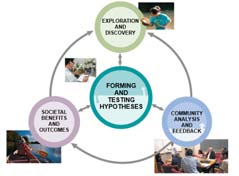
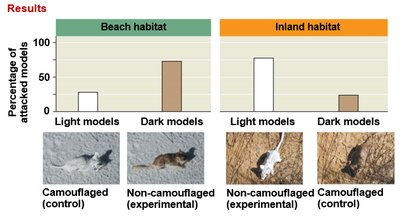
Science is a way of knowing, relying on inquiry, observation, and hypothesis testing. Data can be qualitative or quantitative, and reasoning can be inductive or deductive.
Hypothesis: Explanation based on observations that leads to a testable prediction.
Experiment: Scientific test under controlled conditions.
Variables:
Independent variable: Manipulated factor (e.g., mouse model color).
Dependent variable: Measured outcome (e.g., predation rate).
Control Group: Group matching native conditions.
Experimental Group: Group with altered conditions.
Characteristics of Life
Qualities Shared by Living Things
All living organisms share certain characteristics, including order, reproduction, growth and development, energy processing, response to environment, regulation, and evolutionary adaptation.
Order: Organization of component parts.
Reproduction: Life arises from other life (biogenesis).
Growth and Development: Directed by genetic information.
Energy Processing: Input of energy to offset entropy.
Response to Environment: Reaction to stimuli.
Regulation: Maintenance of homeostasis.
Evolutionary Adaptation: Genetic changes for reproductive success.
Classification and Domains of Life
Domain and Kingdom System
Organisms are classified into hierarchical groups based on shared characteristics and evolutionary relationships. The three-domain system includes Bacteria, Archaea, and Eukarya, with Eukarya further divided into four kingdoms.
Domain: Highest taxonomic rank.
Kingdom: Major groups within domains.
Summary Table: Prokaryotic vs. Eukaryotic Cells
Feature | Prokaryotic Cell | Eukaryotic Cell |
|---|---|---|
Nucleus | Absent | Present |
Membrane-bound Organelles | Absent | Present |
DNA Location | Throughout cell | Within nucleus |
Examples | Bacteria, Archaea | Plants, Animals, Fungi, Protists |
Summary Table: Domains and Kingdoms
Domain | Kingdom(s) | Characteristics |
|---|---|---|
Bacteria | Eubacteria | Prokaryotic, unicellular |
Archaea | Archaebacteria | Prokaryotic, unicellular, extremophiles |
Eukarya | Protista, Fungi, Plantae, Animalia | Eukaryotic, unicellular or multicellular |
Summary Table: Scientific Method Steps
Step | Description |
|---|---|
Observation | Careful and repetitive examination of phenomena |
Hypothesis | Testable explanation based on observations |
Experiment | Controlled test of the hypothesis |
Data Collection | Gathering qualitative and quantitative data |
Analysis | Interpreting results and drawing conclusions |
Key Equations and Formulas
Photosynthesis:
Cellular Respiration:
Additional info:
Inductive reasoning is used to generalize from specific observations, while deductive reasoning applies general principles to specific cases.
Scientific theories are broader than hypotheses and supported by extensive evidence.
Homeostasis is the process by which organisms maintain a stable internal environment.
Adaptive traits increase reproductive success and are favored by natural selection.
