 Back
AP Biology Exam Review: Chemistry of Life and Biological Macromolecules
Study Guide - Smart Notes
 Tailored notes based on your materials, expanded with key definitions, examples, and context.
Chemistry of Life
Matter and Elements
The foundation of biological chemistry begins with understanding matter, elements, and compounds. Elements are substances that cannot be broken down by chemical reactions, while compounds are combinations of two or more elements in fixed ratios. The most abundant elements in living organisms are carbon (C), hydrogen (H), oxygen (O), and nitrogen (N), which together make up 96% of living matter.
Atoms consist of protons, neutrons, and electrons.
Isotopes are variants of elements with different numbers of neutrons.
Chemical Bonding
Chemical bonds form through interactions between valence electrons of atoms. The type of bond determines the properties and functions of molecules.
Covalent bonds: Electrons are shared between atoms.
Nonpolar covalent: Electrons shared equally.
Polar covalent: Electrons shared unequally due to differences in electronegativity.
Ionic bonds: Electrons are transferred from one atom to another, resulting in charged ions that attract each other.
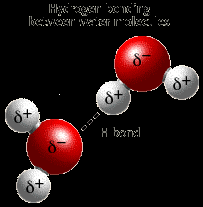
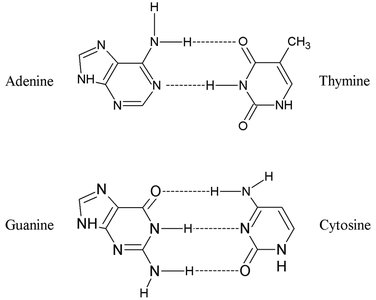
Hydrogen bonds: Weak bonds formed between a partially positive hydrogen atom and an electronegative atom (such as oxygen or nitrogen) of another molecule.
Chemical Reactions
Chemical reactions involve the transformation of reactants into products. These reactions are fundamental to metabolism and cellular processes.
Reactants are the starting substances.
Products are the resulting substances after the reaction.
Water and Life
Structure of Water
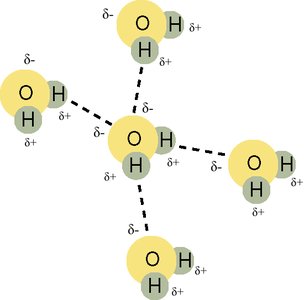
Water is a polar molecule, with the oxygen atom carrying a partial negative charge and the hydrogen atoms carrying partial positive charges. This polarity leads to hydrogen bonding between water molecules.
Polar covalent bonds within a water molecule.
Hydrogen bonds between water molecules.
Properties of Water
Water's unique properties are essential for life and are largely due to hydrogen bonding.
Cohesion: Water molecules stick to each other.
Adhesion: Water molecules stick to other substances.
High specific heat: Water resists temperature changes.
Insulation by ice: Ice is less dense than liquid water, allowing it to float and insulate bodies of water.
Solvent properties: Water dissolves hydrophilic substances.
pH and Buffers
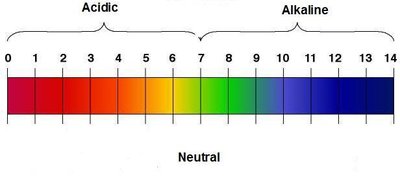
The pH scale measures the acidity or alkalinity of a solution, ranging from 0 (acidic) to 14 (alkaline). Pure water is neutral with a pH of 7. Buffers help maintain stable pH in biological systems by accepting or donating H+ ions.
Acids: Excess H+ ions, pH below 7.
Bases: Excess OH- ions, pH above 7.
Buffers: Minimize changes in pH.
Carbon and the Molecular Diversity of Life
Organic Compounds and Isomers
Organic compounds contain carbon and hydrogen. Carbon's ability to form four covalent bonds allows for a diversity of molecular structures, including isomers—molecules with the same formula but different arrangements.
Major elements: C, H, O, N, P, S.
Isomers: Structural, geometric, and optical isomers.
Functional Groups
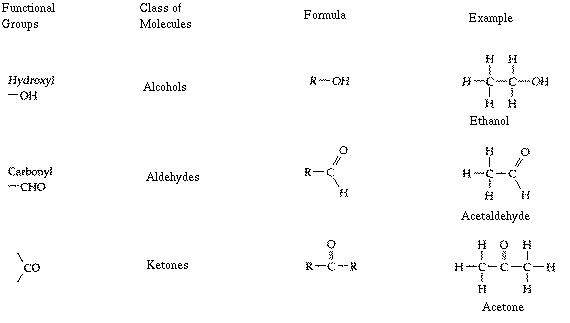
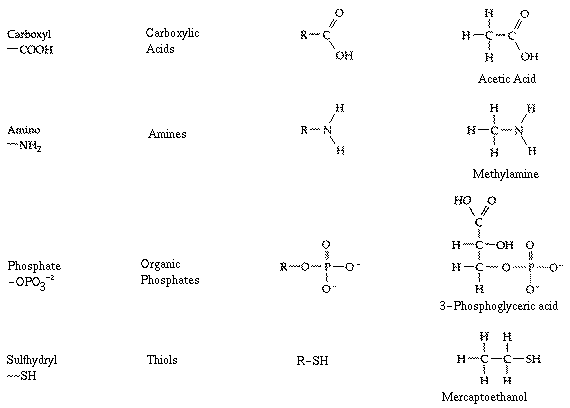
Functional groups are specific groups of atoms attached to carbon skeletons that confer distinct chemical properties to organic molecules.
Hydroxyl (-OH): Alcohols
Carboxyl (-COOH): Carboxylic acids
Amino (-NH2): Amines
Phosphate (-OPO32-): Organic phosphates
Sulfhydryl (-SH): Thiols
Functional Group | Class of Molecules | Formula | Example |
|---|---|---|---|
Hydroxyl | Alcohols | R--OH | Ethanol |
Carboxyl | Carboxylic Acids | R--COOH | Acetic Acid |
Amino | Amines | R--NH2 | Methylamine |
Phosphate | Organic Phosphates | R--OPO32- | 3-Phosphoglyceric acid |
Sulfhydryl | Thiols | R--SH | Mercaptoethanol |
The Structure and Function of Large Biological Molecules
Macromolecules: Polymers and Monomers
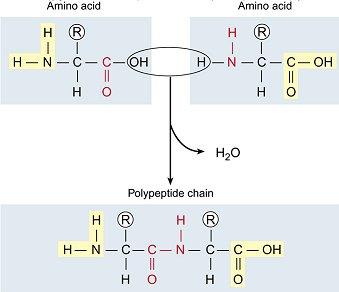
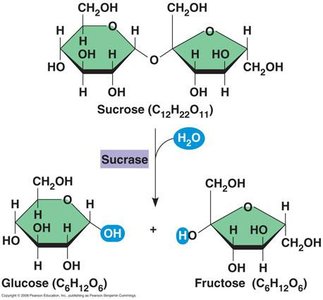
Macromolecules are large biological molecules formed by joining smaller units called monomers. The two main reactions involved are dehydration synthesis (building polymers) and hydrolysis (breaking polymers).
Dehydration synthesis: Removes water to form a bond.
Hydrolysis: Adds water to break a bond.
Carbohydrates
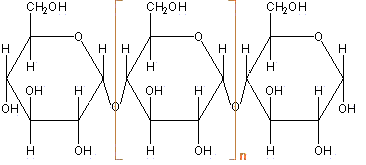
Carbohydrates are composed of monosaccharides (simple sugars) with a C:H:O ratio of 1:2:1. They serve as energy storage and structural components.
Monosaccharides: Glucose, ribose
Polysaccharides:
Starch (α linkages): Energy storage in plants
Glycogen: Energy storage in animals
Cellulose (β linkages): Structural in plants
Chitin: Structural in fungi and arthropods
Lipids
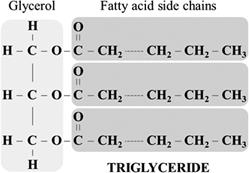
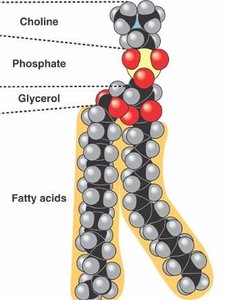
Lipids are hydrophobic molecules, not true polymers, composed of fatty acids and glycerol. They function in energy storage, protection, and insulation.
Saturated fats: No double bonds, solid at room temperature, produced by animals.
Unsaturated fats: Double bonds, liquid at room temperature, produced by plants.
Phospholipids: Major component of cell membranes.
Steroids: Four fused rings, includes cholesterol and hormones.
Proteins
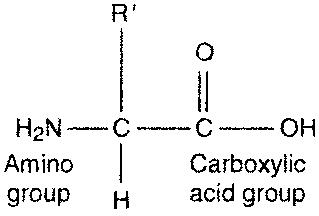
Proteins are polymers of amino acids, each with a central carbon, amino group, carboxyl group, hydrogen atom, and variable R group. The properties of the R group determine the characteristics of each amino acid.
Peptide bonds link amino acids.
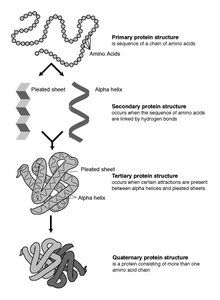
Four levels of structure:
Primary: Sequence of amino acids
Secondary: Hydrogen bonding (α helix, β sheet)
Tertiary: R group interactions
Quaternary: Association of multiple polypeptides
Chaperonins assist in protein folding.
Changes in amino acid sequence can alter protein structure and function.
Nucleic Acids
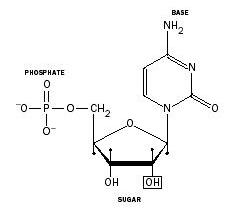
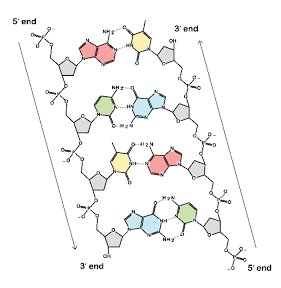
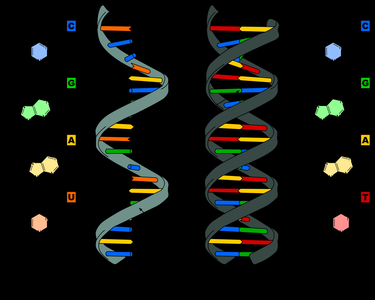
Nucleic acids (DNA and RNA) are polymers of nucleotide monomers, each consisting of a sugar, phosphate, and nitrogenous base. DNA and RNA differ in their sugars and bases.
DNA: Deoxyribose sugar, bases A, T, C, G
RNA: Ribose sugar, bases A, U, C, G
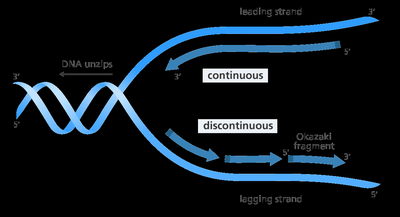
Antiparallel strands: DNA strands run in opposite directions (5' to 3' and 3' to 5').
Replication: New nucleotides are added to the 3' end; synthesis proceeds 5' to 3'.
Base pairing rules: A-T (or A-U in RNA), C-G
Summary Table: Biological Macromolecules
Macromolecule | Monomer | Bond Type | Main Function |
|---|---|---|---|
Carbohydrates | Monosaccharide | Glycosidic | Energy, structure |
Lipids | Fatty acid & glycerol | Ester | Energy, membranes |
Proteins | Amino acid | Peptide | Structure, enzymes |
Nucleic acids | Nucleotide | Phosphodiester | Genetic information |
Key Equations
Dehydration synthesis:
Hydrolysis:
pH calculation:
Conclusion
Understanding the chemistry of life, including the structure and function of biological macromolecules, is fundamental to biology. The properties of water, carbon, and the major macromolecules underpin all cellular processes and the diversity of life.
