 Back
Applications of Population Ecology & Human Population Growth
Study Guide - Smart Notes
 Tailored notes based on your materials, expanded with key definitions, examples, and context.
Applications of Population Ecology & Human Population Growth
Regulation of Population Growth
Population growth in natural ecosystems is regulated by a variety of factors, which can be classified as density-dependent or density-independent. Understanding these factors is crucial for managing wildlife, conserving endangered species, and addressing human impacts on the environment.
Density-Dependent Factors
Definition: Density-dependent factors are limiting factors whose intensity increases as the population density increases. They regulate population size by affecting birth and death rates.
Intraspecific Competition: Competition among individuals of the same species for limited resources (such as food, nesting sites, or shelter) can reduce birth rates and increase death rates.
Example: In song sparrows, as the number of competitors increases, females lay fewer eggs, and the death rates of eggs and nestlings rise.
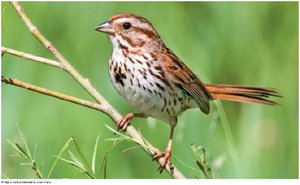
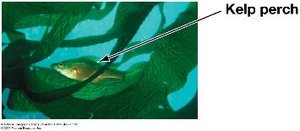
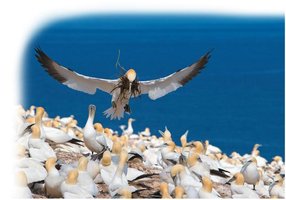
Other Limited Resources: Besides food, other resources such as safe hiding places (e.g., kelp forests for kelp perch) and nesting sites (e.g., rocky islands for gannets) can limit population size.
Density-Independent Factors
Definition: Density-independent factors are population-limiting factors whose intensity is unrelated to population density. They often involve abiotic events.
Examples: Weather changes, fires, floods, and storms can cause sudden population declines regardless of population size. For instance, aphid populations may grow exponentially in spring but die off rapidly in hot weather.
Population Cycles
Some populations exhibit regular cycles of rapid growth (booms) followed by sharp declines (busts). These cycles are often observed in insects, birds, and mammals.
Lemmings: Small rodents in the tundra experience boom-and-bust cycles every 3–4 years.
Snowshoe Hare and Lynx: Population cycles may be driven by food shortages, predator-prey interactions, or a combination of both. Recent studies support the combined effect hypothesis.
Applications of Population Ecology
Population ecology principles are applied to manage natural resources, control pests, and conserve endangered species.
Increasing Harvested Populations: Managing populations of fish, game, or other resources to maximize sustainable yield.
Decreasing Pest Populations: Reducing numbers of organisms that threaten crops or human health.
Conserving Endangered Species: Identifying and mitigating threats to species at risk of extinction.
Conservation of Endangered Species
Endangered Species: Species "in danger of extinction throughout all or a significant portion of its range."
Threatened Species: Species "likely to become endangered in the near future."
Case Study: The red-cockaded woodpecker requires longleaf pine forests. Conservation efforts, including habitat protection and controlled burns, have helped populations recover.
Sustainable Resource Management
Sustainable resource management aims to use natural resources without depleting them, maintaining populations at levels that allow for replenishment.
Logistic Growth Model: Predicts that the fastest population growth occurs at half the carrying capacity () of the habitat.
Equation:
Challenges: Real-world populations may not have stable growth rates or carrying capacities. Overharvesting, as seen in the collapse of the northern Atlantic cod fishery, can lead to resource depletion.
Invasive Species
Invasive species are non-native organisms that spread widely and cause environmental or economic harm.
Definition: An invasive species is a non-native species that colonizes and dominates new habitats, often outcompeting native species.
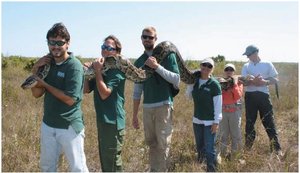
Examples: Zebra mussels in the Great Lakes and Burmese pythons in Florida have caused declines in native species.
Traits: Opportunistic life history patterns, such as early reproduction and high fecundity, contribute to invasiveness.
Biological Control of Pests
Biological control involves the intentional release of natural enemies to control pest populations.
Successes: Leaf beetles were used to control St. John’s wort in the western United States.
Risks: Introduced control agents, such as the small Indian mongoose, can become invasive themselves and harm native wildlife.
Integrated Pest Management (IPM)
IPM combines biological, chemical, and cultural methods for sustainable pest control in agriculture.
Principles: Tolerate low pest levels, use pest-resistant crops, rotate crops, and apply pesticides only when necessary.
Benefits: Reduces reliance on chemicals, preserves beneficial organisms, and promotes long-term sustainability.
Human Population Growth
History and Trends
Human population growth has accelerated dramatically in the past few centuries due to advances in nutrition, sanitation, and medicine. However, growth rates have begun to decline in recent decades.
Early History: High birth and death rates kept population growth low until the 1800s.
Modern Era: Improved living conditions led to lower death rates and rapid population growth, especially in developing countries.
Current Trends: The global population is still increasing, but the annual growth rate has been declining since the 1980s.
Age Structure
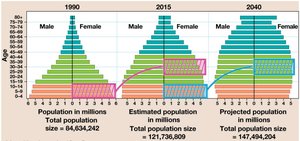
Age structure diagrams show the distribution of a population by age and sex, helping predict future growth and social needs.
Pyramidal Shape: Indicates a rapidly growing population with a high proportion of young individuals (e.g., Mexico in 1990).
Population Momentum: Continued growth after fertility rates decline, due to a large number of individuals entering reproductive age.
Social Implications: Expanding populations require more schools and jobs, while aging populations need more healthcare resources.
Ecological Footprint
The ecological footprint measures the amount of land and water needed to support an individual's or nation's resource consumption and waste absorption.
Definition: An ecological footprint estimates the resources required for food, fuel, housing, and waste absorption.
Biocapacity: The planet's ability to regenerate resources and absorb waste.
Sustainability: In 2019, humanity's average ecological footprint was 1.7 times Earth's biocapacity, indicating unsustainable resource use.
Resource Inequality: Individuals in affluent nations consume more resources than those in less developed countries.
Factor | Density-Dependent | Density-Independent |
|---|---|---|
Definition | Limiting factor whose effect increases with population density | Limiting factor whose effect is unrelated to population density |
Examples | Competition, predation, disease | Weather, fire, floods |
Additional info: The notes above expand on the provided slides by including definitions, equations, and examples for clarity and completeness, as well as a comparison table for density-dependent and density-independent factors.
