 Back
Archaean and Bacterial Diversity: Horizontal Gene Transfer and Prokaryotic Evolution
Study Guide - Smart Notes
 Tailored notes based on your materials, expanded with key definitions, examples, and context.
Notes from Jensen Yap
Sex = gene transfer
Archaean and Bacterial Diversity
Overview of Prokaryotic Diversity
Prokaryotes, including Bacteria and Archaea, represent the most ancient and diverse forms of life on Earth. Their evolutionary history, ecological roles, and genetic mechanisms are foundational topics in General Biology.
Bacteria and Archaea are two distinct domains of prokaryotes.
They exhibit remarkable diversity in morphology, metabolism, and habitats.
Prokaryotes are essential for nutrient cycling, symbiosis, and biotechnology.
Phylogenetic Relationships
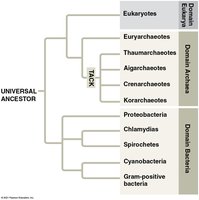
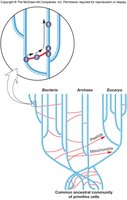
Modern phylogenetic trees illustrate the evolutionary relationships among Bacteria, Archaea, and Eukaryotes, tracing their origins to a universal ancestor.
Universal ancestor gave rise to three domains: Bacteria, Archaea, and Eukarya.
Phylogenetic trees are constructed using molecular data, such as ribosomal RNA sequences.
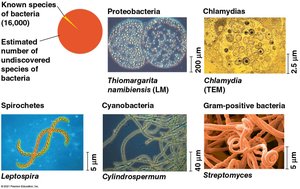
Major groups within Bacteria include Proteobacteria, Chlamydias, Spirochetes, Cyanobacteria, and Gram-positive bacteria.
Bacterial Sex—Horizontal Gene Transfer
Vertical vs. Horizontal Gene Transfer
Gene transfer is a fundamental process in biology, influencing genetic diversity and evolution. Vertical gene transfer occurs from parent to offspring, while horizontal gene transfer involves the movement of genetic material between unrelated organisms.
Vertical gene transfer: Transmission of genetic material from parent to offspring; universal among all organisms.
Horizontal gene transfer (HGT): Exchange of genetic material across lineages; rare in eukaryotes but common in prokaryotes.
HGT contributes to rapid adaptation and evolution in prokaryotes.
Mechanisms of Horizontal Gene Transfer
There are three primary mechanisms of HGT in prokaryotes: transformation, conjugation, and transduction.
Transformation: Uptake of environmental DNA by a cell or bacteria
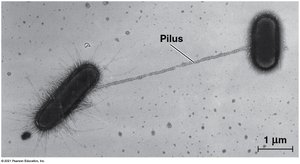
Conjugation: Direct transfer of DNA from one cell to another via a pilus.
Transduction: Transfer of DNA mediated by viruses (bacteriophages).
Conjugation
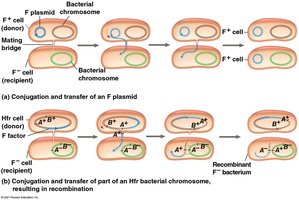
Conjugation is a process where genetic material is transferred between bacterial cells through a physical connection called a pilus.
Involves donor and recipient cells.
F plasmid (fertility plasmid) enables the formation of a pilus and transfer of DNA.
Can result in recombination and genetic diversity.
Transduction
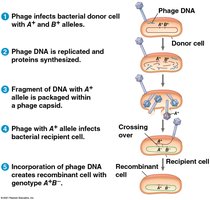
Transduction is the process by which bacteriophages (viruses that infect bacteria) transfer genetic material from one bacterium to another.
Phage infects donor cell and incorporates bacterial DNA into new phage particles.
Phage infects recipient cell, introducing donor DNA.
Results in recombination and new genetic combinations.
Prokaryotic Evolution and Fossil Evidence
Stromatolites and Early Life
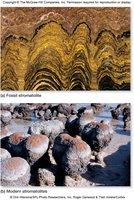
Stromatolites are layered structures formed by the activity of prokaryotes, providing evidence of ancient life on Earth.
Fossil stromatolites date back over 3.5 billion years.
Modern stromatolites are still found in some aquatic environments.
Stromatolites demonstrate the ecological impact of prokaryotes in shaping Earth's history.
Horizontal Gene Transfer in Evolution
Horizontal gene transfer has played a significant role in the evolution of prokaryotes and the development of complex life forms.
HGT can blur the boundaries between lineages, complicating phylogenetic analysis.
Endosymbiotic events, such as the origin of mitochondria and chloroplasts, involved HGT.
Major Groups of Bacteria
Bacterial Diversity and Classification
Bacteria are classified into several major groups based on genetic, structural, and metabolic characteristics.
Proteobacteria: Includes many medically and ecologically important species.
Chlamydias: Obligate intracellular parasites.
Spirochetes: Spiral-shaped bacteria, some pathogenic.
Cyanobacteria: Photosynthetic bacteria, important for oxygen production.
Gram-positive bacteria: Characterized by thick cell walls; includes many antibiotic producers.
Streptomyces is a positive bacteria that makes the antibiotic streptomysin
Archaean Diversity and Habitats
Habitats of Archaea
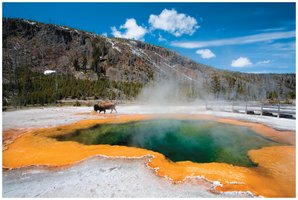
Archaea are found in a wide range of environments, including extreme habitats such as hot springs, salt lakes, and the human gut.
Thermophiles: Thrive in high-temperature environments.
Halophiles: Live in highly saline environments.
Methanogens: Produce methane, often found in anaerobic environments.

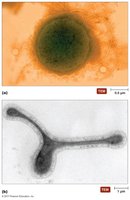

Archaea in the Human Gut and Salt Marshes
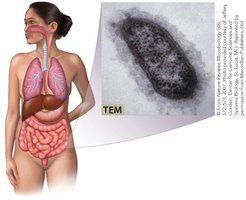
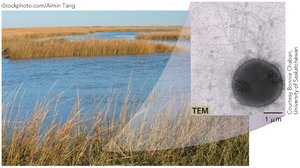
Some archaea, such as Methanobrevibacter smithii and Methanococcus maripaludis, inhabit the human gut and salt marshes, respectively, playing roles in digestion and methane production.
Methanobrevibacter smithii: Dominant archaeon in the human gut, involved in fermentation and methane production.
Methanococcus maripaludis: Found in salt marshes, contributes to methane cycling.
Summary Table: Mechanisms of Horizontal Gene Transfer
Mechanism | Description | Key Features |
|---|---|---|
Transformation | Uptake of free DNA from environment | Requires competent cells; DNA incorporated into genome |
Conjugation | Direct transfer of DNA via pilus | Involves F plasmid; cell-to-cell contact |
Transduction | DNA transfer by bacteriophage | Phage-mediated; can result in recombination |
Key Equations and Concepts
Genetic Recombination
Recombination increases genetic diversity in prokaryotes. The frequency of recombination can be estimated using genetic markers and mapping techniques.
Recombination frequency () is calculated as:
Conclusion
Archaean and bacterial diversity, along with mechanisms of horizontal gene transfer, are central to understanding prokaryotic evolution, adaptation, and ecological impact. These processes contribute to the genetic variability and resilience of prokaryotes, shaping the history of life on Earth.
