 Back
BackArthritis: Types, Mechanisms, Risk Factors, and Treatments
Study Guide - Smart Notes
 Tailored notes based on your materials, expanded with key definitions, examples, and context.
Arthritis
Overview of Arthritis
Arthritis is a group of conditions characterized by inflammation and degeneration of the joints, leading to pain, stiffness, and reduced mobility. The two main types are Osteoarthritis and Rheumatoid Arthritis, each with distinct causes and clinical features.
Types of Arthritis
Osteoarthritis
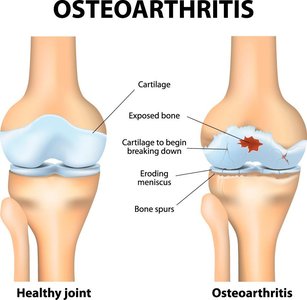
Osteoarthritis is the most common form of arthritis, primarily resulting from the breakdown of joint cartilage and underlying bone. It is considered a degenerative joint disease and is often associated with aging or joint injury.
Cartilage erosion: The smooth cartilage at the ends of bones wears away, causing bones to rub against each other.
Pain and restricted movement: Bone-on-bone contact leads to pain, swelling, and limited joint mobility.
Commonly affected joints: Hands, spine, knees, and hips are most frequently involved.
Symptoms worsen with movement: Activity increases discomfort.
Rheumatoid Arthritis
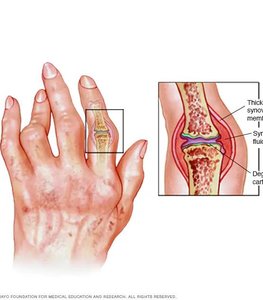
Rheumatoid arthritis is an autoimmune disorder where the immune system attacks the synovial membrane of joints, causing inflammation and joint damage. It can affect multiple joints symmetrically and may also involve systemic symptoms.
Inflammation: The synovial membrane becomes inflamed, leading to swelling, pain, and eventual joint destruction.
Systemic effects: May include fatigue, fever, and involvement of other organs.
Progression: Symptoms can worsen rapidly and may lead to significant disability if untreated.
Comparison of Osteoarthritis and Rheumatoid Arthritis
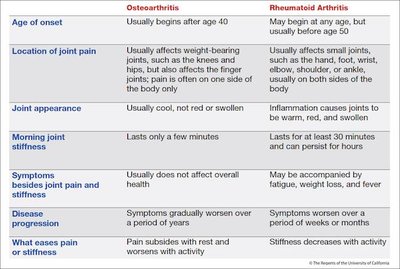
The following table summarizes the key differences between osteoarthritis and rheumatoid arthritis:
Feature | Osteoarthritis | Rheumatoid Arthritis |
|---|---|---|
Age of onset | Usually begins after age 40 | May begin at any age, but usually before age 50 |
Location of joint pain | Usually affects weight-bearing joints (knees, hips); also fingers; often one side | Usually affects small joints (hands, feet); often both sides |
Joint appearance | Usually cool, not red or swollen | Inflammation causes joints to be warm, red, and swollen |
Morning joint stiffness | Lasts only a few minutes | Lasts at least 30 minutes and can persist for hours |
Symptoms besides joint pain and stiffness | Usually does not affect overall health | May be accompanied by fatigue, weight loss, and fever |
Disease progression | Symptoms gradually worsen over years | Symptoms worsen over a period of weeks to months |
What eases pain or stiffness | Pain subsides with rest and worsens with activity | Stiffness decreases with activity |
Pathophysiology: What Happens at the Joint
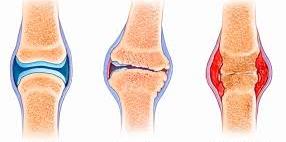
Arthritis leads to several structural and functional changes in the affected joints:
Synovial fluid reduction: The lubricating fluid in the joint dries up, reducing cushioning.
Cartilage erosion: Loss of cartilage exposes bone surfaces.
Stiffness: Joints become less flexible and more difficult to move.
Bone contact: Exposed bone ends rub together, causing pain and further damage.
Bone spurs: Extra bone growths (osteophytes) may develop, increasing friction and discomfort.
Inflammation: The joint may become swollen and tender due to inflammatory processes.
Risk Factors for Developing Arthritis
Several factors can increase the likelihood of developing arthritis:
Joint injury: Overuse or insufficient healing after injury or surgery increases risk.
Other conditions: Secondary arthritis can develop in joints damaged by other diseases (e.g., rheumatoid arthritis, gout).
Age: Risk increases with age due to cumulative wear and tear.
Family history: Genetic predisposition may play a role, though no single gene is identified.
Obesity: Excess weight puts additional strain on weight-bearing joints.
Excessive exercise: Overuse can contribute to joint degeneration.
Sex: Women are at higher risk, possibly due to hormonal factors such as oestrogen.
Treatments for Arthritis
Osteoarthritis Treatments
Lifestyle changes: Regular exercise, weight loss, suitable footwear, and assistive devices to reduce joint strain.
Medications: Painkillers, anti-inflammatory drugs, opioids (e.g., codeine), capsaicin creams, and joint replacement surgery for severe cases.
Supportive treatments: Hot/cold packs, physiotherapy, occupational therapy, and podiatry.
Assistive devices and supplements: Nutritional supplements and appropriate footwear can help manage symptoms.
Rheumatoid Arthritis Treatments
Anti-rheumatic drugs: Disease-modifying antirheumatic drugs (DMARDs) slow disease progression.
Biological treatments: Injections that block immune system chemicals responsible for inflammation.
Pain management: Painkillers and anti-inflammatory drugs.
Joint replacement: For severe joint damage.
Therapies: Physiotherapy, occupational therapy, podiatry, and nutritional supplements.
Impact of Arthritis on Daily Life
Arthritis can significantly affect quality of life and daily functioning:
Pain: Limits activity, may lead to weight gain and further joint strain.
Sleep disturbances: Pain can reduce sleep quality and affect emotional well-being.
Mobility issues: Difficulty moving, lifting, or performing recreational activities.
Loss of dexterity: Fine motor tasks (e.g., sewing, model making) may become impossible.
Independence: Daily tasks such as washing, cooking, and shopping may require assistance.
