 Back
BackArthropods and Major Animal Phyla: Structure, Diversity, and Evolution
Study Guide - Smart Notes
 Tailored notes based on your materials, expanded with key definitions, examples, and context.
Phylogeny and Classification of Major Animal Phyla
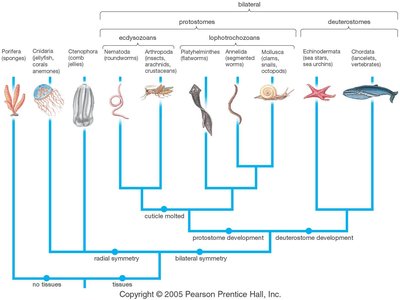
Overview of Animal Phylogeny
Animal phyla are classified based on evolutionary relationships, body plans, and developmental patterns. The phylogenetic tree illustrates the connections among major groups, highlighting features such as symmetry, tissue organization, and developmental modes.
Protostomes: Includes ecdysozoans (e.g., arthropods, nematodes) and lophotrochozoans (e.g., annelids, mollusks).
Deuterostomes: Includes echinoderms and chordates.
Key evolutionary traits: Bilateral symmetry, presence of tissues, and modes of development (protostome vs. deuterostome).
Comparison of Major Animal Phyla
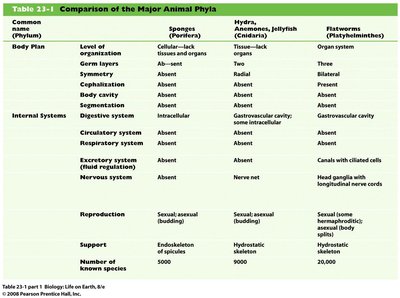
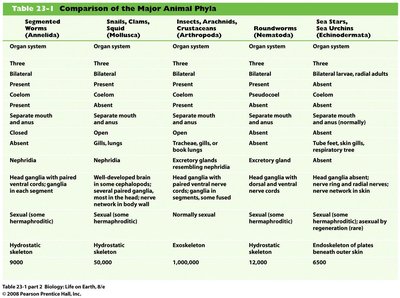
Animal phyla differ in their body plans, internal systems, and modes of reproduction. The following tables summarize these differences.
Phylum | Level of Organization | Symmetry | Body Cavity | Segmentation | Digestive System | Circulatory System | Respiratory System | Nervous System | Reproduction | Support | Number of Known Species |
|---|---|---|---|---|---|---|---|---|---|---|---|
Sponges (Porifera) | Cellular | Absent | Absent | Absent | Intracellular | Absent | Absent | Absent | Sexual/asexual | Endoskeleton of spicules | 5000 |
Hydra, Anemones, Jellyfish (Cnidaria) | Tissues | Radial | Absent | Absent | Gastrovascular cavity | Absent | Absent | Nerve net | Sexual/asexual | Hydrostatic | 9000 |
Flatworms (Platyhelminthes) | Organs | Bilateral | Absent | Absent | Gastrovascular cavity | Absent | Absent | Head ganglia with longitudinal nerve cords | Sexual/asexual | Hydrostatic | 20,000 |
Phylum | Body Plan | Symmetry | Body Cavity | Segmentation | Digestive System | Circulatory System | Respiratory System | Nervous System | Reproduction | Support | Number of Known Species |
|---|---|---|---|---|---|---|---|---|---|---|---|
Segmented Worms (Annelids) | Organ system | Bilateral | Present | Present | Complete | Closed | Gills, skin | Head ganglia with ventral nerve cord | Sexual | Hydrostatic | 15,000 |
Snails, Clams, Squid (Mollusca) | Organ system | Bilateral | Present | Absent | Complete | Open | Gills, skin | Head ganglia with ventral nerve cord | Sexual | Hydrostatic | 93,000 |
Insects, Arachnids, Crustaceans (Arthropoda) | Organ system | Bilateral | Present | Present | Complete | Open | Trachea, gills, or book lungs | Head ganglia with ventral nerve cord | Normally sexual | Exoskeleton | 1,000,000 |
Roundworms (Nematoda) | Organ system | Bilateral | Present | Absent | Complete | Absent | Excretory gland | Head ganglia with longitudinal nerve cords | Sexual | Hydrostatic | 12,000 |
Sea Stars, Sea Urchins (Echinodermata) | Organ system | Bilateral larvae, radial adults | Present | Absent | Complete | Absent | Tube feet, gills | Head ganglia absent, nerve ring in skin | Sexual/asexual | Endoskeleton of plates | 6,500 |
Phylum Arthropoda
General Characteristics
Arthropods are the most diverse animal phylum, with millions of species and individuals. Their success is attributed to their unique body structure and adaptability.
Exoskeleton: A hard external covering made of chitin and proteins, providing protection and flexibility.
Molting: Arthropods shed their exoskeleton to grow, a process known as ecdysis or molting.
Segmented bodies: Divided into specialized regions with paired appendages.
Open circulatory system: Hemolymph circulates through open spaces in the body.
Sensory systems: Sophisticated organs for detecting light, movement, and chemical signals.
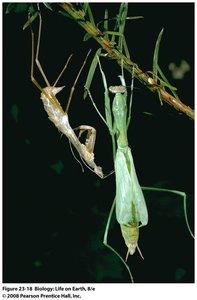
Body Regions of Insects
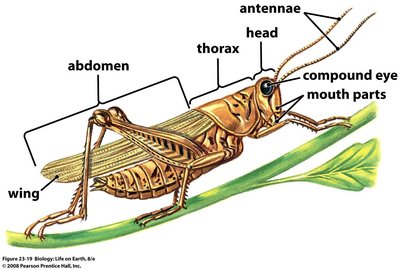
Insects, a subgroup of arthropods, have bodies divided into three distinct regions, each with specialized functions.
Head: Responsible for feeding and environmental sensing.
Thorax: Specialized for locomotion, bearing legs and wings.
Abdomen: Contains organs for digestion and reproduction.
Insects
Key Features and Diversity
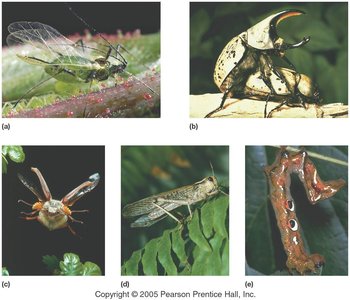
Insects are the only arthropods capable of flight and exhibit a wide range of adaptations.
Three pairs of legs, one pair of antennae, and 1-2 pairs of wings.
Respiration: Breathe through spiracles connected to internal tracheae.
Reproduction: Lay eggs or bear live offspring.
Metamorphosis: Juveniles undergo dramatic changes in body form to become adults.
Larval forms: Many insects have worm-shaped larvae (e.g., maggots, caterpillars).
Compound Eyes
Insects possess compound eyes, which consist of multiple lenses and allow for wide-angle vision and detection of movement. 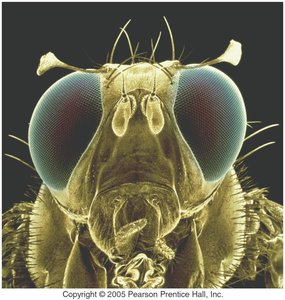
Bees and Colony Collapse Disorder
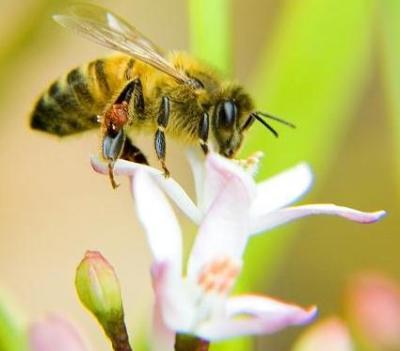
Bees are essential pollinators in ecosystems and agriculture. Colony Collapse Disorder is a phenomenon where bee populations decline rapidly, threatening food production.
Causes: Likely due to viral infections weakening immune and orientation systems.
Implications: Reduced pollination could lead to significant decreases in food supply.
Arachnids
Characteristics of Arachnids
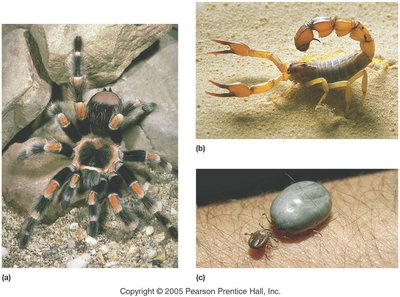
Arachnids include spiders, ticks, scorpions, and mites. They are distinguished by their body structure and feeding habits.
Eight legs and no antennae.
Feeding: Predigested prey or blood.
Spiders: Possess eight simple eyes, venomous fangs, and silk-producing glands.
Respiration: Use book lungs for gas exchange.
Myriapods
Centipedes and Millipedes
Myriapods are characterized by their elongated bodies and numerous legs.
Centipedes: Carnivorous, possess a poisonous bite.
Millipedes: Herbivorous, generally harmless.
Respiration: Breathe through tracheae.
Habitat: Found in logs or moist leaf litter.
Crustaceans
Characteristics and Diversity
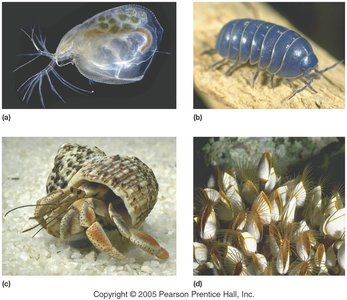
Crustaceans include lobsters, shrimp, barnacles, crabs, crayfish, and isopods. They are primarily aquatic and exhibit diverse forms.
Two pairs of antennae and jointed appendages.
Respiration: Breathe through gills.
Sexes: Most species have separate sexes.
Habitat: Freshwater and marine environments.
Summary Table: Arthropod Subgroups
Comparison of Insects, Arachnids, Myriapods, and Crustaceans
Group | Body Segments | Legs | Respiration | Habitat | Reproduction |
|---|---|---|---|---|---|
Insects | Head, thorax, abdomen | 6 (3 pairs) | Tracheae | Terrestrial | Eggs/live young |
Arachnids | Cephalothorax, abdomen | 8 (4 pairs) | Book lungs | Terrestrial | Eggs |
Myriapods | Many segments | Many pairs | Tracheae | Terrestrial | Eggs |
Crustaceans | Variable | Variable | Gills | Aquatic | Eggs |
Additional info:
Arthropods are a key example of evolutionary success due to their adaptability, segmentation, and exoskeleton.
Metamorphosis in insects is a critical process for ecological diversity and specialization.
Colony Collapse Disorder in bees highlights the importance of arthropods in ecosystem services and agriculture.
