 Back
Atoms, Bonds, and the Foundations of Biological Chemistry
Study Guide - Smart Notes
 Tailored notes based on your materials, expanded with key definitions, examples, and context.
Hierarchy and Emergent Properties in Biology
Biological Organization and Emergence
Biology is organized into a hierarchy of structural levels, from molecules to the biosphere. At each level, emergent properties arise—these are new characteristics that appear as complexity increases and are not present at lower levels.
Hierarchy in Biology: Atoms → Molecules → Organelles → Cells → Tissues → Organs → Organ Systems → Organisms → Populations → Communities → Ecosystems → Biosphere
Emergent Properties: For example, life emerges at the level of the cell, even though individual molecules are not alive.
Example: The ability of the heart to pump blood is an emergent property of the coordinated function of cardiac cells, which themselves are made of non-living molecules.
The Chemical Context of Life
Atoms, Electrons, and Stability
Atoms are the fundamental units of matter, composed of protons, neutrons, and electrons. The arrangement of electrons in electron shells determines an atom's chemical behavior.
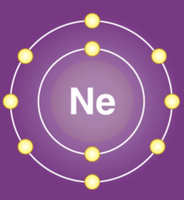
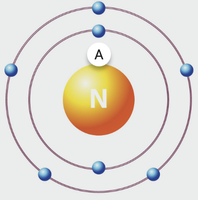
Electron Shells: Electrons occupy shells around the nucleus. The first shell holds up to 2 electrons; the second and third can each hold up to 8.
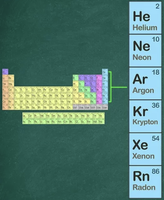
Stability: Atoms with full outer shells (like the noble gases) are chemically stable and unreactive.
Reactive Atoms: Atoms with incomplete outer shells tend to react to achieve stability, often by sharing or transferring electrons.
Atomic Number and Valence Electrons
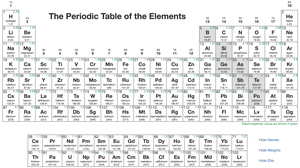
The atomic number of an element is the number of protons in its nucleus, which also equals the number of electrons in a neutral atom. The number of electrons in the outermost shell (valence electrons) determines an element's chemical properties.
Example: Carbon (atomic number 6) and silicon (atomic number 14) both have 4 valence electrons, making them chemically similar in bonding behavior.
Covalent and Non-Covalent Bonds
Covalent Bonds
A covalent bond forms when two atoms share one or more pairs of electrons. This type of bond is strong and forms the backbone of biological molecules.
Single Covalent Bond: Sharing one pair of electrons (e.g., H-H in H2).
Double Covalent Bond: Sharing two pairs of electrons (e.g., O=O in O2).
Example: In a molecule of Cl2, two chlorine atoms share a pair of electrons, forming a covalent bond.
Non-Covalent Bonds
Non-covalent bonds do not involve the sharing of electrons. Instead, they are based on attractions between atoms or molecules with opposite charges. These include ionic bonds, hydrogen bonds, and van der Waals interactions.
Ionic Bonds: Formed when one atom transfers electrons to another, creating ions that attract each other (e.g., NaCl).
Hydrogen Bonds: Weak attractions between a hydrogen atom covalently bonded to an electronegative atom (like O or N) and another electronegative atom.
Van der Waals Interactions: Weak, transient attractions between molecules due to temporary charge differences.
Example: Table salt (NaCl) is held together by ionic (non-covalent) bonds.

Comparison of Bond Types
Bond Type | Electron Sharing | Strength | Example |
|---|---|---|---|
Covalent | Yes | Strong | H2O, CH4 |
Ionic (Non-covalent) | No (electron transfer) | Moderate | NaCl |
Hydrogen Bond (Non-covalent) | No | Weak | Between water molecules |
Polar and Non-Polar Covalent Bonds
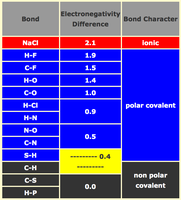
The sharing of electrons in covalent bonds can be equal or unequal, depending on the atoms' electronegativity (the tendency to attract electrons).
Non-Polar Covalent Bond: Electrons are shared equally (e.g., H2, O2).
Polar Covalent Bond: Electrons are shared unequally, creating partial charges (e.g., H2O).
Example: In water, oxygen is more electronegative than hydrogen, so electrons are pulled closer to oxygen, making it partially negative and hydrogen partially positive.
Electronegativity and Hydrogen Bonds
Electronegativity is a measure of an atom's ability to attract electrons in a bond. When two polar molecules are near each other, the partial positive charge on hydrogen in one molecule is attracted to the partial negative charge on an electronegative atom (like O or N) in another molecule, forming a hydrogen bond.
Role in Biology: Hydrogen bonds are crucial for the structure of water, proteins, and DNA.
Example: The hydrogen bonds between water molecules give water its unique properties, such as high surface tension and boiling point.
Atoms and Molecules in Biological Systems
Valence and Bonding Capacity
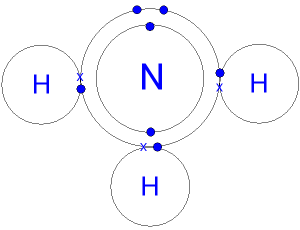
The valence of an atom is the number of covalent bonds it can form, determined by the number of electrons needed to fill its outer shell.
Carbon: Valence of 4; can form four covalent bonds, allowing for complex molecules.
Nitrogen: Valence of 3; can form three covalent bonds.
Oxygen: Valence of 2; can form two covalent bonds.
Hydrogen: Valence of 1; can form one covalent bond.
Summary Table: Common Elements in Biology
Element | Valence | Typical Bonds |
|---|---|---|
Hydrogen (H) | 1 | Single |
Oxygen (O) | 2 | Double or two singles |
Nitrogen (N) | 3 | Triple or three singles |
Carbon (C) | 4 | Four singles, two doubles, or combinations |
Additional Info
Heisenberg's Uncertainty Principle applies to electrons, meaning their exact position and momentum cannot both be known precisely. This underlies the dynamic nature of electron shells and chemical bonding.
Self-directed learning and repeated self-testing are effective strategies for mastering biology concepts.
