 Back
Atoms, Molecules, and Chemical Bonds in Biology
Study Guide - Smart Notes
 Tailored notes based on your materials, expanded with key definitions, examples, and context.
Introduction to Chemistry in Biology
Biological Organization and Chemical Foundations
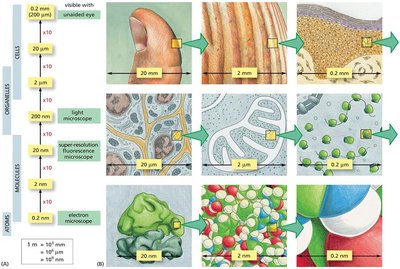
Biology is fundamentally based on chemistry, as living organisms are composed of atoms and molecules that interact to form cells and tissues. Understanding the chemical properties of atoms and their interactions is essential for grasping biological structure and function.
Atoms are the basic units of matter, consisting of protons, neutrons, and electrons.
Molecules are formed when atoms bond together, creating the building blocks of life.
Biological molecules include lipids, proteins, nucleic acids, and carbohydrates.
Properties of Atoms
Atomic Structure and Subatomic Particles
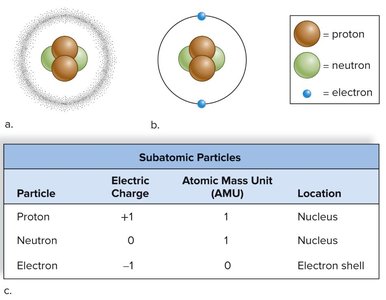
Atoms are composed of a nucleus containing protons and neutrons, surrounded by electrons in shells. The arrangement of these particles determines the atom's chemical properties.
Proton: Positively charged, located in the nucleus.
Neutron: Neutral, located in the nucleus.
Electron: Negatively charged, located in electron shells.
Atomic Number and Mass Number
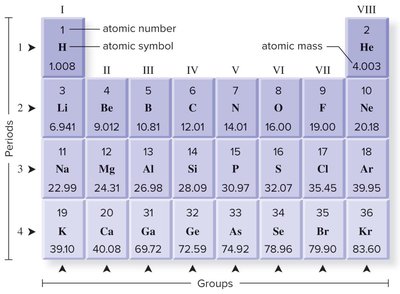
The atomic number is the number of protons in an atom, defining the element. The mass number is the sum of protons and neutrons.
Atomic Number: Determines the element's identity.
Mass Number: Determines the isotope of the element.
Electron Shells and Energy Levels
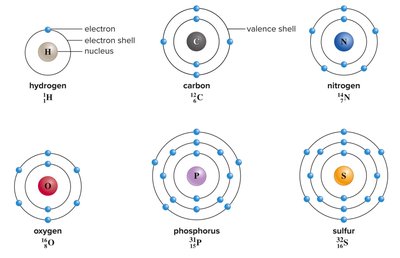
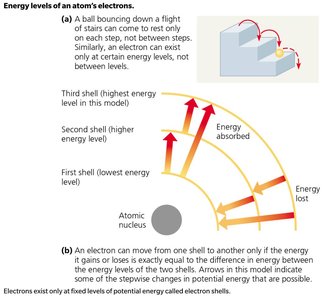
Electrons occupy specific energy levels or shells around the nucleus. The distribution of electrons in these shells affects the atom's stability and reactivity.
First shell: up to 2 electrons
Second shell: up to 8 electrons
Third shell: up to 8 electrons
Chemical Bonds and Interactions
Valence Electrons and Stability
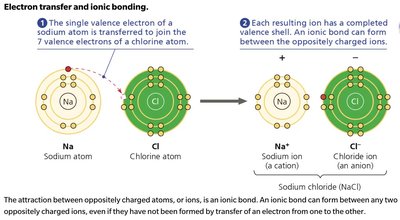
The chemical reactivity of an atom is determined by the electrons in its outermost (valence) shell. Atoms strive for a full valence shell, which makes them stable.
Atoms with incomplete valence shells are reactive.
Atoms achieve stability by sharing, donating, or receiving electrons.
Types of Chemical Bonds
Atoms interact to form chemical bonds, which are essential for the structure and function of biomolecules.
Ionic Bonds: Formed by the transfer of electrons between atoms, resulting in charged ions.
Covalent Bonds: Formed by the sharing of electrons between atoms. Can be polar (unequal sharing) or nonpolar (equal sharing).
Electronegativity and Polarity
Electronegativity is the ability of an atom to attract shared electrons. Differences in electronegativity between atoms lead to polarity in molecules.
Polar Covalent Bonds: Unequal sharing of electrons, resulting in partial charges (δ+ and δ-).
Nonpolar Covalent Bonds: Equal sharing of electrons, no charge difference.
Redox Reactions
Redox reactions involve the transfer of electrons between atoms.
Oxidation: Loss of electrons.
Reduction: Gain of electrons.
O.I.L. R.I.G.: Oxidation Is Loss, Reduction Is Gain.
Biologically Important Elements
Major Elements in the Human Body
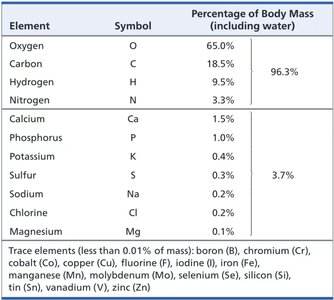
Living organisms are composed primarily of a few key elements.
Oxygen (O): 65.0% of body mass
Carbon (C): 18.5%
Hydrogen (H): 9.5%
Nitrogen (N): 3.3%
Trace Elements
Trace elements are required in small amounts for proper biological function.
Examples: Iron (Fe), Zinc (Zn), Copper (Cu), Selenium (Se)
Biomolecules and Their Chemical Composition
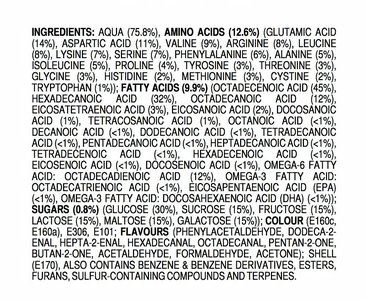
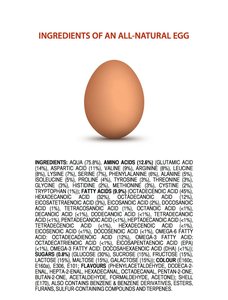
Ingredients of Biological Molecules
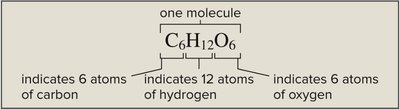
Biological molecules such as proteins, lipids, and nucleic acids are composed of specific elements and functional groups.
Amino Acids: Building blocks of proteins, contain C, H, O, N, and sometimes S.
Fatty Acids: Components of lipids, contain C, H, and O.
Sugars: Carbohydrates, contain C, H, and O.
Cell Components and Locations of Biomolecules
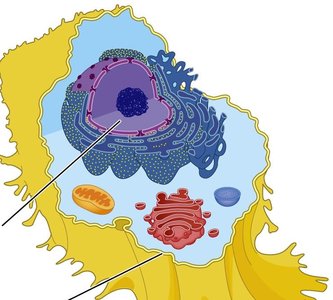
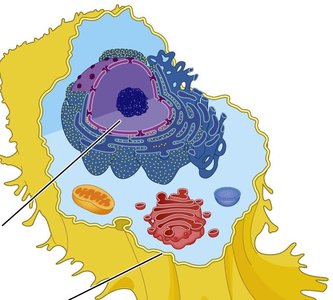
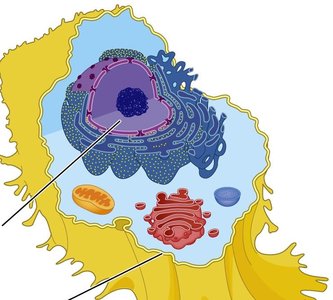
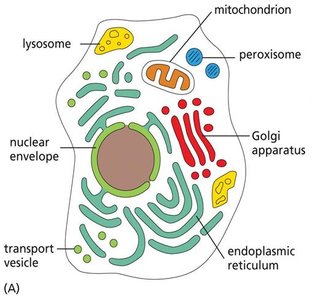
Cellular Distribution of Lipids, DNA, and Proteins
Different biomolecules are found in specific locations within cells.
Lipids: Primarily found in cell membranes and organelles such as the endoplasmic reticulum.
DNA: Located in the nucleus (eukaryotes) or nucleoid region (prokaryotes).
Proteins: Found throughout the cell, including the cytoplasm, membranes, and organelles.
Summary Table: Major Elements in Biology
Comparison of Elemental Abundance
Element | Symbol | Percentage of Body Mass |
|---|---|---|
Oxygen | O | 65.0% |
Carbon | C | 18.5% |
Hydrogen | H | 9.5% |
Nitrogen | N | 3.3% |
Calcium | Ca | 1.5% |
Phosphorus | P | 1.0% |
Potassium | K | 0.4% |
Sulfur | S | 0.3% |
Sodium | Na | 0.2% |
Chlorine | Cl | 0.2% |
Magnesium | Mg | 0.1% |
Conclusion
Fundamental Concepts
Atoms interact via chemical bonds to form molecules, which are essential for the structure and function of living organisms. The chemical properties of biomolecules, including polarity and electronegativity, impart functional capabilities necessary for life.
Understanding atomic structure and bonding is foundational for studying biology.
Biomolecules are composed of specific elements and are distributed in distinct cellular locations.
