 Back
BackBacteria and Archaea: Diversity, Structure, and Function
Study Guide - Smart Notes
 Tailored notes based on your materials, expanded with key definitions, examples, and context.
Chapter 26: Bacteria and Archaea
Introduction to Bacteria and Archaea
Bacteria and Archaea are two of the three largest branches on the tree of life, with Eukarya as the third. Both groups are prokaryotic, meaning they lack a membrane-bound nucleus, but they differ in the molecular composition of their plasma membranes and cell walls. These differences are significant enough that antibiotics targeting bacterial ribosomes do not affect those of archaea or eukaryotes.
Prokaryotes: Unicellular organisms without a nucleus.
Microbiome: The community of microbes inhabiting a particular area, including all their genetic material.
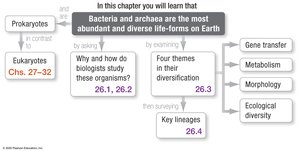
26.1 Why Do Biologists Study Bacteria and Archaea?
Biological Impact and Abundance
Bacteria and Archaea are ancient, diverse, and ubiquitous. The oldest fossils are 3.5 billion years old, predating eukaryotes by nearly 2 billion years. They dominate Earth's biomass and are found in vast numbers in soil, water, and even within the human body.
Abundance: Billions of microbes per teaspoon of soil; marine archaea are highly numerous in seawater.
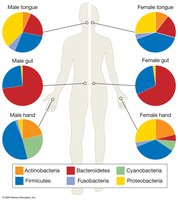
Human Microbiome: Hundreds of microbial species inhabit the human body, especially the gut and mouth.
Habitat Diversity: Extremophiles
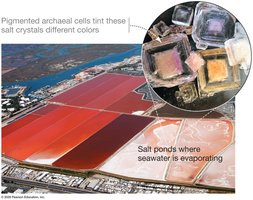
Some prokaryotes, called extremophiles, thrive in extreme environments such as hydrothermal vents, acidic waters, subzero temperatures, and hypersaline ponds. These organisms are important for understanding the origins of life and have commercial applications due to their unique enzymes.
Medical Importance: Koch’s Postulates and Germ Theory
Koch’s postulates established a causative link between specific microbes and diseases, forming the basis of the germ theory of disease. Infectious diseases can be transmitted between individuals, by vectors, or through contaminated food and water.
Pathogens: Disease-causing microbes.
Virulence: The ability to cause disease, often due to specific genes.
Endospores and Antibiotic Resistance
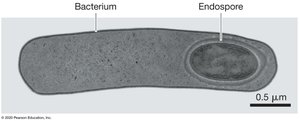
Some bacteria form endospores—dormant, tough structures that can survive extreme conditions and facilitate disease transmission. The overuse of antibiotics has led to the evolution of drug-resistant bacterial strains, often protected within biofilms.
Role in Bioremediation
Bacteria and Archaea are used in bioremediation to clean up pollutants, especially organic solvents. Strategies include fertilizing contaminated sites to stimulate native microbes and seeding sites with specific degraders.
26.2 How Do Biologists Study Bacteria and Archaea?
Enrichment Cultures
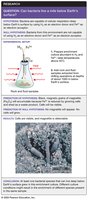
Enrichment cultures allow scientists to isolate and grow microbes under specific conditions, leading to the discovery of organisms such as thermophiles.
Metagenomics and the Human Microbiome
Metagenomics involves sequencing DNA from environmental samples to identify and characterize previously unknown organisms. This approach, combined with direct sequencing, has revealed the diversity of the human microbiome, which plays a crucial role in health and disease.
26.3 Themes in the Diversification of Bacteria and Archaea
Genetic Variation through Gene Transfer
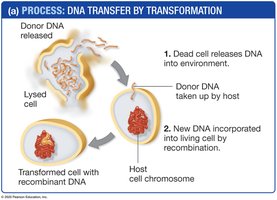
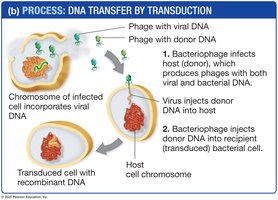
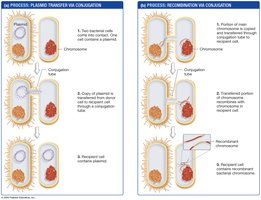
Lateral gene transfer allows prokaryotes to acquire new traits. Mechanisms include:
Transformation: Uptake of DNA from the environment.
Transduction: Transfer of DNA by viruses (bacteriophages).
Conjugation: Direct transfer of DNA between cells via physical contact.
Morphological Diversity
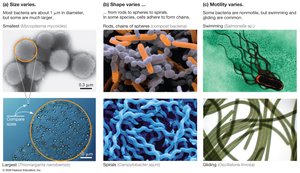
Bacteria and Archaea exhibit diversity in size, shape (spheres, rods, spirals, filaments), and motility (flagella, gliding).
Cell-Wall Composition: Gram Staining
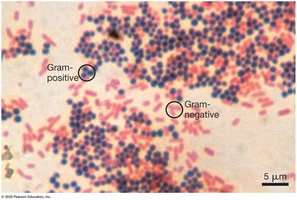
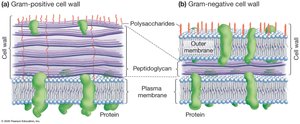
Gram staining distinguishes bacteria based on cell wall structure:
Gram-positive: Thick peptidoglycan layer, stains purple.
Gram-negative: Thin peptidoglycan layer plus outer membrane, stains pink.
Metabolic Diversity
Bacteria and Archaea display remarkable metabolic diversity, using different energy and carbon sources:
Phototrophs: Use light energy (photophosphorylation).
Chemoorganotrophs: Oxidize organic molecules (cellular respiration or fermentation).
Chemolithotrophs: Oxidize inorganic molecules (cellular respiration).
Autotrophs: Synthesize organic compounds from CO2 or other simple molecules.
Heterotrophs: Obtain organic compounds from the environment.
The Oxygen Revolution
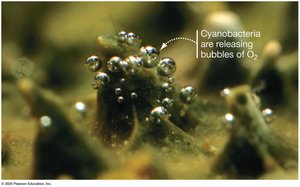
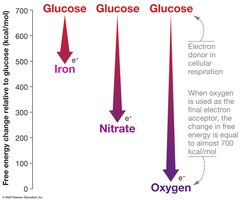
Cyanobacteria were the first organisms to perform oxygenic photosynthesis, fundamentally changing Earth's atmosphere and enabling aerobic respiration, which is more efficient than anaerobic processes.
Nitrogen Fixation and the Nitrogen Cycle
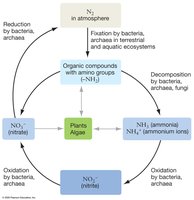
Only certain bacteria and archaea can fix atmospheric nitrogen (N2) into ammonia (NH3), making nitrogen available to living organisms. These processes are essential for ecosystem function and agriculture.
Nitrate Pollution
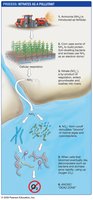
Excessive use of ammonia fertilizers leads to nitrate pollution, which can cause oxygen-depleted 'dead zones' in aquatic environments due to microbial activity.
26.4 Key Lineages of Bacteria and Archaea
Bacterial Lineages
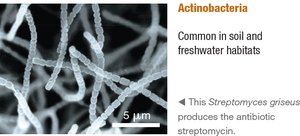
Actinobacteria: Filamentous, important decomposers, some fix nitrogen, many produce antibiotics.
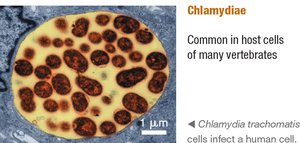
Chlamydiae: Small, spherical, obligate intracellular parasites.
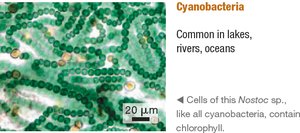
Cyanobacteria: Photosynthetic, oxygen-producing, found in diverse aquatic habitats.
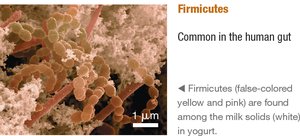
Firmicutes: Common in animal intestines, involved in digestion, some used in food production, others pathogenic.
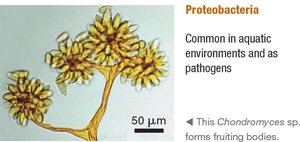
Proteobacteria: Diverse morphologies, include pathogens and nitrogen cyclers.
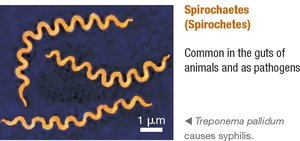
Spirochaetes: Corkscrew-shaped, motile, some pathogenic.
Archaeal Lineages
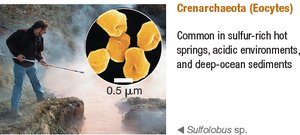
Crenarchaeota (Eocytes): Thrive in hot, acidic, and high-pressure environments.
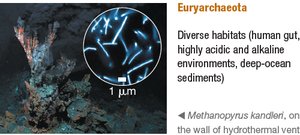
Euryarchaeota: Broad range of habitats, including high salt and acidic conditions, and deep-sea vents.
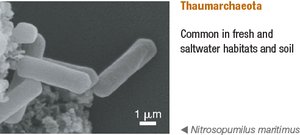
Thaumarchaeota: Abundant in oceans and soils, mesophilic (moderate temperatures).
Additional info: This guide covers the main features, diversity, and ecological roles of Bacteria and Archaea, as well as their importance in medicine, biotechnology, and environmental science. It is suitable for exam preparation and foundational understanding in college-level biology.
