 Back
Bacteria and Archaea: Diversity, Structure, and Function
Study Guide - Smart Notes
 Tailored notes based on your materials, expanded with key definitions, examples, and context.
Bacteria and Archaea: Diversity, Structure, and Function
Overview of Prokaryotes and the Tree of Life
Prokaryotes are single-celled, microscopic organisms that thrive in nearly every environment on Earth, including extreme habitats. They are divided into two domains: Bacteria and Archaea. Both domains share a common ancestor with Eukarya, but have distinct evolutionary lineages and cellular characteristics.
Prokaryotes are ubiquitous and play essential roles in ecosystems, including chemical recycling and symbiosis with other organisms.
They are generally much smaller than eukaryotic cells and lack membrane-bound organelles.
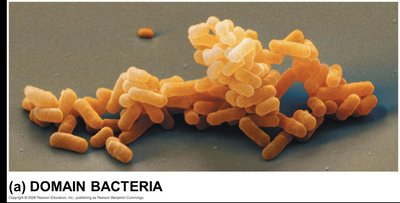
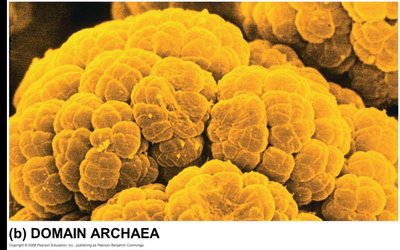
Major Domains of Life
Bacteria: Includes most known prokaryotes, with diverse metabolic and ecological roles.
Archaea: Often extremophiles, living in environments with extreme temperature, salinity, or acidity.
Eukarya: Includes all eukaryotic organisms (plants, animals, fungi, protists).
Domain Archaea
Characteristics of Archaea
Archaea are prokaryotes with unique molecular and biochemical features that distinguish them from bacteria. They are especially known for their ability to inhabit extreme environments.
Cell walls contain polysaccharides and proteins, but lack peptidoglycan (unlike bacteria).
Ribosomal RNA sequences differ significantly from those of bacteria.
Many archaea are extremophiles, thriving in conditions lethal to most life forms.
Survival in extremes is aided by specialized enzymes called extremozymes.
Types of Archaebacteria
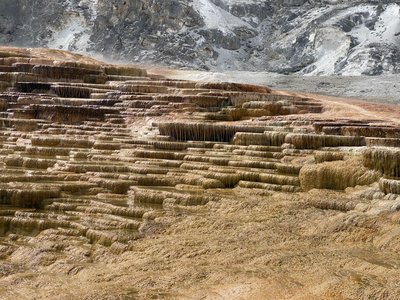
Extreme Thermophiles: Thrive at high temperatures (e.g., hot springs).
Extreme Halophiles: Live in highly saline environments (e.g., salt lakes).
Methanogens: Produce methane as a metabolic byproduct, often found in anaerobic environments.
Acidophiles: Prefer acidic environments.
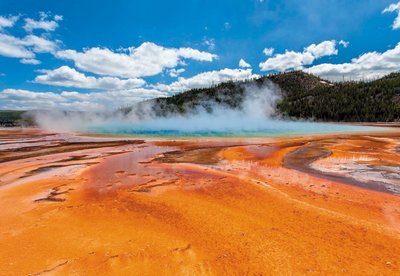
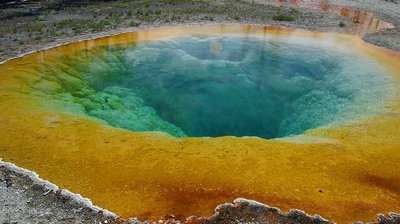

Practical Applications of Archaea
Thermo-stable enzymes from thermophiles are used in biotechnology, such as Taq polymerase for PCR (Polymerase Chain Reaction).
Domain Bacteria
Characteristics of Bacteria
Bacteria are highly diverse and play crucial roles in ecosystems and human health. They are found in soil, water, and as part of the human microbiome.
Bacteria inhabit various parts of the human body, including the scalp, armpits, gut, skin, mouth, and more.
The microbiota refers to the community of microorganisms living in a particular environment, while the microbiome refers to their collective genomes.
Symbiosis
Prokaryotes often form symbiotic relationships with larger organisms, which can be classified as:
Mutualism: Both organisms benefit.
Commensalism: One benefits, the other is unaffected.
Parasitism: One benefits at the expense of the other; disease-causing parasites are called pathogens.
Classification and Identification of Prokaryotes
Cell Shape
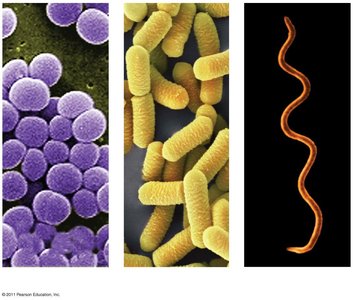
Bacteria are classified by their shape, which is often reflected in their names:
Cocci: Spherical
Bacilli: Rod-shaped
Spirilla/Spirochetes: Spiral-shaped
Gram Staining
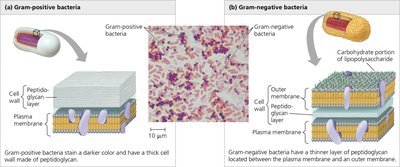
The Gram stain differentiates bacteria based on cell wall composition:
Gram-positive bacteria: Thick peptidoglycan layer, stain purple, generally more susceptible to antibiotics.
Gram-negative bacteria: Thin peptidoglycan layer, outer membrane with lipopolysaccharides, stain pink, often more resistant to antibiotics.
Bacterial Cell Wall and Structures
Cell wall: Maintains shape, protects cell, prevents bursting; contains peptidoglycan in bacteria.
Capsule: Polysaccharide/protein layer outside cell wall; aids in attachment and evasion of immune system.
Fimbriae: Short, hair-like structures for attachment.
Pili: Longer than fimbriae, used for DNA exchange (conjugation).
Flagella: Used for movement (motility); structure and function differ from eukaryotic flagella.
Endospores: Dormant, resistant cells formed under harsh conditions.
Genetic Material and Reproduction
Circular chromosome located in the nucleoid region (not membrane-bound).
Plasmids: Small, circular DNA molecules; may carry genes for antibiotic resistance (R plasmids) or fertility (F plasmid).
Binary fission: Asexual reproduction; rapid division leads to fast evolution.
Genetic recombination occurs via mutation, transformation, transduction (via bacteriophages), and conjugation (plasmid exchange).
Metabolic Diversity
Prokaryotes display remarkable metabolic diversity, classified by energy and carbon sources:
Phototrophs: Obtain energy from light.
Chemotrophs: Obtain energy from chemicals.
Autotrophs: Use CO2 as a carbon source.
Heterotrophs: Require organic nutrients for carbon.
Oxygen requirements vary:
Obligate aerobes: Require O2 for respiration.
Obligate anaerobes: Poisoned by O2; use fermentation or anaerobic respiration.
Facultative anaerobes: Can survive with or without O2.
Specialized Functions and Cooperation
Some prokaryotes have specialized membranes for metabolic functions (e.g., thylakoid membranes in photosynthetic bacteria).
Metabolic cooperation can occur in biofilms, surface-coating colonies of prokaryotes.
Major Groups of Bacteria
Proteobacteria
Gram-negative; includes photoautotrophs, chemoautotrophs, and heterotrophs.
Examples: Neisseria gonorrhoeae, Vibrio cholerae, Helicobacter pylori.
Spirochetes
Helical, Gram-negative heterotrophs with internal flagella.
Some are free-living; others are pathogenic (e.g., Treponema pallidum - syphilis, Borrelia burgdorferi - Lyme disease).
Cyanobacteria
Photoautotrophs that generate O2; commonly called "blue-green algae."
Plant chloroplasts likely evolved from cyanobacteria via endosymbiosis.
Chlamydias
Obligate intracellular parasites of animal cells.
Chlamydia trachomatis causes blindness and sexually transmitted infections.
Gram-Positive Bacteria
Includes Actinomycetes (decomposers, source of antibiotics), Streptomyces (antibiotic production), Staphylococcus, Bacillus anthracis (anthrax), Clostridium botulinum (botulism).
Pathogenic and Beneficial Prokaryotes
Pathogenic Bacteria
Cause disease by releasing toxins.
Exotoxins: Secreted proteins causing disease even if bacteria are absent (e.g., Vibrio cholerae, Clostridium botulinum).
Endotoxins: Released only when Gram-negative bacteria die and cell walls break down (e.g., Salmonella typhi).
Beneficial Prokaryotes
Bioremediation: Decontamination of soil and water.
Production of antibiotics, vitamins, hormones, and bioplastics.
Food production: Cheese, yogurt, fermented foods.
Biotechnology: PCR (using archaeal enzymes), CRISPR gene editing.
