 Back
Bacteria and Archaea: Structure, Function, and Diversity
Study Guide - Smart Notes
 Tailored notes based on your materials, expanded with key definitions, examples, and context.
Bacteria and Archaea
Overview of Prokaryotes
Prokaryotes are unicellular organisms that thrive in diverse environments, including extreme conditions. They are divided into two domains: Bacteria and Archaea. Despite their microscopic size, prokaryotes are abundant and exhibit remarkable genetic diversity.
Prokaryotes lack a nucleus and membrane-bound organelles.
They are typically 0.5–5 µm in size, much smaller than most eukaryotic cells.
Prokaryotes display three main shapes: cocci (spherical), bacilli (rod-shaped), and spirals.
Example: Prokaryotes can be found in soil, water, and even within other organisms. 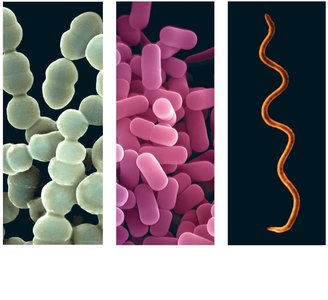
Structural and Functional Adaptations
Prokaryotic cells possess specialized structures that contribute to their survival and function.
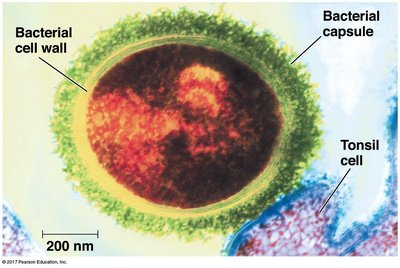
Cell Wall: Maintains cell shape, provides protection, and prevents bursting in hypotonic environments.
Bacterial cell walls contain peptidoglycan, a polymer of sugars and polypeptides.
Archaeal cell walls lack peptidoglycan, containing polysaccharides and proteins instead.
Eukaryotic cell walls are made of cellulose or chitin.
Gram Stain Classification
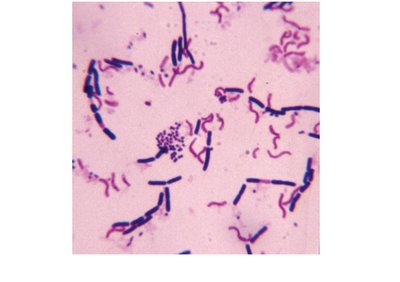
The Gram stain differentiates bacteria based on cell wall composition:
Gram-positive bacteria: Thick peptidoglycan layer, stains purple, more susceptible to antibiotics.
Gram-negative bacteria: Thin peptidoglycan layer, outer membrane with lipopolysaccharides, stains pink/red, often more resistant to antibiotics.
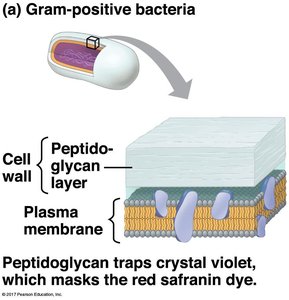
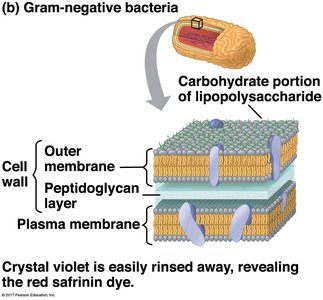 Example: Penicillin targets peptidoglycan, making Gram-positive bacteria more vulnerable.
Additional Cell-Surface Structures
Capsule: A polysaccharide or protein layer that covers many prokaryotes, aiding in protection and adherence.
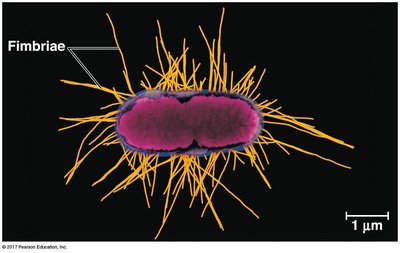
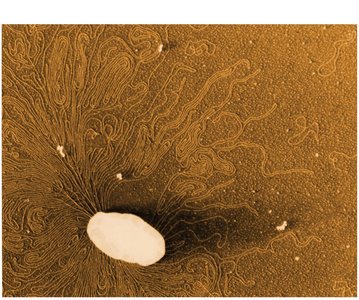
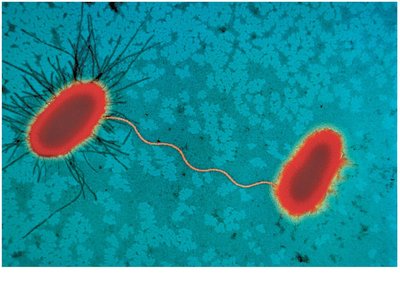
Fimbriae: Hair-like appendages that help cells stick to surfaces or each other.
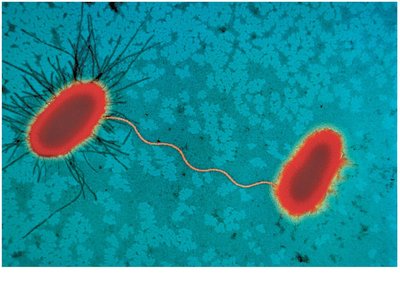
Pili: Longer than fimbriae, used for DNA exchange between cells (conjugation).
Motility
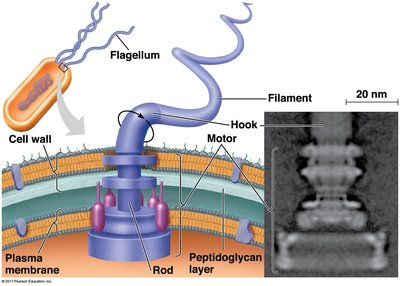
Many prokaryotes are motile, using flagella to move.
Flagella: Structures for movement, distinct from eukaryotic flagella in structure and function.
Taxis: Directed movement toward (positive taxis) or away from (negative taxis) a stimulus, such as light (phototaxis), chemicals (chemotaxis), or magnetic fields (magnetotaxis).
Internal and Genomic Organization
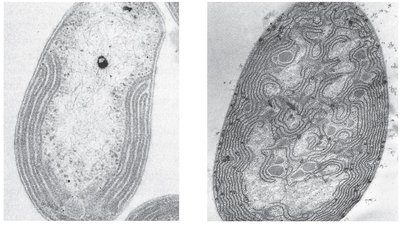
Prokaryotes lack complex compartmentalization but may have specialized membranes for metabolic functions.
Nucleoid: Region containing circular DNA, not surrounded by a membrane.
Plasmids: Small, circular DNA molecules with non-essential genes, often conferring antibiotic resistance.
Prokaryotic ribosomes differ from eukaryotic ones, allowing selective antibiotic targeting.
Endospores
Some prokaryotes form endospores, dormant structures that survive harsh conditions for extended periods. 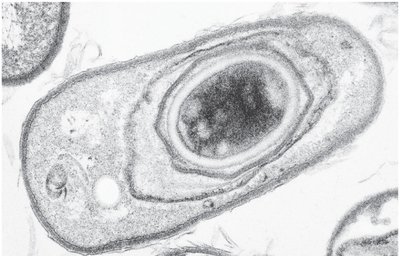
Reproduction and Adaptation
Prokaryotes reproduce rapidly by binary fission, leading to high population growth and genetic variation.
Genetic diversity arises from rapid reproduction, mutation, and genetic recombination.
Genetic Recombination Mechanisms
Transformation: Uptake of DNA fragments from the environment.
Transduction: Gene transfer via bacteriophages (viruses).
Conjugation: Direct transfer of DNA between cells via pili.
Nutritional and Metabolic Adaptations
Major Nutritional Modes
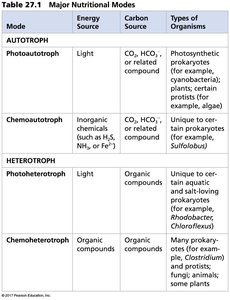
Prokaryotes exhibit diverse nutritional strategies, classified by energy and carbon sources.
Mode | Energy Source | Carbon Source | Types of Organisms |
|---|---|---|---|
Photoautotroph | Light | CO2, HCO3-, or related compound | Photosynthetic prokaryotes (e.g., cyanobacteria), plants, certain protists |
Chemoautotroph | Inorganic chemicals (e.g., H2S, NH3, Fe2+) | CO2, HCO3-, or related compound | Certain prokaryotes (e.g., Sulfolobus) |
Photoheterotroph | Light | Organic compounds | Certain aquatic and salt-loving prokaryotes |
Chemoheterotroph | Organic compounds | Organic compounds | Many prokaryotes (e.g., Clostridium), fungi, animals, some plants |
Oxygen and Nitrogen Metabolism
Obligate aerobes: Require O2 for respiration.
Obligate anaerobes: Poisoned by O2, use fermentation or anaerobic respiration.
Facultative anaerobes: Can survive with or without O2.
Nitrogen fixation: Conversion of atmospheric N2 to ammonia (NH3), making nitrogen available to other organisms.
Prokaryotic Phylogeny and Diversity
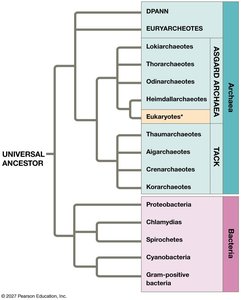
Molecular Systematics
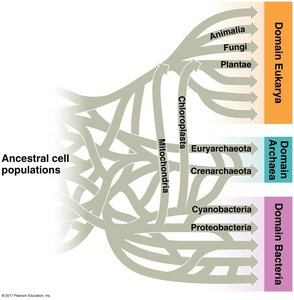
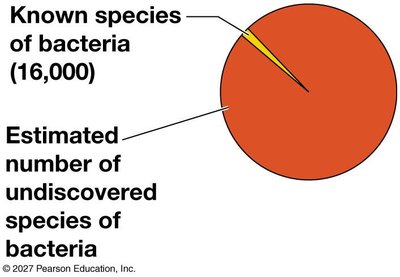
Advances in molecular systematics have reshaped prokaryotic taxonomy, revealing extensive diversity and evolutionary relationships. 
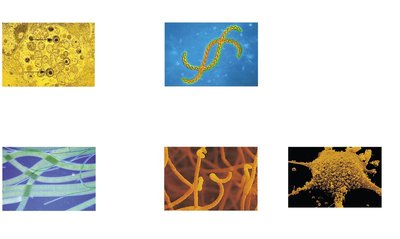
Major Groups of Bacteria
Proteobacteria: Gram-negative, diverse metabolic types.
Chlamydias: Lack peptidoglycan, obligate intracellular parasites.
Spirochetes: Helical, often pathogenic.
Cyanobacteria: Oxygenic photosynthesizers, some fix nitrogen.
Gram-positive bacteria: Includes free-living and pathogenic forms, source of many antibiotics.
Archaea
Archaea share features with both bacteria and eukaryotes and often inhabit extreme environments.
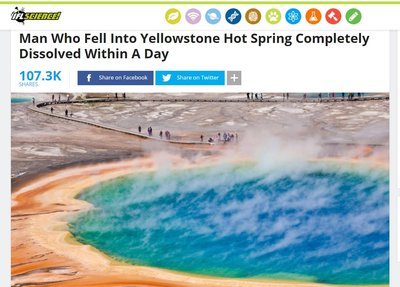
Extremophiles: Include extreme halophiles (saline environments), thermophiles (hot environments), and methanogens (produce methane in anaerobic conditions).
Ecological and Human Importance
Role in the Biosphere
Prokaryotes are essential for biogeochemical cycling, functioning as decomposers and nitrogen fixers.
They recycle nutrients between living and nonliving components of ecosystems.
Ecological Interactions
Prokaryotes often form symbiotic relationships with other organisms.
Mutualism: Both partners benefit.
Commensalism: One benefits, the other is unaffected.
Parasitism: One benefits at the expense of the other; pathogens cause disease.
Impact on Humans
Prokaryotes cause about half of all human diseases.
Gram-negative bacteria are generally more threatening due to their outer membrane.
Exotoxins: Secreted proteins causing disease symptoms.
Endotoxins: Lipopolysaccharide components released upon cell death.
Prokaryotes in Research and Technology
Used in DNA technology, bioremediation, recovery of metals, synthesis of vitamins, antibiotics, hormones, and other products.
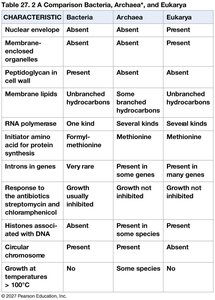
Comparison of Bacteria, Archaea, and Eukarya
Characteristic | Bacteria | Archaea | Eukarya |
|---|---|---|---|
Nuclear envelope | Absent | Absent | Present |
Membrane-enclosed organelles | Absent | Absent | Present |
Peptidoglycan in cell wall | Present | Absent | Absent |
Membrane lipids | Unbranched hydrocarbons | Some branched hydrocarbons | Unbranched hydrocarbons |
RNA polymerase | One kind | Several kinds | Several kinds |
Initiator amino acid for protein synthesis | Formyl-methionine | Methionine | Methionine |
Introns in genes | Very rare | Present in some genes | Present in many genes |
Response to antibiotics | Growth usually inhibited | Growth not inhibited | Growth not inhibited |
Histones associated with DNA | Absent | Present in some species | Present |
Circular chromosome | Present | Present | Absent |
Growth at temperatures >100°C | No | Some species | No |
Additional info: These notes expand on the original content with definitions, examples, and tables for clarity and completeness.
