 Back
Bacteria and Archaea: Structure, Function, and Ecological Roles
Study Guide - Smart Notes
 Tailored notes based on your materials, expanded with key definitions, examples, and context.
Bacteria and Archaea
Overview: Masters of Adaptation
Prokaryotes, which include Bacteria and Archaea, are among the most adaptable and abundant organisms on Earth. They thrive in environments that are inhospitable to most other life forms, such as highly saline lakes, acidic springs, and deep-sea vents. Their remarkable diversity and adaptability are key to their evolutionary success.
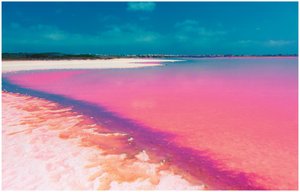
Prokaryotes are found in extreme environments, including those with high salinity, acidity, or temperature.
They are microscopic but extremely numerous, with more prokaryotes in a handful of soil than the total number of humans ever lived.
Prokaryotes are divided into two domains: Bacteria and Archaea.
Structural and Functional Adaptations in Prokaryotes
Cell Size, Shape, and Organization
Prokaryotic cells are generally much smaller than eukaryotic cells and exhibit a variety of shapes. The three most common shapes are:
Cocci: Spherical-shaped
Bacilli: Rod-shaped
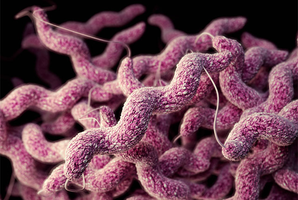
Spirilla: Spiral-shaped
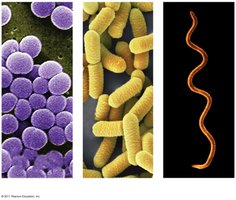
Most prokaryotes are unicellular, but some form colonies. Their small size (0.5–5 µm) allows for efficient nutrient uptake and rapid growth.
Cell-Surface Structures
The cell wall is a critical feature of prokaryotic cells, providing shape, protection, and preventing lysis in hypotonic environments. The composition of the cell wall differs between bacteria and archaea:
Bacterial cell walls contain peptidoglycan, a polymer of sugars and amino acids.
Archaeal cell walls lack peptidoglycan and instead contain polysaccharides and proteins.
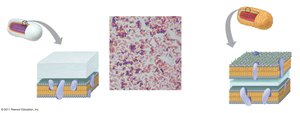
The Gram stain is used to classify bacteria based on cell wall structure:
Gram-positive bacteria: Thick peptidoglycan layer, stains purple.
Gram-negative bacteria: Thin peptidoglycan layer and an outer membrane, stains pink/red; often more resistant to antibiotics.
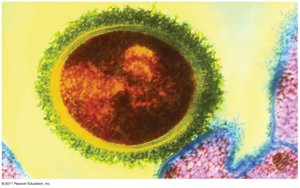
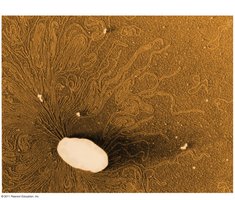
Many prokaryotes are surrounded by a capsule, a sticky layer of polysaccharide or protein that aids in adherence and protection.
Other surface structures include:
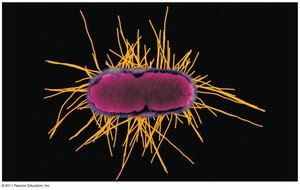
Fimbriae: Hair-like appendages for attachment to surfaces or other cells.
Pili (sex pili): Longer than fimbriae, used for DNA exchange during conjugation.
Motility
Many prokaryotes are motile and can move toward or away from stimuli (taxis). Chemotaxis is movement in response to chemical signals. Most motile bacteria use flagella for propulsion, which may be distributed over the cell surface or concentrated at one or both ends.
Internal Organization and DNA
Prokaryotic cells lack membrane-bound organelles. Their genetic material is typically a single circular chromosome located in the nucleoid region. Some bacteria also possess plasmids, small rings of DNA that carry additional genes, such as those for antibiotic resistance.
Genetic Variation in Prokaryotes
Sources of Genetic Diversity
Prokaryotes exhibit high genetic diversity due to:
Rapid reproduction (binary fission)
Mutation (even with low rates, rapid division leads to accumulation)
Genetic recombination (combining DNA from different sources)
Mechanisms of Genetic Recombination
Transformation: Uptake of foreign DNA from the environment.
Transduction: Transfer of genes by bacteriophages (viruses that infect bacteria).
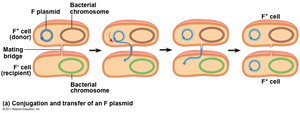
Conjugation: Direct transfer of DNA between cells via a pilus; requires the F factor (fertility factor).
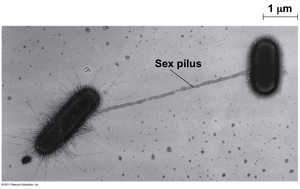
Cells with the F plasmid act as donors during conjugation, while recipients lack the F factor. The F factor can exist as a plasmid or be integrated into the chromosome.
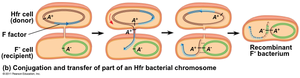
R plasmids carry genes for antibiotic resistance, and their spread is a major concern in medicine.
Diverse Nutritional and Metabolic Adaptations
Energy and Carbon Sources
Prokaryotes are classified by how they obtain energy and carbon:
Phototrophs: Obtain energy from light.
Chemotrophs: Obtain energy from chemicals.
Autotrophs: Use CO2 as a carbon source.
Heterotrophs: Require organic compounds for carbon.
The Role of Oxygen in Metabolism
Obligate aerobes: Require O2 for cellular respiration.
Obligate anaerobes: Poisoned by O2; use fermentation or anaerobic respiration.
Facultative anaerobes: Can survive with or without O2.
Nitrogen Metabolism
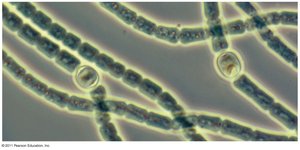
Nitrogen is essential for amino acids and nucleic acids. Some prokaryotes perform nitrogen fixation, converting atmospheric N2 to ammonia (NH3), making nitrogen available to other organisms.
Archaea: Life in Extreme Environments
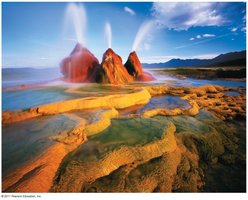
Some archaea, known as extremophiles, thrive in extreme conditions:
Extreme halophiles: Live in highly saline environments.
Extreme thermophiles: Thrive in very hot environments.
Bacterial Diversity and Examples
Notable Bacteria
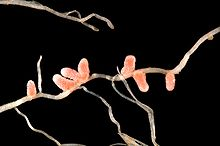
Rhizobium: Forms root nodules in legumes and fixes atmospheric nitrogen, contributing to soil fertility and human nutrition.
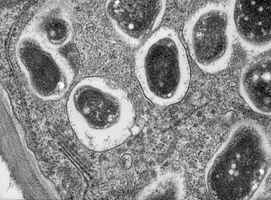
Agrobacterium: Causes tumors in plants and is used as a tool in genetic engineering.
Campylobacter: Causes blood poisoning in humans.
Helicobacter pylori: Causes stomach ulcers.
Prokaryotes in the Biosphere
Chemical Recycling
Prokaryotes are essential for recycling chemical elements in ecosystems. Chemoheterotrophic prokaryotes act as decomposers, breaking down dead organisms and waste, and increasing the availability of nutrients for plants.
Ecological Interactions
Prokaryotes engage in various symbiotic relationships:
Mutualism: Both organisms benefit.
Commensalism: One benefits, the other is unaffected.
Parasitism: One benefits at the expense of the other; disease-causing parasites are called pathogens.
Prokaryotes and Human Health
Beneficial and Harmful Impacts
While some prokaryotes are pathogenic, many have positive roles in human health. The human gut contains hundreds of bacterial species that aid in digestion and nutrient absorption.
About half of all human diseases are caused by prokaryotes (e.g., Lyme disease).
Pathogenic prokaryotes may produce exotoxins (secreted toxins) or endotoxins (released when bacteria die).
