 Back
Bacteria and Archaea: Structure, Function, and Diversity
Study Guide - Smart Notes
 Tailored notes based on your materials, expanded with key definitions, examples, and context.
Bacteria and Archaea
Introduction to Prokaryotes
Prokaryotes, which include the domains Bacteria and Archaea, are the most abundant and diverse organisms on Earth. Their remarkable adaptability allows them to thrive in environments that are too acidic, salty, cold, or hot for most other life forms.
Unicellular: Most prokaryotes are single-celled organisms.
Size: Typically 0.5–5 µm in diameter.
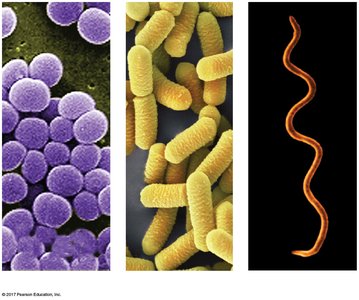
Shapes: Common shapes include spherical (cocci), rod-shaped (bacilli), and spiral (spirilla).
Adaptations for Success
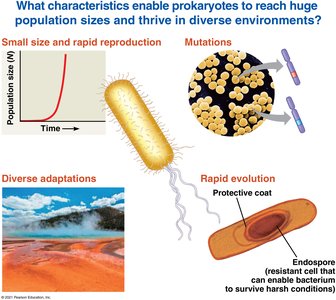
Prokaryotes have evolved a variety of structural and functional adaptations that enable them to reach large population sizes and thrive in diverse environments.
Small size and rapid reproduction: Prokaryotes reproduce quickly by binary fission, allowing for rapid population growth.
Mutation and rapid evolution: Although mutation rates are low, the large population sizes and rapid reproduction lead to significant genetic diversity.
Diverse adaptations: Prokaryotes can survive in extreme environments due to specialized adaptations such as endospores and unique metabolic pathways.
Cell-Surface Structures
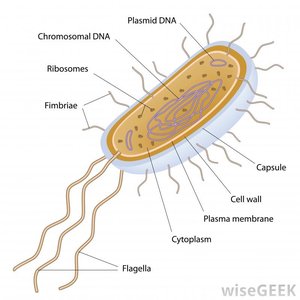
The cell wall is a key feature of prokaryotic cells, providing structural support and protection.
Bacterial cell walls: Contain peptidoglycan, a polymer of sugars and amino acids.
Archaeal cell walls: Composed of various polysaccharides and proteins, but lack peptidoglycan.
Capsule: Many prokaryotes have a sticky layer of polysaccharide or protein outside the cell wall, aiding in adherence and protection.
Gram Staining
Prokaryotes are classified based on cell wall composition using the Gram stain:
Gram-positive: Thick peptidoglycan layer; retains crystal violet dye.
Gram-negative: Thin peptidoglycan layer and an outer membrane; does not retain crystal violet, appears red/pink after staining.
Specialized Structures
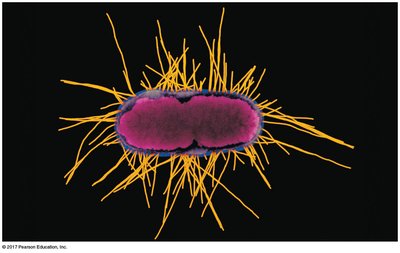
Fimbriae: Hair-like appendages that allow prokaryotes to adhere to surfaces.
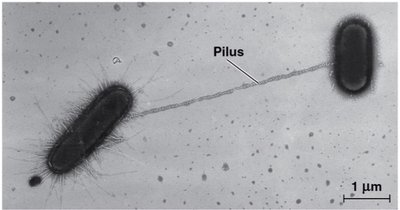
Pili: Longer appendages used for DNA exchange during conjugation.
Flagella: Most common structure for movement; can be scattered or concentrated.
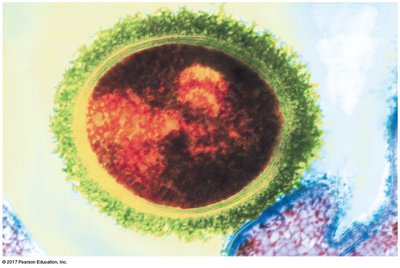
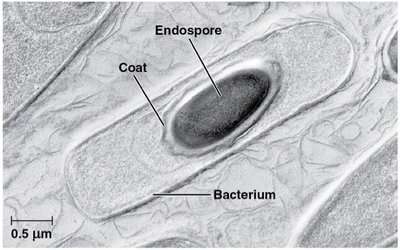
Endospores: Metabolically inactive, resistant cells that can survive harsh conditions for centuries.
Internal Organization and DNA
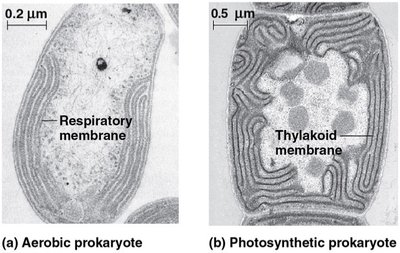
Prokaryotes lack membrane-bound organelles but may have specialized internal membranes for metabolic functions.
Circular chromosome: Located in the nucleoid region.
Plasmids: Small, circular DNA molecules that carry accessory genes.
Ribosomes: Sites of protein synthesis; structurally different from eukaryotic ribosomes.
Genetic Diversity in Prokaryotes
Mechanisms Promoting Diversity
Genetic diversity in prokaryotes is promoted by rapid reproduction, mutation, and genetic recombination.
Binary fission: Asexual reproduction; rapid population growth.
Mutation: Although rare per division, the high number of divisions leads to genetic variation.
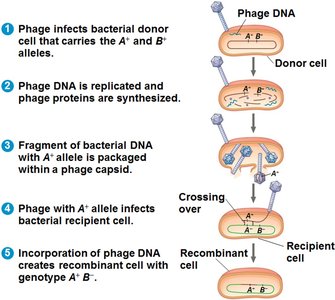
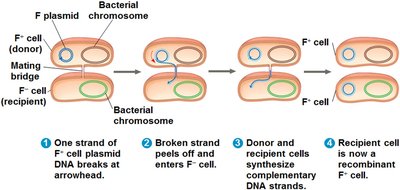
Genetic recombination: Exchange of genetic material through transformation, transduction, and conjugation.
Transformation
Uptake of foreign DNA from the environment by a prokaryotic cell.
Transduction
Transfer of genes between prokaryotes by bacteriophages (viruses that infect bacteria).
Conjugation
Direct transfer of DNA between two prokaryotic cells joined by a pilus. The F factor (fertility factor) is required for the formation of the pilus and DNA transfer.
Nutrition and Metabolism
Diverse Nutritional Modes
Prokaryotes exhibit a wide range of nutritional and metabolic adaptations, allowing them to exploit diverse environments.
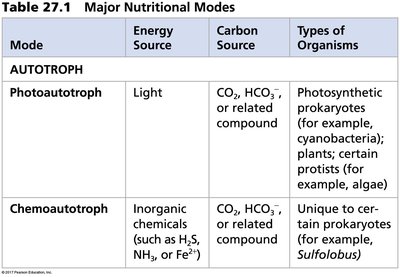
Mode | Energy Source | Carbon Source | Types of Organisms |
|---|---|---|---|
Photoautotroph | Light | CO2, HCO3-, or related compound | Photosynthetic prokaryotes (e.g., cyanobacteria); plants; certain protists (e.g., algae) |
Chemoautotroph | Inorganic chemicals (e.g., H2S, NH3, Fe2+) | CO2, HCO3-, or related compound | Certain prokaryotes (e.g., Sulfolobus) |
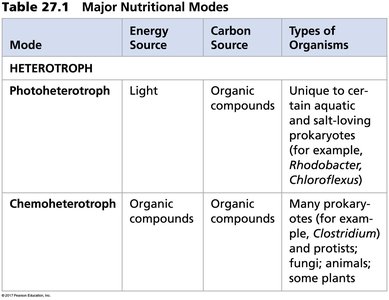
Mode | Energy Source | Carbon Source | Types of Organisms |
|---|---|---|---|
Photoheterotroph | Light | Organic compounds | Certain aquatic and salt-loving prokaryotes (e.g., Rhodobacter, Chloroflexus) |
Chemoheterotroph | Organic compounds | Organic compounds | Many prokaryotes (e.g., Clostridium); fungi; animals; some plants |
Role of Oxygen in Metabolism
Obligate aerobes: Require oxygen for cellular respiration.
Obligate anaerobes: Poisoned by oxygen; use fermentation or anaerobic respiration.
Facultative anaerobes: Can use oxygen if present or switch to anaerobic metabolism if not.
Nitrogen Metabolism
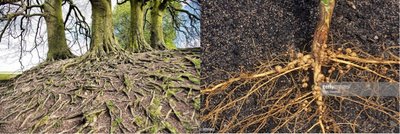
Some prokaryotes can fix atmospheric nitrogen (N2) into ammonia (NH3), a process essential for the nitrogen cycle in ecosystems.
Prokaryotic Diversity and Classification
Domains and Phylogeny
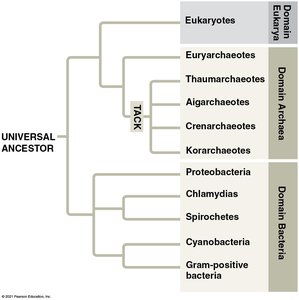
Prokaryotes are divided into two domains: Bacteria and Archaea. Horizontal gene transfer complicates the reconstruction of evolutionary relationships, which are not always reflected in morphology or metabolism.
Major Groups of Bacteria
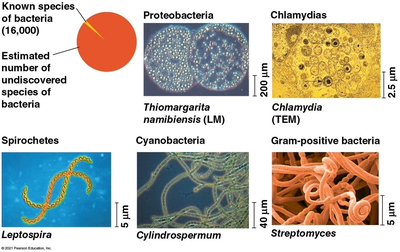
Proteobacteria: Large, diverse group of Gram-negative bacteria; includes photoautotrophs, chemoautotrophs, and heterotrophs.
Chlamydias: Parasites that live within animal cells; e.g., Chlamydia trachomatis causes nongonococcal urethritis.
Spirochetes: Helical, Gram-negative heterotrophs; some are pathogenic (e.g., Treponema pallidum causes syphilis, Borrelia burgdorferi causes Lyme disease).
Cyanobacteria: Gram-negative photoautotrophs; important for oxygen production and as phytoplankton.
Gram-positive bacteria: Includes important decomposers and pathogens (e.g., Streptomyces produces antibiotics, Bacillus anthracis causes anthrax).
Archaea: Masters of Extreme Environments
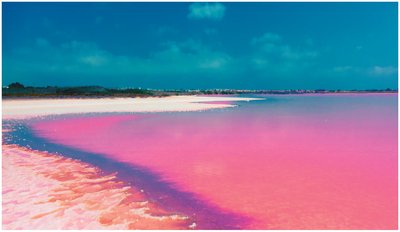
Archaea are known for their ability to inhabit extreme environments.
Extreme halophiles: Thrive in highly saline environments.
Extreme thermophiles: Thrive in very hot environments.
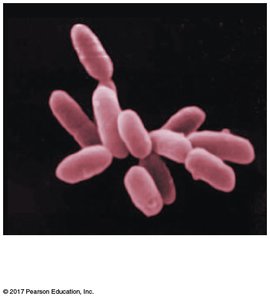
Summary Table: Major Prokaryotic Groups
Group | Key Features | Examples |
|---|---|---|
Proteobacteria | Gram-negative; diverse metabolism | Helicobacter pylori |
Chlamydias | Obligate intracellular parasites | Chlamydia trachomatis |
Spirochetes | Helical; some pathogenic | Treponema pallidum, Borrelia burgdorferi |
Cyanobacteria | Photoautotrophs; oxygenic photosynthesis | Oscillatoria |
Gram-positive bacteria | Thick peptidoglycan wall; some produce antibiotics | Streptomyces, Bacillus anthracis |
Conclusion
Bacteria and Archaea are essential to life on Earth, playing critical roles in ecosystems, biotechnology, and human health. Their structural, metabolic, and genetic diversity underpins their evolutionary success and ecological importance.
