 Back
BackBacteria and Archaea: Structure, Function, Diversity, and Roles in the Biosphere
Study Guide - Smart Notes
 Tailored notes based on your materials, expanded with key definitions, examples, and context.
Bacteria and Archaea: Masters of Adaptation
Introduction to Prokaryotes
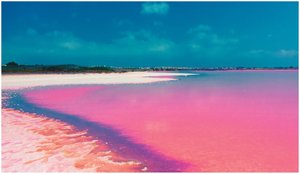
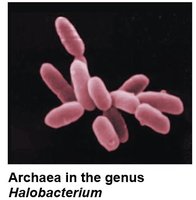
Prokaryotes, comprising the domains Bacteria and Archaea, are single-celled organisms that dominate Earth's biosphere in both abundance and diversity. Their remarkable adaptability allows them to thrive in environments ranging from extreme salinity to high temperatures and acidity. For example, the pink coloration of the hypersaline Laguna Salada de Torrevieja in Spain is due to the presence of trillions of prokaryotes, including halophilic archaea.
Characteristics Enabling Prokaryotic Success
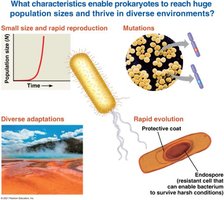
Small size and rapid reproduction: Prokaryotes reproduce quickly, allowing for large population sizes and rapid evolution.
Genetic diversity: High mutation rates and genetic recombination contribute to adaptability.
Diverse metabolic adaptations: Prokaryotes can utilize a wide range of energy and carbon sources.
Protective structures: Features such as endospores enable survival in harsh conditions.
Structural and Functional Adaptations of Prokaryotes
Cell Size and Shape
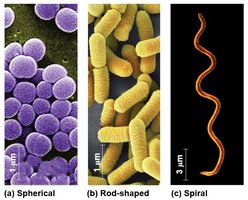
Prokaryotic cells are typically 0.5–5 µm in diameter, much smaller than most eukaryotic cells. They exhibit a variety of shapes:
Cocci: Spherical
Bacilli: Rod-shaped
Spirilla: Spiral-shaped
Cell Wall Structure
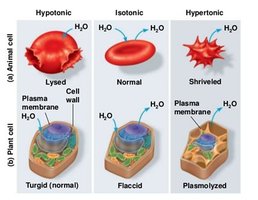
The cell wall is essential for maintaining cell shape, protecting the cell, and preventing lysis in hypotonic environments. In hypertonic environments, prokaryotes lose water and may undergo plasmolysis, which is why salt is an effective food preservative.
Composition of Cell Walls
Bacteria: Most have cell walls containing peptidoglycan, a polymer of sugars and amino acids.
Archaea: Cell walls lack peptidoglycan and instead contain various polysaccharides and proteins.
Eukaryotes: Cell walls (if present) are made of cellulose (plants) or chitin (fungi).
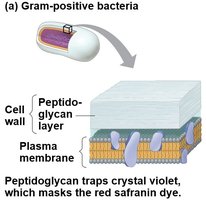
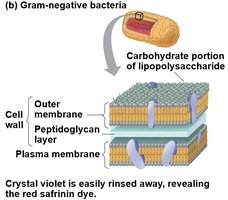
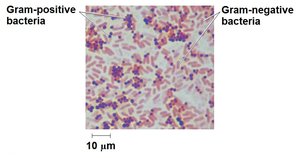
The Gram stain is used to classify bacteria based on cell wall composition:
Gram-positive: Thick peptidoglycan layer, stains purple.
Gram-negative: Thin peptidoglycan layer and an outer membrane with lipopolysaccharides, stains pink/red.
Additional Cell Surface Structures
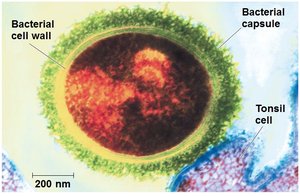
Capsule/Slime Layer: Sticky polysaccharide or protein layer aiding in adherence, dehydration prevention, and immune evasion.
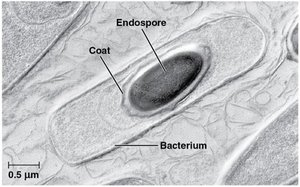
Endospores: Dormant, tough structures formed during nutrient scarcity, allowing survival in extreme conditions.
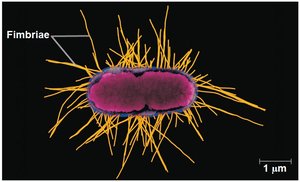
Fimbriae and Pili: Hairlike appendages for attachment (fimbriae) and DNA transfer (pili/sex pili).
Motility
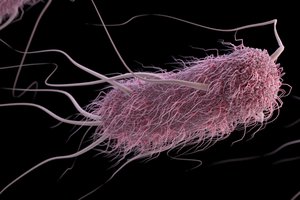
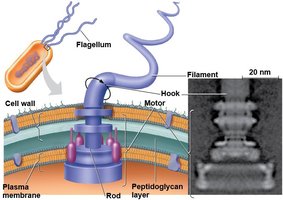
About half of all prokaryotes are motile, often using flagella to move toward or away from stimuli (taxis). Prokaryotic flagella differ structurally and functionally from eukaryotic flagella.
Internal Organization and DNA
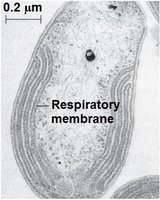
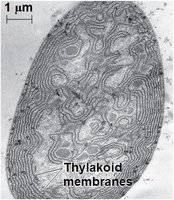
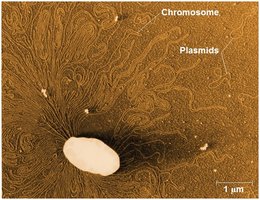
Prokaryotes lack membrane-bound organelles but may have specialized infoldings of the plasma membrane for metabolic functions. Their genetic material consists of a single circular chromosome located in the nucleoid region, and often additional small DNA rings called plasmids.
Genetic Processes
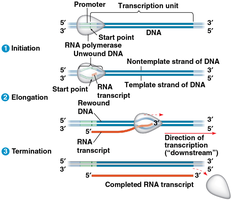
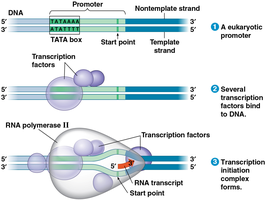
Prokaryotes differ from eukaryotes in DNA replication, transcription, and translation, which is the basis for the selective action of many antibiotics.
Reproduction
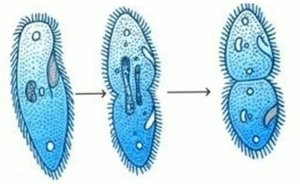
Prokaryotes reproduce asexually by binary fission, leading to rapid population growth under favorable conditions.
Genetic Diversity in Prokaryotes
Sources of Genetic Variation
Rapid reproduction: Short generation times allow for quick accumulation of mutations.
Mutation: Although rare per cell division, the large population sizes and rapid reproduction rates make mutations a significant source of diversity.
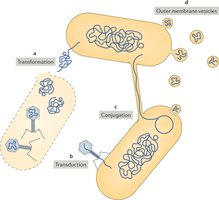
Genetic recombination: DNA from different sources is combined through transformation, transduction, and conjugation.
Transformation and Transduction
Transformation: Uptake of foreign DNA from the environment.
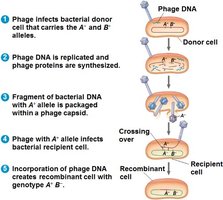
Transduction: Transfer of DNA via bacteriophages (viruses that infect bacteria).
Conjugation and Plasmids
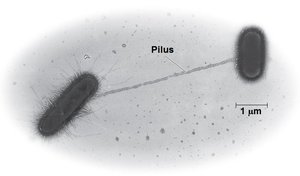
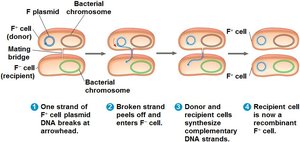
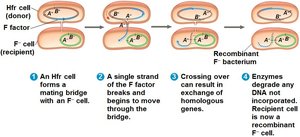
Conjugation involves direct transfer of DNA between two prokaryotic cells, typically mediated by a pilus. The F factor (fertility factor) is essential for pilus formation and DNA transfer.
Antibiotic Resistance
R plasmids carry genes for antibiotic resistance and can be rapidly spread through populations by horizontal gene transfer, posing significant challenges for medicine.
Diversity of Nutritional and Metabolic Adaptations
Major Nutritional Modes
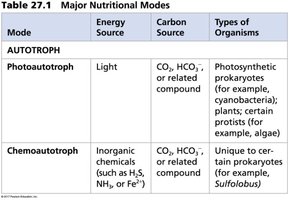
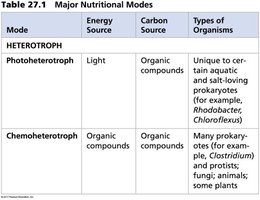
Prokaryotes are classified by their energy and carbon sources:
Mode | Energy Source | Carbon Source | Types of Organisms |
|---|---|---|---|
Photoautotroph | Light | CO2, HCO3-, or related compound | Photosynthetic prokaryotes (e.g., cyanobacteria), plants, certain protists |
Chemoautotroph | Inorganic chemicals (e.g., H2S, NH3, Fe2+) | CO2, HCO3-, or related compound | Certain prokaryotes (e.g., Sulfolobus) |
Photoheterotroph | Light | Organic compounds | Certain aquatic and salt-loving prokaryotes (e.g., Rhodobacter, Chloroflexus) |
Chemoheterotroph | Organic compounds | Organic compounds | Many prokaryotes (e.g., Clostridium), protists, fungi, animals, some plants |
Oxygen and Nitrogen in Metabolism
Obligate aerobes: Require O2 for respiration.
Obligate anaerobes: Poisoned by O2; use fermentation or anaerobic respiration.
Facultative anaerobes: Can use O2 or switch to anaerobic metabolism.
Nitrogen fixation: Some prokaryotes convert atmospheric N2 to ammonia (NH3), making nitrogen available to other organisms.
Metabolic Cooperation
Prokaryotes may form colonies or biofilms to exploit resources more efficiently. For example, in Anabaena, some cells specialize in nitrogen fixation (heterocysts), while others perform photosynthesis.
Prokaryotic Diversity and Evolution
Phylogenetic Diversity
Genomic studies have revealed extensive diversity among prokaryotes, with many lineages resulting from horizontal gene transfer. The domains Bacteria and Archaea are genetically distinct, with Archaea sharing some features with eukaryotes.
Major Groups of Bacteria
Proteobacteria: Gram-negative, metabolically diverse (includes pathogens and autotrophs).
Chlamydias: Animal cell parasites, lack peptidoglycan.
Spirochetes: Helical, some are pathogens (e.g., syphilis, Lyme disease).
Cyanobacteria: Photoautotrophs, ancestors of plant chloroplasts.
Gram-positive bacteria: Includes actinomycetes, pathogens, and antibiotic producers.
Major Groups of Archaea
Extremophiles: Live in extreme environments (halophiles, thermophiles).
Methanogens: Produce methane, obligate anaerobes.
TACK supergroup: Includes Thaumarchaeota, Aigarchaeota, Crenarchaeota, Korarchaeota, and Lokiarchaeotes (potentially related to eukaryotes).
Ecological and Human Roles of Prokaryotes
Chemical Recycling
Prokaryotes are essential for recycling elements such as carbon and nitrogen. They decompose organic matter, fix nitrogen, and make nutrients available to other organisms.
Ecological Interactions
Symbiosis: Close association between two species (mutualism, commensalism, parasitism).
Pathogens: Disease-causing bacteria.
Mutualists: For example, gut bacteria that aid digestion and synthesize vitamins.
Antibiotic Resistance
Overuse and misuse of antibiotics have led to the rapid evolution of resistant bacterial strains, posing a major public health challenge. Resistance genes spread quickly via horizontal gene transfer.
Prokaryotes in Research and Technology
CRISPR-Cas9: A gene-editing tool derived from prokaryotic immune systems.
Biotechnology: Prokaryotes are used in gene cloning, PCR, and the production of biodegradable plastics and biofuels.
Bioremediation: Use of prokaryotes to clean up environmental pollutants, such as oil spills.
