 Back
Basic Chemistry and the Molecules of Life: Foundations for General Biology (Study Guide 1)
Study Guide - Smart Notes
 Tailored notes based on your materials, expanded with key definitions, examples, and context.
Atoms and Elements
Structure of Atoms
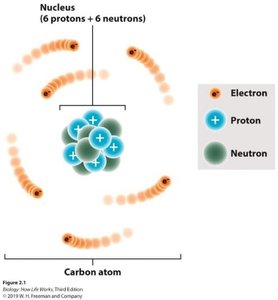
Atoms are the fundamental units of matter, composed of three subatomic particles: protons, neutrons, and electrons. The nucleus contains protons (positively charged) and neutrons (neutral), while electrons (negatively charged) orbit the nucleus in shells.
Atomic number: The number of protons in the nucleus, which defines the element.
Atomic mass: The sum of protons and neutrons in the nucleus.
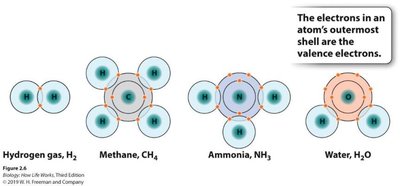
Valence electrons: Electrons in the outermost shell, crucial for chemical bonding.
Elements and the Periodic Table
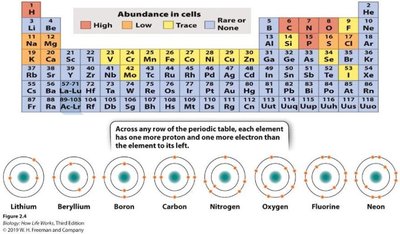
Elements are pure substances consisting of only one type of atom. The periodic table organizes elements by increasing atomic number and groups them by similar chemical properties.
There are 118 known elements; 94 occur naturally.
Elements in the same row have the same number of electron shells.
The most abundant elements in biological organisms are carbon (C), oxygen (O), hydrogen (H), nitrogen (N), phosphorus (P), and sulfur (S).
Chemical Bonding and Molecule Stability
Valence Electrons and Bond Formation
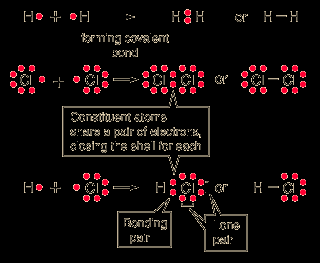
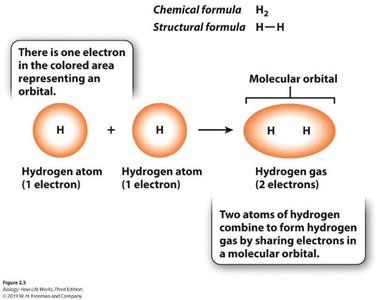
Atoms form chemical bonds to achieve stable electron configurations, usually by filling their valence shells. Common examples include hydrogen gas (H2), methane (CH4), ammonia (NH3), and water (H2O).
Covalent bonds: Atoms share electrons to fill their valence shells.
Molecule stability: Molecules are most stable when their outermost energy level is fully occupied.
Types of Chemical Bonds
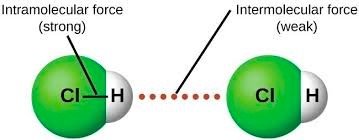
Chemical bonds are classified as strong (intramolecular) or weak (intermolecular) interactions.
Strong bonds: Covalent and ionic bonds hold molecules and macromolecules together.
Weak bonds: Non-covalent interactions (hydrogen bonds, ionic interactions, van der Waals forces) allow for transient and reversible molecular interactions.
Electronegativity and Bond Types
Electronegativity
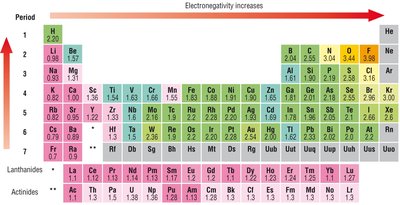
Electronegativity is the tendency of an atom to attract shared electrons in a chemical bond. It is determined by nuclear charge and the arrangement of electrons in atomic shells.
Electronegativity increases up and to the right on the periodic table.
Order of electronegativity for common biological elements: O > N > S, C, H, P.
Bond Types Based on Electronegativity Differences
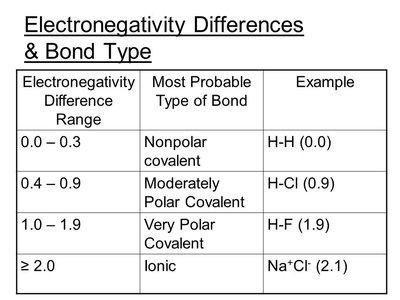
The type of bond formed between two atoms depends on the difference in their electronegativities.
Nonpolar covalent bond: Electrons are shared equally (e.g., H2).
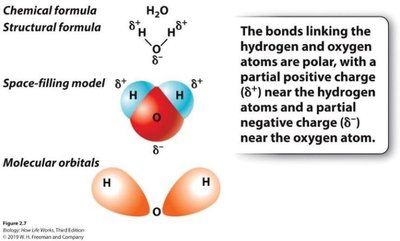
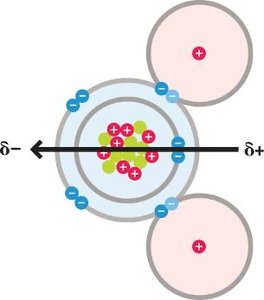
Polar covalent bond: Electrons are shared unequally, creating partial charges (e.g., H2O).
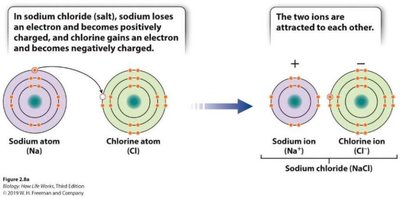
Ionic bond: Electrons are transferred, resulting in full charges (e.g., NaCl).
Electronegativity Difference Range | Most Probable Type of Bond | Example |
|---|---|---|
0.0 – 0.3 | Nonpolar covalent | H–H (0.0) |
0.4 – 0.9 | Moderately Polar Covalent | H–Cl (0.9) |
1.0 – 1.9 | Very Polar Covalent | H–F (1.9) |
≥ 2.0 | Ionic | Na+Cl- (2.1) |
Polar and Nonpolar Molecules
Polar Covalent Bonds and Dipoles
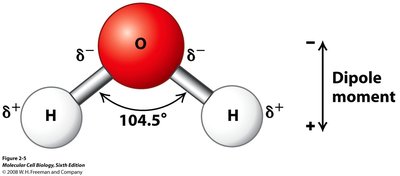
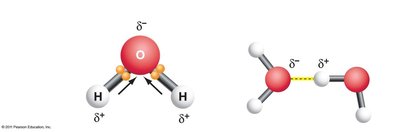
Polar covalent bonds result in molecules with partial positive and negative charges, known as dipoles. Water is a classic example, with oxygen being more electronegative than hydrogen.
Dipole moment: A measure of the separation of charges in a molecule.
Water's polarity enables hydrogen bonding and makes it an excellent solvent for polar substances.
Ionic Bonds
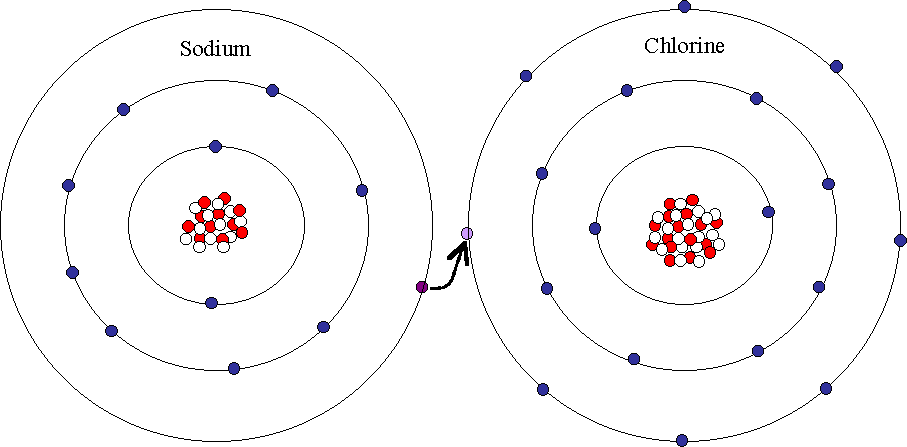
Ionic bonds form when electrons are transferred from one atom to another, creating oppositely charged ions that attract each other.
Example: Sodium (Na) donates an electron to chlorine (Cl), forming Na+ and Cl-.
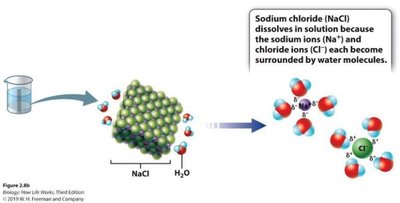
Ionic compounds often dissolve in water, as water molecules surround and stabilize the ions.
Macromolecules and Covalent Bonds
Macromolecule Structure
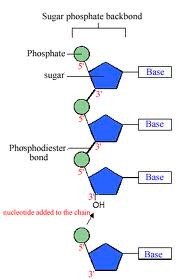
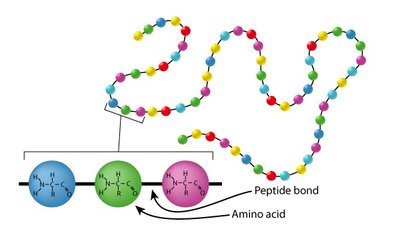
Biological macromolecules are polymers made from monomer subunits, held together by strong covalent bonds.
Nucleic acids: Nucleotides joined by phosphodiester bonds.
Proteins: Amino acids joined by peptide bonds.
Carbohydrates: Monosaccharides joined by glycosidic bonds.
Lipids: Fatty acids and glycerol joined by ester bonds.
Non-covalent Interactions in Biomolecules
Types of Non-covalent Bonds
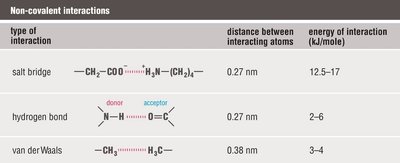
Non-covalent interactions are weaker than covalent bonds but essential for transient and reversible biological processes.
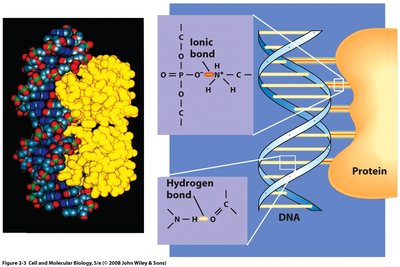
Salt bridges: Ionic interactions between charged groups.
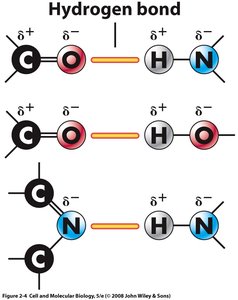
Hydrogen bonds: Attractive forces between a hydrogen atom attached to an electronegative atom and another electronegative atom.
Van der Waals/hydrophobic interactions: Weak attractions due to transient charge asymmetry; nonpolar molecules cluster together and repel water.
Type of Interaction | Distance (nm) | Energy (kJ/mole) |
|---|---|---|
Salt bridge | 0.27 | 12.5–17 |
Hydrogen bond | 0.27 | 2–6 |
Van der Waals | 0.38 | 3–4 |
Hydrogen Bonds and Water
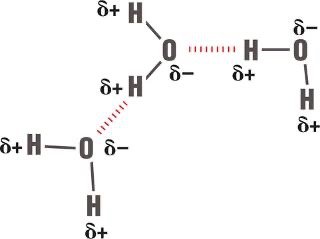
Hydrogen bonds are critical for the structure and function of water, DNA, proteins, and other biomolecules.
Hydrogen bonds form between water molecules, giving water its unique properties.
Hydrophilic molecules interact with water via hydrogen bonds, while hydrophobic molecules cluster together, excluding water.
Biological Examples of Non-covalent Interactions
Non-covalent interactions are essential for:
Protein-DNA binding (transcription factors)
Cell membrane formation (hydrophobic lipid bilayers)
Protein folding (interactions between side chains)
Carbon: The Backbone of Life
Properties of Carbon
Carbon is the most versatile atom in organic chemistry, capable of forming four covalent bonds and a wide variety of molecular shapes.
Carbon atoms can form chains, rings, and double bonds.
Single bonds allow free rotation; double bonds are shorter and restrict rotation.
Functional Groups in Organic Molecules
Functional groups containing H, N, O, P, and S impart specific chemical properties to organic molecules.
Amino groups: Act as bases.
Carboxyl groups: Act as acids.
Carbonyl groups: Link molecules into more complex compounds.
Hydroxyl groups: Act as weak acids.
Phosphate groups: Carry negative charges.
Sulfhydryl groups: Form disulfide bonds.
Macromolecule Overview
Cellular processes depend on four main classes of carbon-based macromolecules:
Proteins: Polymers of amino acids.
Nucleic acids: Polymers of nucleotides.
Carbohydrates: Polymers of monosaccharides.
Lipids: Polymers of fatty acids and glycerol.
Summary Table: Macromolecules and Their Bonds
Macromolecule | Monomer Unit | Covalent Bond |
|---|---|---|
Nucleic Acids | Nucleotide | Phosphodiester Bond |
Proteins | Amino Acid | Peptide Bond |
Carbohydrates | Monosaccharide | Glycosidic Bond |
Lipids | Fatty Acid + Glycerol | Ester Bond |
Key Concepts and Applications
Atoms and elements are the foundation of biological molecules.
Chemical bonds (covalent, ionic, and non-covalent) determine molecular structure and function.
Electronegativity influences bond type and molecular polarity.
Macromolecules are built from monomers via covalent bonds; their interactions are mediated by non-covalent forces.
