 Back
BackBasic Principles of Animal Form and Function
Study Guide - Smart Notes
 Tailored notes based on your materials, expanded with key definitions, examples, and context.
Basic Principles of Animal Form and Function
Introduction
This chapter explores how animal form (anatomy) and function (physiology) are closely correlated and shaped by evolutionary processes. It covers the hierarchical organization of animal bodies, the types of tissues, organ systems, and the mechanisms animals use to regulate their internal environment in response to external changes.
Correlation of Form and Function
Body Plans and Evolutionary Adaptation
Animal body plans are the result of evolutionary adaptation and natural selection, constrained by physical laws. The size and shape of an animal influence how it interacts with its environment, affecting movement, heat exchange, and other physiological processes.
Anatomy: The biological structure of an organism, which varies widely among animals.
Physiology: The biological function of structures.
Body plans are programmed by the genome, shaped by millions of years of evolution.
Physical laws (e.g., those governing strength, diffusion, and heat exchange) limit the range of possible animal forms.
Convergent evolution can result in similar body shapes among unrelated species facing similar environmental challenges.
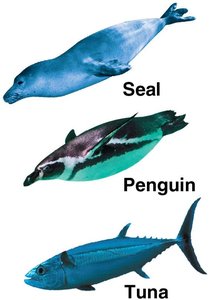
Example: Fast-swimming animals like seals, penguins, and tuna have evolved streamlined bodies independently due to similar selective pressures in aquatic environments.
Exchange with the Environment
Surface Area and Exchange
All animals must exchange materials (nutrients, gases, wastes) with their environment. The rate of exchange is proportional to the surface area of the cell or tissue involved.
Single-celled organisms (e.g., amoebas) have sufficient surface area for direct exchange.
Simple multicellular organisms (e.g., hydra) have body plans that facilitate diffusion across their surfaces.
Flat animals (e.g., tapeworms) maximize surface area for exchange by having most cells in direct contact with the environment.
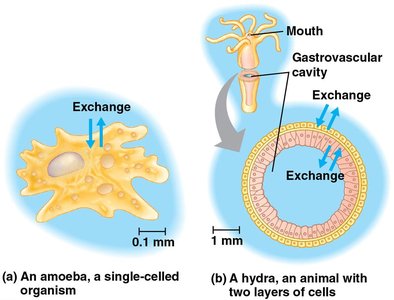
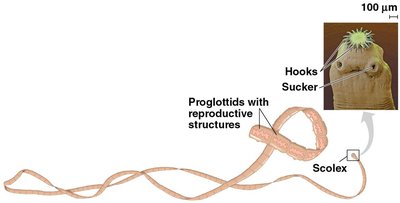
Complex Body Plans and Internal Exchange Surfaces
More complex animals have specialized, extensively branched or folded internal structures (e.g., lungs, intestines) to increase surface area for exchange. These surfaces are usually internal but connect to the environment via openings (e.g., mouth).
Complex body plans allow animals to maintain stable internal environments despite external variability.
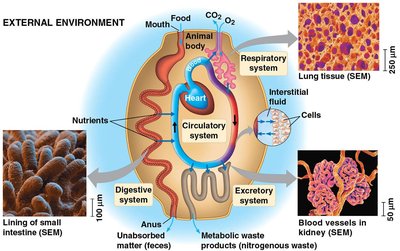
Hierarchical Organization of Animal Bodies
Levels of Organization
Animal bodies are organized hierarchically:
Cells are organized into tissues with common functions.
Tissues are organized into organs.
Organs are grouped into organ systems.
Some organs serve multiple physiological functions (e.g., pancreas in digestion and endocrine regulation).
Major Organ Systems in Mammals
The following table summarizes the main organ systems in mammals and their components:
Organ System | Main Components |
|---|---|
Digestive | Mouth, pharynx, esophagus, stomach, intestines, liver, pancreas, anus |
Circulatory | Heart, blood vessels, blood |
Respiratory | Lungs, trachea, other breathing tubes |
Immune and lymphatic | Bone marrow, lymph nodes, thymus, spleen, lymph vessels |
Excretory | Kidneys, ureters, urinary bladder, urethra |
Endocrine | Pituitary, thyroid, pancreas, adrenal, and other hormone-secreting glands |
Reproductive | Ovaries or testes and associated organs |
Nervous | Brain, spinal cord, nerves, sensory organs |
Integumentary | Skin and its derivatives (hair, claws, sweat glands) |
Skeletal | Bones, tendons, ligaments, cartilage |
Muscular | Skeletal muscles |
Animal Tissues
Overview of Tissue Types
There are four main types of animal tissues:
Epithelial
Connective
Muscle
Nervous
Epithelial Tissue
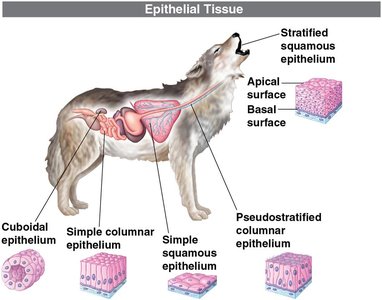
Epithelial tissue covers the outside of the body and lines organs and cavities. Epithelial cells are closely packed and can function as barriers. They are classified by cell shape (cuboidal, columnar, squamous) and arrangement (simple, stratified, pseudostratified). All epithelia are polarized, with an apical (exposed) and basal (attached) surface.

Connective Tissue
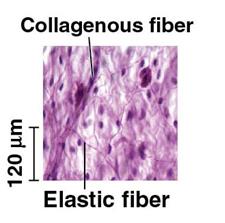
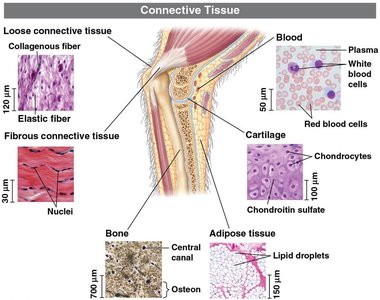
Connective tissue holds tissues and organs in place. It contains sparsely packed cells in an extracellular matrix of fibers (collagenous, reticular, elastic). There are six major types:
Loose connective tissue: binds epithelia to underlying tissues
Fibrous connective tissue: found in tendons and ligaments
Bone: forms the skeleton
Adipose tissue: stores fat
Cartilage: flexible support, made of chondrocytes
Blood: composed of cells in plasma
Muscle Tissue
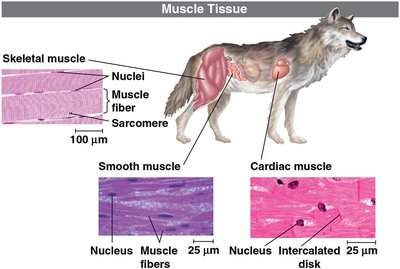
Muscle tissue is responsible for movement. It consists of actin and myosin filaments. There are three types:
Skeletal muscle: voluntary movement, attached to bones
Smooth muscle: involuntary movement, found in organs
Cardiac muscle: involuntary, forms the heart wall
Nervous Tissue
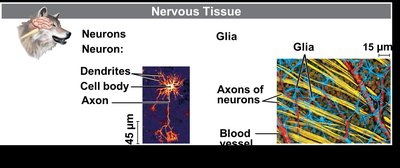
Nervous tissue functions in the receipt, processing, and transmission of information. It contains neurons (transmit impulses) and glial cells (support neurons).
Coordination and Control
Endocrine and Nervous Systems
Animals coordinate responses to stimuli using the endocrine and nervous systems:
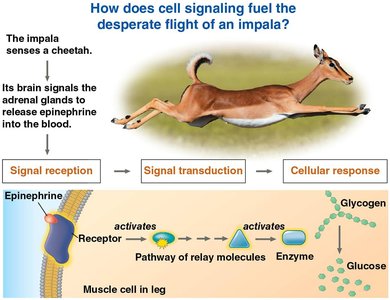
Endocrine system: releases hormones into the bloodstream; effects are slow but long-lasting and widespread.
Nervous system: transmits signals rapidly to specific locations; effects are fast but short-lived and localized.
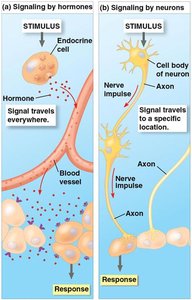
Example: The nervous system is responsible for immediate responses (e.g., reflexes), while the endocrine system coordinates gradual changes (e.g., growth, metabolism).
Regulation of the Internal Environment
Regulators vs. Conformers
Animals manage their internal environment by regulating or conforming to external changes:
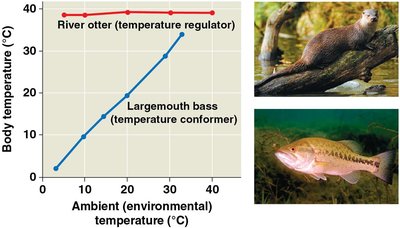
Regulators: use internal mechanisms to maintain stable conditions (e.g., river otter regulates body temperature).
Conformers: allow internal conditions to change with the environment (e.g., largemouth bass conforms to water temperature).
Homeostasis and Feedback Control
Homeostasis is the maintenance of a steady internal state. It relies largely on negative feedback, which returns a variable to a normal range. Positive feedback amplifies a stimulus and is less common in homeostasis.
Negative feedback: e.g., regulation of body temperature, blood pH, and glucose concentration.
Positive feedback: e.g., oxytocin release during childbirth.
Thermoregulation
Endotherms vs. Ectotherms
Thermoregulation is the process by which animals maintain internal temperature within a normal range.
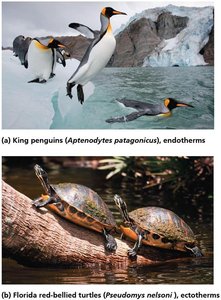
Endotherms: generate heat by metabolism (e.g., birds, mammals); can maintain stable body temperature despite environmental changes.
Ectotherms: gain heat from external sources (e.g., reptiles, amphibians, most fish); tolerate greater variation in internal temperature.
Mechanisms of Heat Exchange
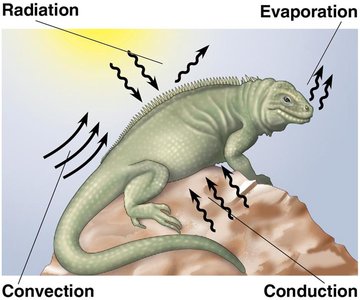
Heat exchange with the environment occurs via four physical processes:
Radiation: absorption and emission of heat as electromagnetic waves
Evaporation: loss of heat as water evaporates from a surface
Convection: transfer of heat by movement of air or liquid past a surface
Conduction: direct transfer of heat between objects in contact
Thermoregulatory Adaptations
Animals use several adaptations to balance heat loss and gain:
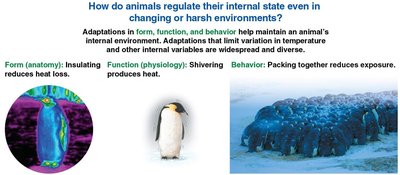
Insulation: skin, feathers, fur, and blubber reduce heat flow
Circulatory adaptations: vasodilation and vasoconstriction regulate blood flow; countercurrent exchange reduces heat loss
Evaporative cooling: sweating, panting, and bathing
Behavioral responses: seeking shade, basking, huddling
Adjusting metabolic heat production: shivering and nonshivering thermogenesis (e.g., brown fat)
Example: Emperor penguins huddle together to conserve heat in cold environments, demonstrating behavioral thermoregulation.
Countercurrent heat exchangers in marine mammals and birds transfer heat between blood vessels to minimize heat loss.
Brown fat in mammals is specialized for rapid heat production, especially in infants and hibernating species.
