 Back
Biology Exam 3 Ch. 40 Animal Form and Function
Study Guide - Smart Notes
 Tailored notes based on your materials, expanded with key definitions, examples, and context.
Basic Principles of Animal Form and Function
Anatomy vs. Physiology
Animal biology is structured around the concepts of anatomy (the study of an organism's physical structure) and physiology (the study of the functions and processes of those structures). Understanding both is essential for predicting how animals survive and adapt to their environments.
Anatomy: The physical structure of organisms, including organs, tissues, and cells.
Physiology: The functions and mechanisms operating within those structures.
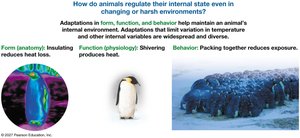
Example: Insulating fur (anatomy) reduces heat loss, while shivering (physiology) produces heat.
Constraints on Unicellular Organisms
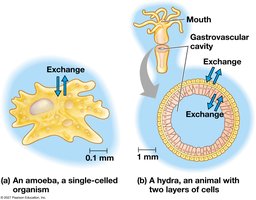
Large unicellular organisms do not exist because the mechanisms for exchange (diffusion, osmosis, active transport) are inefficient over large distances. Multicellularity allows for increased surface area and specialized transport systems.
Direct exchange: Small unicellular organisms (e.g., amoeba) exchange materials directly with their environment.
Multicellularity: Larger organisms are composed of many small cells, increasing surface area for exchange.
Example: Hydras (two cell layers thick) can still exchange materials efficiently, but larger animals require complex internal transport systems.
Surface Area to Volume Ratio (SA/V)
The surface area to volume ratio is a critical factor in biological systems, affecting rates of diffusion, heat exchange, and nutrient absorption. As organisms increase in size, their volume grows faster than their surface area, reducing SA/V.
High SA/V: Promotes efficient exchange of materials.
Low SA/V: Limits exchange, requiring specialized structures.
Prediction: Smaller or more complex structures (e.g., villi in intestines) have higher SA/V.
Hierarchical Organization of Body Plans
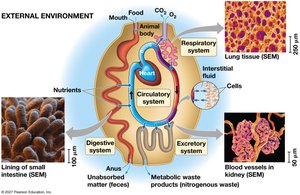
Animals are organized hierarchically: cells form tissues, tissues form organs, and organs form organ systems. This organization allows for specialization and efficient functioning.
Cell: Basic unit of life.
Tissue: Group of cells with similar structure and function.
Organ: Structure composed of multiple tissues performing specific functions.
Organ system: Group of organs working together for a common purpose.
Types of Animal Tissues
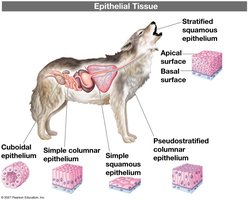
There are four main types of animal tissues, each with distinct structure and function:
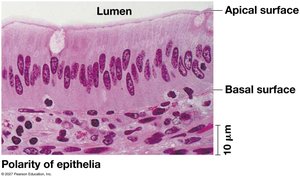
Epithelial tissue: Covers body surfaces and lines cavities; cells are closely packed and may be stratified or simple.
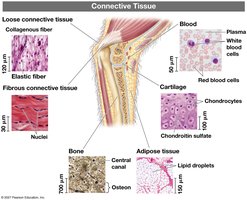
Connective tissue: Supports and binds other tissues; contains cells scattered in an extracellular matrix (fibers in liquid, jellylike, or solid foundation).
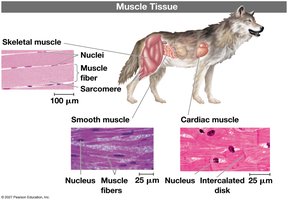
Muscle tissue: Responsible for movement; contains actin and myosin filaments. Types: skeletal (voluntary), smooth (involuntary), cardiac (heart).
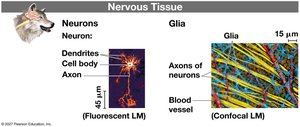
Nervous tissue: Receives, processes, and transmits information; contains neurons and glial cells.
Coordination and Control: Endocrine vs. Nervous Systems
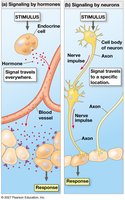
Animals use two major systems for regulation: the endocrine system (hormones, slow and widespread) and the nervous system (electrical signals, fast and targeted).
Endocrine system: Releases hormones into the bloodstream, affecting distant targets.
Nervous system: Transmits electrical impulses along neurons to specific locations.
Comparison: Endocrine is slower but longer-lasting; nervous is rapid and short-term.
Regulators vs. Conformers
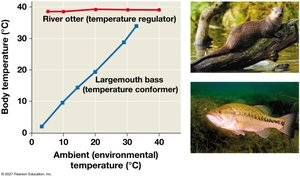
Animals can be classified as regulators (maintain internal conditions despite external changes) or conformers (internal conditions vary with the environment).
Regulator: River otter maintains constant body temperature.
Conformer: Largemouth bass body temperature changes with ambient temperature.
Homeostasis
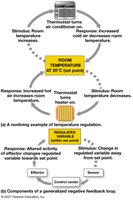
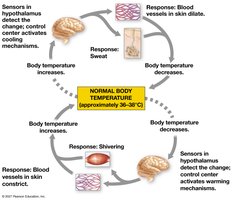
Homeostasis is the maintenance of a stable internal environment. It involves set points, sensors, control centers, and responses to stimuli.
Set point: Desired value for a physiological variable.
Sensor: Detects changes from set point.
Control center: Processes information and triggers response.
Response: Returns variable to set point.
Feedback Control in Homeostasis
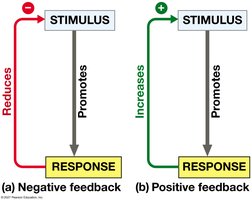
Feedback mechanisms regulate homeostasis:
Negative feedback: Reduces deviation from set point (e.g., temperature regulation).
Positive feedback: Amplifies deviation, driving processes to completion (e.g., childbirth).
Thermoregulation
Thermoregulation is the process by which animals maintain internal temperature. Animals are classified by their heat source and temperature stability:
Endotherms: Generate heat metabolically (birds, mammals).
Ectotherms: Gain heat from environment (fishes, amphibians, reptiles).
Homeotherms: Maintain constant body temperature.
Poikilotherms: Body temperature varies with environment.
Heat Exchange Mechanisms
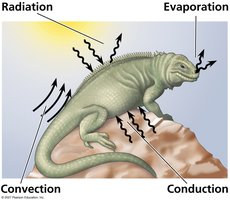
Animals exchange heat with their environment via four main mechanisms:
Radiation: Absorption of heat from sunlight.
Evaporation: Loss of heat through water evaporation.
Convection: Heat transfer via air or water movement.
Conduction: Direct transfer of heat between surfaces.
Adaptations for Thermoregulation
Animals use various adaptations to balance heat loss and gain:
Insulation: Fur, feathers, blubber reduce heat loss.
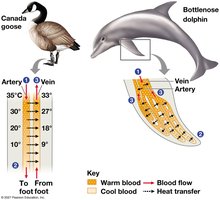
Circulatory adaptations: Vasodilation and vasoconstriction regulate blood flow; countercurrent exchange conserves heat.
Evaporative cooling: Sweating, panting.
Behavioral responses: Huddling, seeking shade.
Metabolic adjustments: Shivering, hormone regulation.
Thermoregulation in Mammals: The Hypothalamus
The hypothalamus acts as the control center for thermoregulation in mammals, detecting temperature changes and triggering responses such as sweating or shivering.
Fever: Regulated by hypothalamus; can enhance immune response.
Bioenergetics of Animals
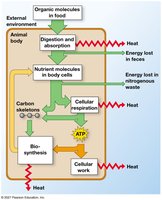
Bioenergetics is the study of how animals acquire, transform, and use energy. Energy is used for cellular work, biosynthesis, and maintaining homeostasis.
Energy flow: Organic molecules are digested and absorbed, used for cellular respiration and biosynthesis, and lost as heat.
ATP: The main energy currency for cellular work.
Summary Table: Types of Animal Tissues
Tissue Type | Main Function | Key Characteristics |
|---|---|---|
Epithelial | Protection, absorption, secretion | Closely packed cells, covers surfaces |
Connective | Support, binding, transport | Cells in extracellular matrix |
Muscle | Movement | Actin and myosin filaments |
Nervous | Information processing | Neurons and glial cells |
Additional info:
As animal size increases, SA/V decreases, requiring adaptations for efficient exchange.
Countercurrent exchange is a specialized circulatory adaptation found in birds and marine mammals.
Homeostasis is fundamental to all physiological processes, ensuring survival in changing environments.
