 Back
Behavioral Ecology: Mechanisms, Evolution, and Fitness Trade-offs
Study Guide - Smart Notes
 Tailored notes based on your materials, expanded with key definitions, examples, and context.
Behavioral Ecology
Studying Animal Behavior
Behavioral ecology examines how animal actions are shaped by environmental stimuli and evolutionary processes. Behaviors are typically responses to external cues and are expected to increase an organism's fitness.
Proximate questions: Address "how" behaviors occur, focusing on genetic, neurological, hormonal, and skeletal-muscular mechanisms.
Ultimate questions: Address "why" behaviors exist, considering their adaptive value and evolutionary origins.
Fitness trade-offs: Behaviors often involve choices that balance costs and benefits, shaped by natural selection.
Variation: Behavioral traits vary within populations, and those increasing fitness are likely to be inherited.
Classification of Behavior
Behaviors can be classified along two main continuums: flexibility (fixed vs. flexible) and origin (innate vs. learned).
Innate behaviors: Inherited, require no learning, and show little variation among individuals.
Learned behaviors: Acquired through experience, often flexible and influenced by environmental conditions.
Fixed action patterns: Highly inflexible, stereotypical behaviors that are not modified by learning.
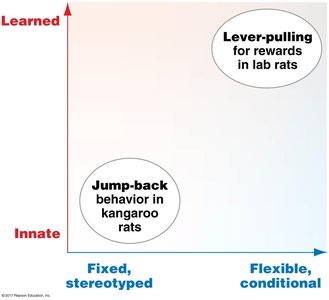
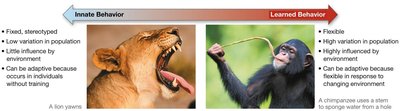
Examples of Fixed and Learned Behaviors
Fixed, innate behavior: Digger wasps exhibit a fixed action pattern when preparing their burrows for prey.
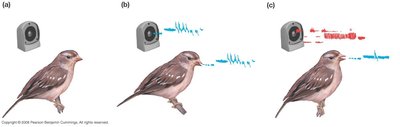
Fixed, learned behavior: White-crowned sparrows acquire their song during a specific learning window; the song is fixed for life once learned.
Flexible, learned behavior: Human language use is learned and highly flexible, with cultural transmission playing a key role.
Foraging Behavior
Genetic Basis of Foraging
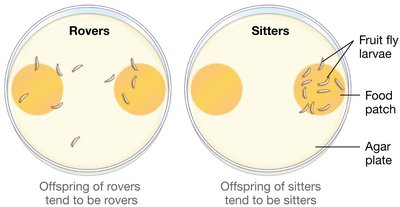
Foraging strategies in animals are often heritable traits. In fruit flies (Drosophila melanogaster), larvae exhibit two distinct behaviors: roving and sitting.
Rovers: Move after feeding, tend to explore new food patches.
Sitters: Remain in one place, exploiting a single food patch.
Gene: The foraging (for) gene influences these behaviors, with the rover allele being dominant.
Evolutionary Context of Foraging
Rover allele: Favored in high-density populations with limited food.
Sitter allele: Favored in low-density populations with abundant food.
Optimal Foraging Theory
Animals are expected to maximize their energy intake relative to the costs of foraging. This is formalized as:
Fitness Feeding efficiency Benefits/cost
Costs include energy spent searching for food and risk of predation.
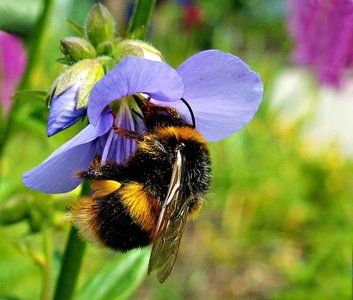
Bumblebees optimize their flight paths to minimize travel distance and maximize energy gain.
Predation and Group Behavior
Avoiding Predation
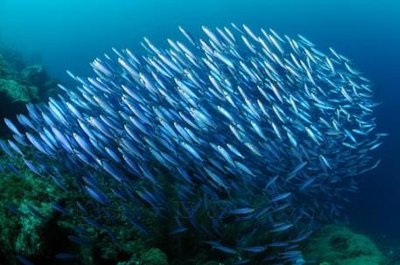
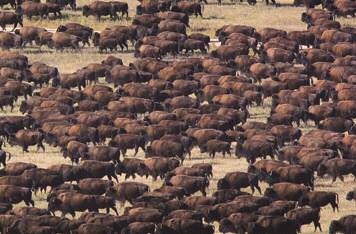
Animals may form groups to reduce individual risk of predation. Group living can confuse predators and lower the probability of any one individual being targeted.
Examples: Fish schools and bison herds.
Mating Behavior
Patterns of Mating Behavior
Mating systems vary among species and can include monogamy, polyandry, polygyny, and polygynandry.
Monogamy: One male and one female form a lasting pair bond (e.g., many birds).
Polyandry: One female mates with multiple males (e.g., seahorses).
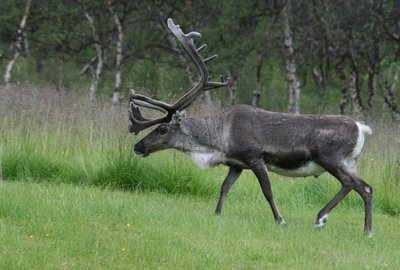
Polygyny: One male mates with multiple females (e.g., deer).
Polygynandry: Multiple males and females mate with each other.
Proximate Causes of Mating Behavior
Visual cues: Appearance of males may trigger estradiol production in females, influencing mate choice.
Acoustic cues: Bird song and cricket chirping.
Olfactory cues: Pheromones in fruit flies.
Physical cues: Touch between swans.
Production and perception of cues require heritable traits (e.g., pigments, receptors).
Ultimate Causes of Mating Behavior
Sexual selection: Includes male-male competition and female mate choice.
Social selection: Differential reproductive success based on social competition for resources.
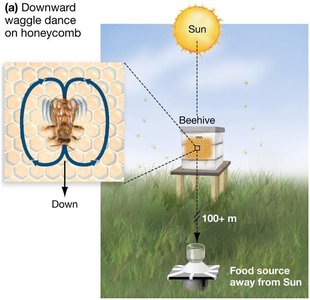
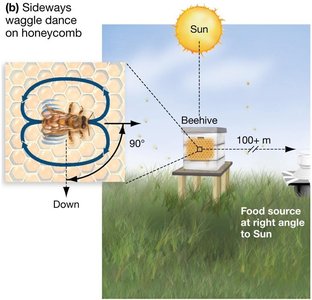
Honest signals: Traits that accurately convey fitness, such as honeybee communication about food sources.
Dishonest Signals
Some animals use dishonest signals to avoid predation or attract prey.
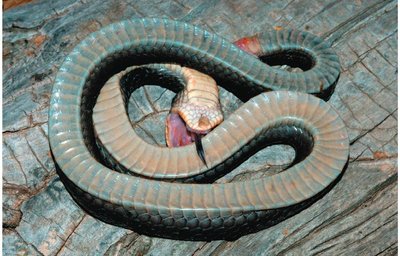
Hognose snakes: Play dead to avoid predation.
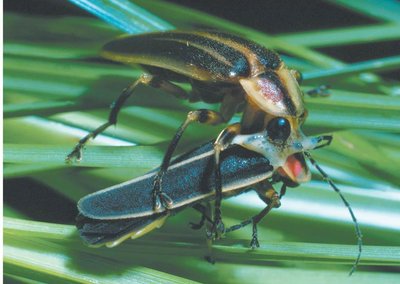
Photuris fireflies: Mimic mating signals to attract and eat males of another species.
Altruistic Behavior
Definition and Examples
Altruism is a behavior that appears to reduce an individual's fitness but increases the fitness of others.
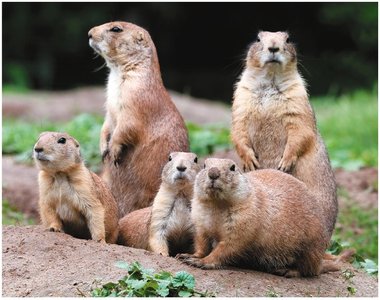
Alarm calls: Prairie dogs alert others to danger, increasing risk to themselves.
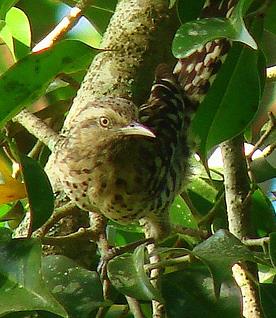
Helping behavior: Stripe-backed wrens help raise young that are not their own.
Reciprocal Altruism
Individuals help others with the expectation that the favor will be returned in the future. This is common in species with limited resources and strict social hierarchies.
Ability to recognize and remember individuals is crucial.
Territory inheritance and succession are important in stripe-backed wrens.
Kin Selection and Inclusive Fitness
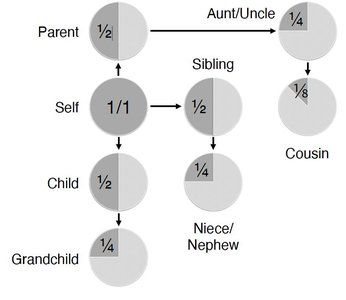
Kin selection is natural selection that acts through benefits to relatives at the expense of the individual. Inclusive fitness combines direct fitness (from one's own offspring) and indirect fitness (from helping relatives).
Hamilton's rule:
B: Benefit to recipient (measured in offspring)
r: Relatedness
C: Cost to altruist (measured in offspring)
Intelligence in Animals
Defining Intelligence
Intelligence is a complex and evolving concept in biology. It can be measured by language use, tool use, learning complex tasks, and advanced planning.
Language: Primates, prairie dogs, crows, parrots.
Tool use: Chimps, crows, Galapagos finches, dolphins, otters.
Learning: Mammals, birds, octopus.
Advanced planning: Stone-throwing chimpanzees.
