 Back
Behavioral Ecology: Proximate and Ultimate Causes of Animal Behavior
Study Guide - Smart Notes
 Tailored notes based on your materials, expanded with key definitions, examples, and context.
Chapter 50: Behavioral Ecology
Introduction to Behavioral Ecology
Behavioral ecology is a branch of organismal ecology that examines how behavioral adaptations evolve in response to ecological selection pressures. It integrates genetics, development, anatomy, physiology, evolution, and ecology to understand animal behavior. Behavioral ecologists investigate questions at two fundamental levels of causation: proximate (mechanistic) and ultimate (evolutionary).
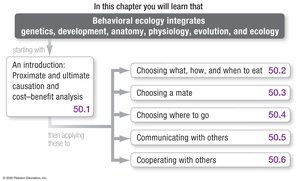
Proximate causation: Explains how actions occur, focusing on genetic, neurological, hormonal, and skeletal-muscular mechanisms.
Ultimate causation: Explains why actions occur, based on evolutionary consequences and history. Behaviors, like other phenotypes, can evolve by natural selection.
Proximate and Ultimate Causes of Behavior
Understanding animal behavior requires distinguishing between proximate and ultimate causes. Proximate causes address the immediate mechanisms underlying behavior, while ultimate causes consider the evolutionary significance and fitness consequences.
Example: Consolation behavior in prairie voles is mediated by oxytocin. Blocking oxytocin receptors eliminates consolation behaviors, demonstrating proximate causation. The ultimate cause is that such behaviors strengthen social bonds, increasing fitness.
Behavioral Traits: Innate vs. Learned
Behavioral traits vary in their flexibility and dependence on learning. Some behaviors are innate and genetically inherited, while others are learned and more flexible.
Innate behavior: Inherited, inflexible, and stereotypical. Examples include sneezing, yawning, and fixed-action patterns (FAPs).
Learned behavior: Results from experience, is flexible, and can be adaptive in changing environments.
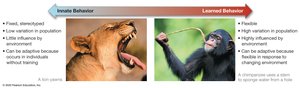
Example: Jump-back behavior in kangaroo rats is innate, while tool use in chimpanzees is learned.
50.2 Choosing What, How, and When to Eat
Foraging Behavior
Foraging is the food-seeking behavior of animals. Even species with specialized diets must make choices about which food sources to exploit. Foraging decisions are influenced by both proximate and ultimate causes.
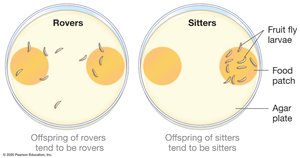
Proximate cause: Genetic differences in foraging alleles (e.g., rover and sitter alleles in Drosophila melanogaster).
Ultimate cause: Optimal foraging theory predicts animals maximize feeding efficiency to increase fitness.
Optimal foraging: Animals maximize benefits and minimize costs, leading to higher reproductive success.
50.3 Choosing a Mate
Mating Systems
Species exhibit different mating systems, shaped by evolutionary pressures. These systems influence mate choice and reproductive success.
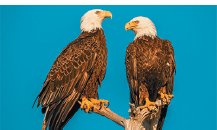
Monogamy: One male mates with one female.
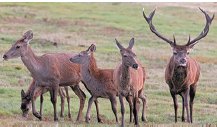
Polygyny: One male mates with multiple females.
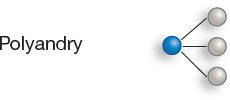
Polyandry: One female mates with multiple males.
Sexual Selection
Sexual selection favors traits that increase an individual's ability to obtain mates. It occurs in two forms:
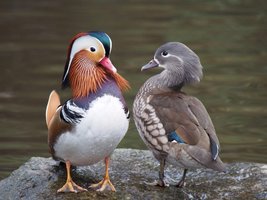
Intersexual selection: Individuals of one sex choose mates based on traits that provide direct or indirect benefits.
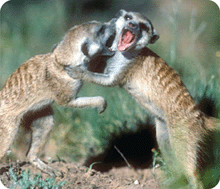
Intrasexual selection: Individuals of the same sex compete for mates, often resulting in physical contests.
50.4 Choosing Where to Go
Animal Navigation
Animals use various strategies to navigate their environment, including piloting, compass orientation, and true navigation.
Piloting: Using visual cues and landmarks for short-distance navigation.
Compass orientation: Moving in a specific direction using cues like the Sun, stars, or Earth's magnetic field.
True navigation: Ability to locate a specific place on Earth, even from unfamiliar locations.
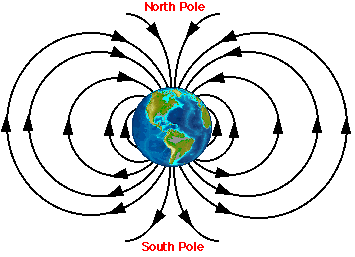
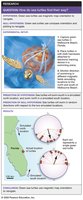
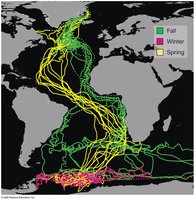
Ultimate causes: Migration increases reproductive success and access to food, despite high costs.
50.5 Communicating with Others
Animal Communication
Communication involves signals that modify the behavior of other individuals. Effective communication requires both signal transmission and reception.
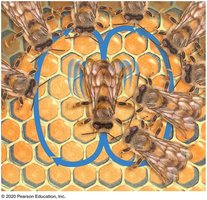
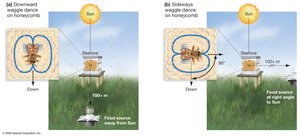
Example: Honeybees use the waggle dance to communicate the location of food sources relative to the Sun.
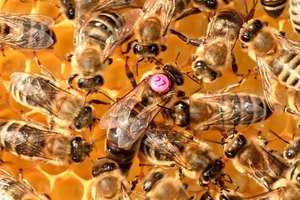
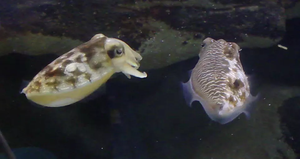
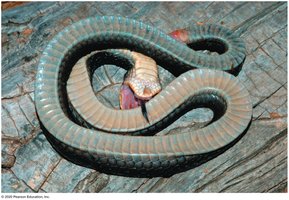
Signals can be honest or deceitful, depending on whether they accurately convey information. Deceitful communication may increase fitness by misleading competitors or predators.
50.6 Cooperating with Others
Altruism and Kin Selection
Altruism is behavior that decreases an individual's fitness but increases the fitness of others. Kin selection explains how altruistic behaviors can evolve when they benefit relatives who share genes.
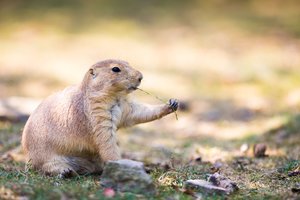
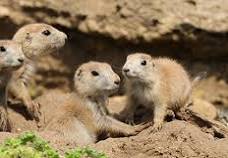
Example: Black-tailed prairie dogs perform alarm calls, risking themselves to warn kin.
Hamilton's Rule
Hamilton's rule predicts that altruism is favored when the fitness benefit to the recipient (B), multiplied by the coefficient of relatedness (r), exceeds the fitness cost to the actor (C):
Altruism is most likely when benefits are high, recipients are close relatives, and costs are low.
Inclusive Fitness
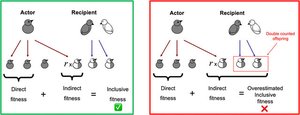
Inclusive fitness combines direct fitness (from an individual's own offspring) and indirect fitness (from helping relatives). This concept explains the evolutionary advantage of altruistic behaviors.
Reciprocal Altruism
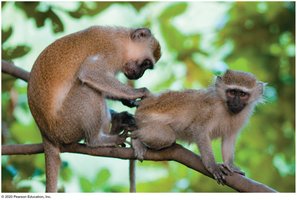
Reciprocal altruism involves exchanging fitness benefits over time, often among unrelated individuals. For example, vervet monkeys groom those who have helped them previously.
Cooperation and Mutualism
Cooperation occurs when individuals work together for mutual benefit. Mutualism refers to cooperation between different species. Some behaviors that appear altruistic are actually selfish, increasing direct fitness.
Example: African dogs hunt cooperatively, and female horses groom each other to reduce harassment.
Individuals Do Not Act for the Good of the Species
Self-sacrificing alleles do not evolve by natural selection because individuals with such alleles would die and not reproduce, while selfish alleles would increase in frequency.
