 Back
BackBehavioural Ecology and Population Ecology: Communication, Altruism, and Population Dynamics
Study Guide - Smart Notes
 Tailored notes based on your materials, expanded with key definitions, examples, and context.
Behavioural Ecology
Animal Communication
Communication in animals involves the transmission of signals that modify the behavior of other individuals. The type of signal used is often adapted to the organism’s habitat and can be tactile, olfactory, acoustic, or visual.
Communication: Any information-containing behavior that influences another individual’s behavior.
Signal Types: Tactile (touch), olfactory (smell), acoustic (sound), visual (sight).
Habitat Influence: The environment shapes which signal types are most effective.
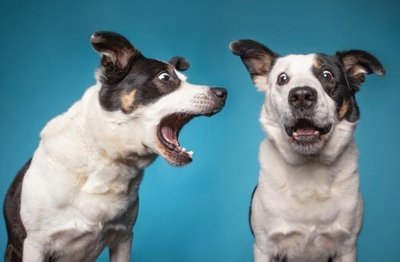
Bee Communication: The Waggle Dance
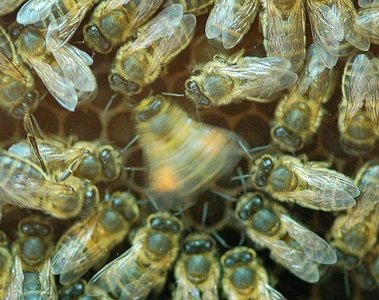
Honeybees use a sophisticated form of communication known as the waggle dance to convey information about the location of food sources to other members of the hive.
Von Frisch’s Experiments: Demonstrated that forager bees perform a dance to communicate food location.
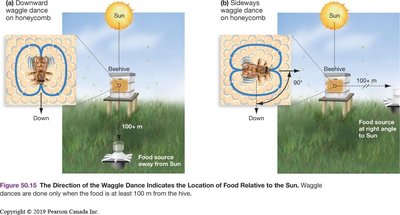
Waggle Dance: The length of the waggle run indicates distance, and the direction of the waggle run indicates the direction of the food source relative to the sun.
Evolutionary Causes of Communication
Communication behaviors, such as the waggle dance, have evolved through natural selection to maximize foraging success and overall fitness.
Ultimate Cause: Communication increases the efficiency of resource acquisition, supporting survival and reproduction.
Deceptive Communication
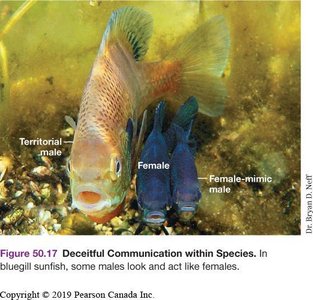
Some animals use deceptive signals to increase their own fitness, either by deceiving members of other species or their own species.
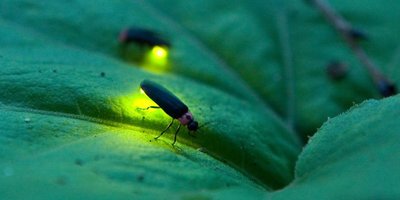
Inter-species Deception: Predatory firefly females mimic the mating signals of other species to attract and consume males.
Intra-species Deception: In bluegill sunfish, some males mimic females to gain reproductive advantages.
Altruism and Cooperation
Altruism is a behavior that reduces the fitness of the individual performing the act but increases the fitness of the recipient. This appears paradoxical from an evolutionary perspective.
Altruism: Behavior with a fitness cost to the actor and a benefit to the recipient.
Kin Selection: Natural selection that favors altruistic behaviors toward close relatives, increasing indirect fitness.
Hamilton’s Rule
Hamilton’s Rule predicts when altruistic behavior will be favored by natural selection. The rule is expressed as:
B: Fitness benefit to the recipient
r: Coefficient of relatedness (probability of shared alleles)
C: Fitness cost to the altruist
Altruism is favored when the benefit to the recipient, weighted by relatedness, exceeds the cost to the altruist.
Coefficient of Relatedness
The coefficient of relatedness (r) quantifies the probability that two individuals share an allele due to common descent.
Range: 0.0 (unrelated) to 1.0 (identical twins)
Parent-offspring: r = 0.5
Calculation: , where n is the number of generational steps between individuals.
Inclusive Fitness
Inclusive fitness combines direct fitness (personal reproduction) and indirect fitness (helping relatives reproduce). Altruistic alleles can increase in frequency if they enhance inclusive fitness.
Direct Fitness: Individual’s own offspring
Indirect Fitness: Additional offspring produced by relatives due to individual’s help
Inclusive Fitness: Direct fitness + Indirect fitness
Reciprocal Altruism
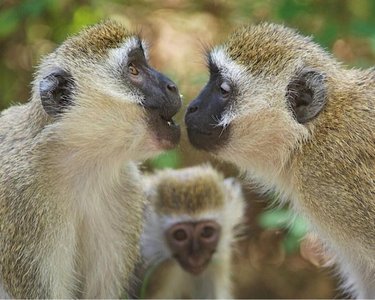
Reciprocal altruism involves the exchange of fitness benefits between unrelated individuals, with the expectation that the favor will be returned in the future.
Example: Vervet monkeys are more likely to groom individuals who have groomed them previously.
Summary of Altruistic Behavior
Organisms behave altruistically if it increases their direct or inclusive fitness.
Decision-making is influenced by genetic, physiological, and evolutionary mechanisms.
Population Ecology
Introduction to Population Ecology
Population ecology studies groups of individuals of the same species living in the same area at the same time. It examines how populations are distributed, how they grow, and what factors regulate their size.
Population: Group of conspecific individuals in a defined area and time.
Geographic Distribution of Populations
Populations can be distributed in different patterns across geographic space, influenced by environmental factors and species interactions.
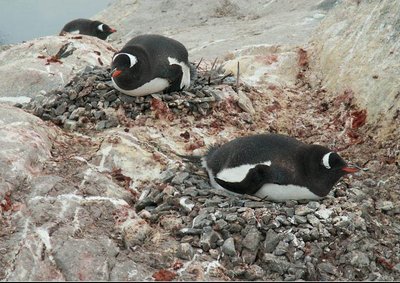
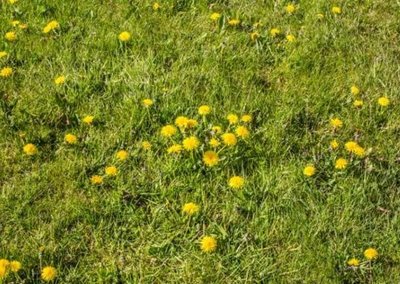
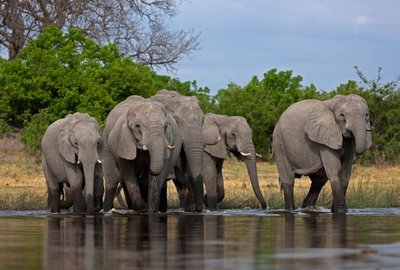
Clumped Distribution: Individuals aggregate in patches.
Uniform Distribution: Individuals are evenly spaced.
Random Distribution: Position of each individual is independent of others.
Survivorship Curves
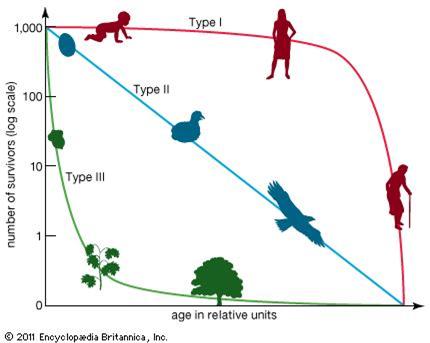
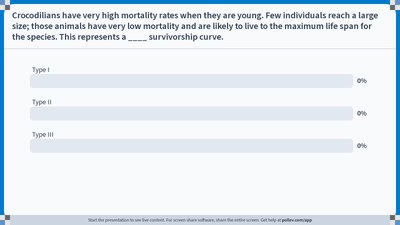
Survivorship curves graphically represent the number of individuals surviving at each age. There are three general types:
Type I: High survivorship throughout life, most individuals reach old age (e.g., humans, elephants).
Type II: Constant survivorship across ages (e.g., birds, some reptiles).
Type III: Low survivorship early in life, high survivorship after maturity (e.g., plants, fish).
Population Dynamics
Population dynamics studies the factors that cause population sizes to change over time, including birth rates, death rates, immigration, and emigration.
Applications: Predicting overpopulation, managing endangered species, controlling invasive species.
Life Tables
Life tables summarize the survival and reproductive rates of individuals in different age classes. They are essential tools for understanding population growth and for conservation planning.
Purpose: Identify critical life stages for survival and fecundity.
Application: Conservation efforts may focus on protecting life stages with the greatest impact on population growth (e.g., adult female sea turtles).
Population Growth Equations
Population growth can be quantified using mathematical models. The basic equation for change in population size is:
If immigration and emigration are negligible:
Per capita growth rate (r):
b: Per capita birth rate
d: Per capita death rate
Population growth rate:
If r > 0, population grows; if r < 0, population shrinks; if r = 0, population is stable.
Intrinsic Growth Rate and Exponential Growth
The intrinsic growth rate () is the maximum per capita rate of increase under ideal conditions. Species with rapid maturity and high fecundity have high $r_{max}$, while those with slow maturity and low fecundity have low $r_{max}$.
Exponential growth model for continuously breeding species:
Nt: Population size at time t
N0: Initial population size
r: Per capita growth rate
t: Time
Example: If 12 rats are introduced to an island with r = 0.6 per month, after 4 months:
rats
Summary of Key Concepts
Animal communication is diverse and shaped by natural selection.
Altruism can evolve through kin selection and reciprocal altruism.
Population ecology uses mathematical models to predict changes in population size and structure.
