 Back
BackBehavioural Ecology: Proximate and Ultimate Causes of Animal Behaviour
Study Guide - Smart Notes
 Tailored notes based on your materials, expanded with key definitions, examples, and context.
Behavioural Ecology: Key Questions and Concepts
Introduction to Behavioural Ecology
Behavioural ecology is the study of the evolutionary and ecological basis for animal behaviour. It seeks to understand how behaviour contributes to survival and reproductive success. Five central questions guide research in this field:
What should I eat?
Where should I live?
Whom should I mate with?
How should I communicate?
When should I cooperate?
Sexual Cannibalism in Redback Spiders
Definition and Examples
Sexual cannibalism is a behaviour in which one sex (usually the female) consumes the other during or after mating. This phenomenon is observed in several arthropods, including the Australian redback spider (Latrodectus hasselti), praying mantises, and scorpions.
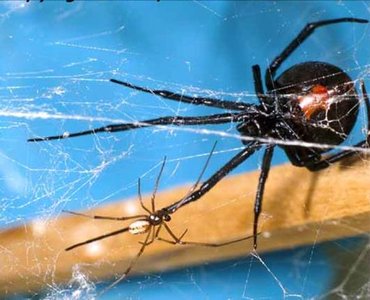
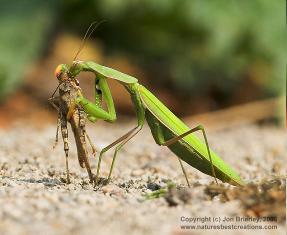
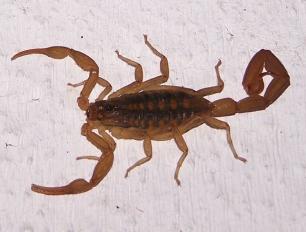
Courtship and Mating Behaviour in Redback Spiders
Male redback spiders engage in elaborate courtship, often lasting up to eight hours. The male strums the female's web and approaches cautiously. Specialized legs called palps are used to transfer sperm to the female.
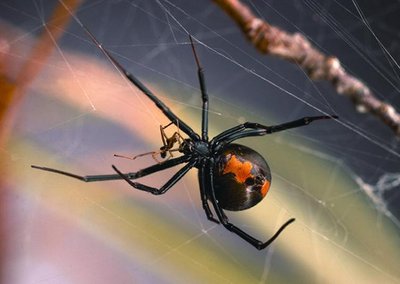
During mating:
The male mounts the female and inserts a palp into her sperm receptacle.
He then performs a 'headstand' and somersaults, positioning his abdomen in front of the female's jaws.
This behaviour facilitates sexual cannibalism, as the female begins to consume the male.
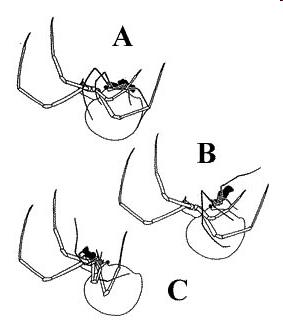
Proximate and Ultimate Causes of Sexual Cannibalism
Behavioural ecologists distinguish between proximate causes (the immediate mechanisms) and ultimate causes (the evolutionary reasons) for behaviours.
Proximate Cause: The male's somersault is triggered by the insertion of his palp into the female's sperm receptor, placing him in a vulnerable position.
Ultimate Cause: The female gains nutrients by consuming the male, which may enhance her reproductive output.
Testing Hypotheses: Why Do Females Cannibalize Males?
Two main hypotheses have been tested:
Hungry Lover Hypothesis: Females eat their mates as a food source, especially when hungry.
Nuptial Gift Hypothesis: Males benefit from self-sacrifice by increasing their fertilization success.
Experimental results show that:
Females with supplemented diets are less likely to cannibalize males (29%) compared to those feeding naturally (62%).
Cannibalized males copulate longer (25 min vs. 11 min) and father twice as many offspring as non-cannibalized males.
Conclusion: Both nutritional benefit for females and increased reproductive success for males support the adaptive value of sexual cannibalism.
Adaptive Value and Trade-offs
For male redback spiders, self-sacrifice is an adaptive behaviour because:
It doubles their reproductive success, despite resulting in death.
Escaping may allow longer life but with a much lower chance of finding another mate, as females are widely dispersed and males have short lifespans.
Innate vs. Learned Behaviour
Fixed Action Patterns (FAPs)
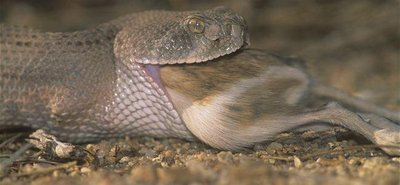
Fixed action patterns are highly inflexible, innate behaviours triggered by specific stimuli. They are genetically programmed and do not require learning.
Learning and Behavioural Flexibility
Learned behaviours are acquired through experience and are more flexible than innate behaviours. The degree to which a behaviour is innate or learned can vary among species and contexts.
Innate behaviours: Fixed, stereotyped, and do not require prior experience.
Learned behaviours: Flexible, conditional, and shaped by environmental interactions.
Proximate and Ultimate Causes in Anolis Lizards
Proximate Causes: Hormonal Triggers of Sexual Behaviour
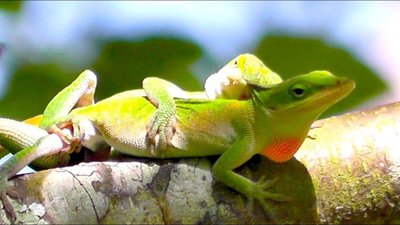
In Anolis lizards, sexual behaviour is seasonal and regulated by hormones:
Testosterone in males and estradiol in females are the proximate causes of reproductive activity.
Two environmental factors trigger hormonal changes in females:
Longer day lengths and warmer temperatures
Exposure to breeding males
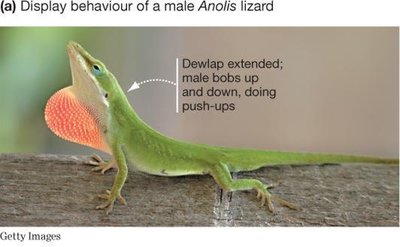
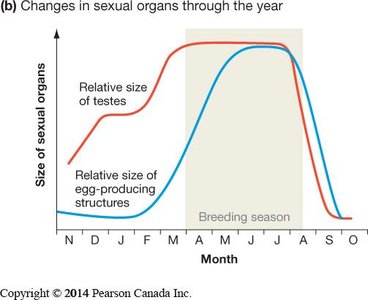
Ultimate Causes: Sexual Selection
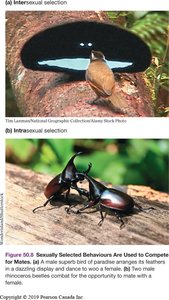
Sexual selection drives the evolution of traits that increase mating success. In Anolis lizards:
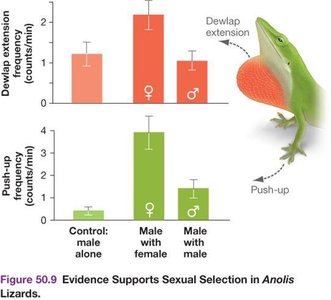
Intersexual selection: Traits like dewlap extension and push-ups serve as honest signals of male quality to females. These displays are energetically costly and may increase predation risk.
Intrasexual selection: Males compete with each other for access to females, which can be costly in terms of energy and risk of injury.
Summary Table: Proximate vs. Ultimate Causes of Behaviour
Aspect | Proximate Cause (How) | Ultimate Cause (Why) |
|---|---|---|
Sexual Cannibalism in Redback Spiders | Male somersaults after palp insertion, triggering female attack | Female gains nutrients; male increases reproductive success |
Sexual Behaviour in Anolis Lizards | Triggered by hormones (testosterone, estradiol) and environmental cues | Increases fitness by maximizing reproductive output |
Learning Objectives
Distinguish between proximate (how) and ultimate (why) causes of behaviour.
Explain how foraging and mating decisions maximize fitness.
Contrast innate and learned behaviours.
Describe cues animals use to navigate and select mates.
