 Back
BackBehavioural Ecology: Proximate and Ultimate Causes of Animal Behaviour
Study Guide - Smart Notes
 Tailored notes based on your materials, expanded with key definitions, examples, and context.
Behavioural Ecology
Introduction to Behavioural Ecology
Behavioural ecology is the study of the evolutionary and ecological basis for animal behaviour, focusing on how behaviour contributes to survival and reproductive success. Key questions in behavioural ecology include:
What should I eat?
Where should I live?
Whom should I mate with?
How should I communicate?
When should I cooperate?
Sexual Cannibalism in Redback Spiders
Definition and Examples
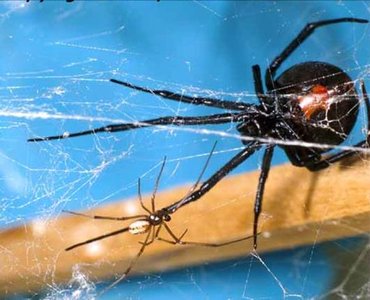
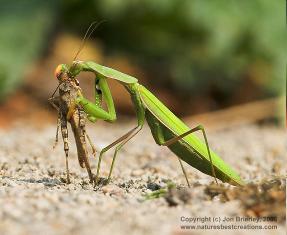
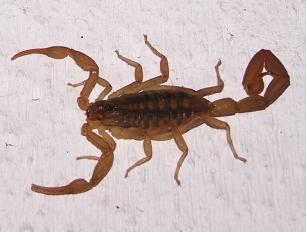
Sexual cannibalism is a phenomenon where one sex (usually the female) consumes the other during or after mating. This behaviour is observed in several arthropods, including the Australian redback spider, praying mantis, and some scorpions.
Australian redback spider (Latrodectus hasselti): Females are much larger than males and often consume their mates during reproduction.
Praying mantis: Females may eat males during or after copulation.
Scorpions: Some species exhibit similar behaviour.
Courtship and Mating Behaviour in Redback Spiders
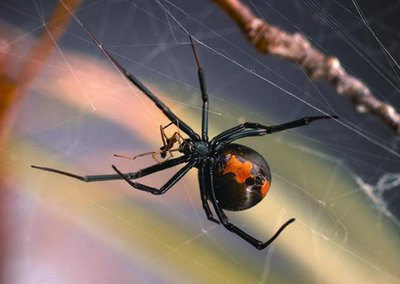
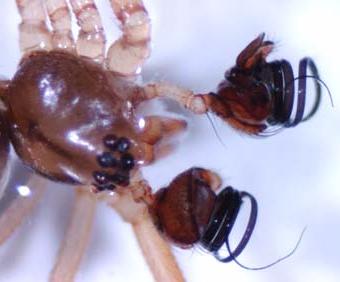
Male redback spiders engage in elaborate courtship rituals, including strumming the female's web and using specialized legs (palps) to transfer sperm. The courtship can last up to eight hours, and the male approaches the much larger female cautiously.
During mating:
The male mounts the female and inserts a palp into one of her sperm receptacles.
He then performs a 'headstand' and somersaults, dangling his abdomen in front of the female's jaws.
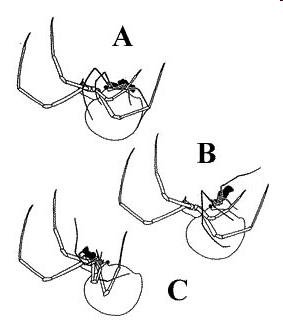
The female begins to feed on the male during this process. After the first sperm transfer, the male may repeat the process with his second palp, after which the female typically finishes consuming him.
Why Do Females Cannibalize Males?
Two main hypotheses have been proposed to explain sexual cannibalism in redback spiders:
Hungry Lover Hypothesis: Females eat their mates as a food source, especially when food is scarce.
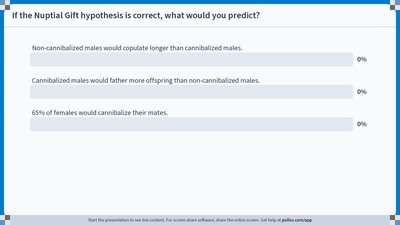
Nuptial Gift Hypothesis: Males benefit from self-sacrifice by increasing their fertilization success.
Testing the Hungry Lover Hypothesis
Researchers compared cannibalism rates between females with natural diets and those with supplemented diets. Results showed that 62% of naturally fed females were cannibalistic, compared to only 29% of supplemented females, supporting the hypothesis that hunger drives cannibalism.

Testing the Nuptial Gift Hypothesis
Researchers compared copulation duration and number of offspring between cannibalized and non-cannibalized males. Cannibalized males copulated for an average of 25 minutes and fathered twice as many offspring as non-cannibalized males (who copulated for 11 minutes on average). This suggests that self-sacrifice increases male reproductive success.
Proximate and Ultimate Causes of Behaviour
Behavioural ecologists distinguish between:
Proximate causes (the how): Immediate mechanisms that trigger behaviour (e.g., the male's somersault is triggered by palp insertion).
Ultimate causes (the why): Evolutionary reasons for the behaviour (e.g., increased reproductive success through self-sacrifice).
Is Self-Sacrifice Adaptive for Males?
Self-sacrifice in male redback spiders is considered adaptive because:
Benefit: Doubled reproductive success by increasing copulation duration and fertilization rate.
Cost: Near-certain death, but with low probability of finding another mate due to short male lifespan and dispersed females.
Innate vs. Learned Behaviour
Fixed Action Patterns (FAPs)
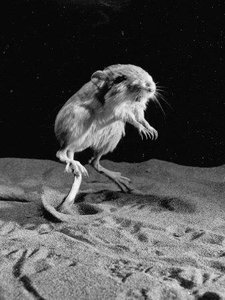
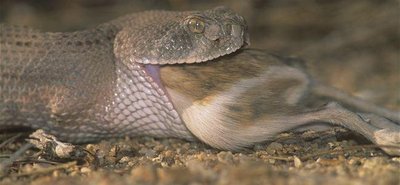
Fixed action patterns are highly inflexible, innate behaviours triggered by specific stimuli. These are stereotyped and do not require learning.
Behavioural Flexibility
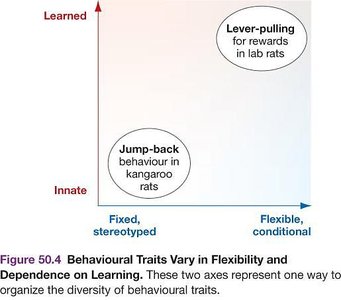
Behaviours vary in their flexibility and dependence on learning. Innate behaviours are fixed, while learned behaviours are more flexible and can be modified by experience.
Learning: Behavioural change based on experience.
Innate behaviour: Requires no learning and is typically inflexible.
Proximate Causes of Sexual Activity in Anolis Lizards
Hormonal Triggers and Environmental Cues
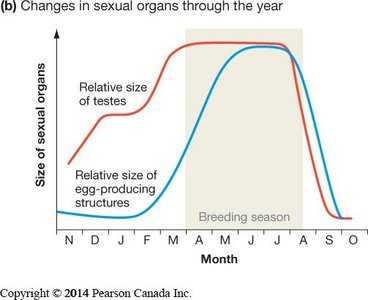
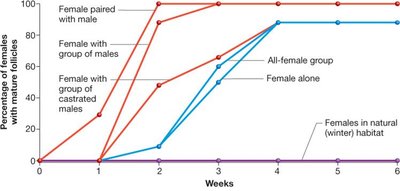
Anolis lizards have a distinct breeding season, and their sexual behaviour is triggered by sex hormones (testosterone in males, estradiol in females). Two main proximate causes for sexual activity are:
Exposure to longer day lengths and warm temperatures.
Presence of breeding males, which stimulates follicle maturation in females.
Ultimate Causes: Sexual Selection
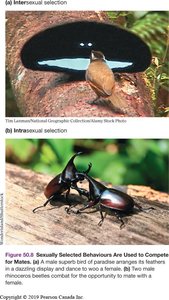
Sexual selection drives the evolution of traits that increase mating success. It can be divided into:
Intersexual selection: Traits that attract mates (e.g., bright colours, long tails).
Intrasexual selection: Competition among individuals of the same sex for mates (e.g., fighting, displays).
Sexual Selection in Anolis Lizards
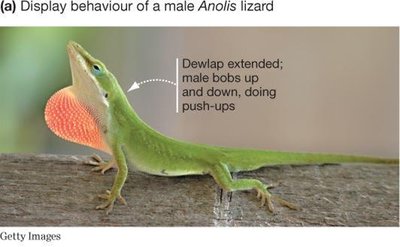
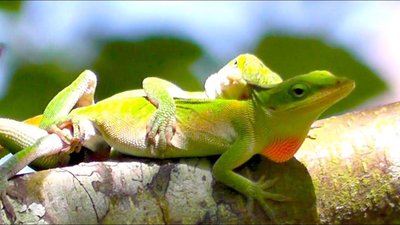
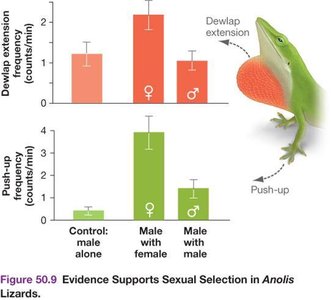
Male Anolis lizards use dewlap extensions and push-ups as courtship displays, supporting the intersexual selection hypothesis. These displays are honest signals of male quality and may also play a role in intrasexual competition.
Summary Table: Proximate vs. Ultimate Causes of Behaviour
Aspect | Proximate Cause (How) | Ultimate Cause (Why) |
|---|---|---|
Redback Spider Cannibalism | Male somersaults after palp insertion, triggering female attack | Increases male's reproductive success by prolonging copulation |
Anolis Lizard Sexual Activity | Triggered by hormones and environmental cues | Leads to higher fitness by synchronizing reproduction with optimal conditions |
Learning Objectives
Distinguish between proximate (how) and ultimate (why) causes of behaviour.
Explain how foraging and mating decisions maximize fitness.
Contrast the proximate and ultimate causes of mate choice.
Describe cues animals use to navigate and reproduce successfully.
