 Back
BILD 1 Midterm 3 Review: Photosynthesis, Cell Signaling, Cell Cycle, and Meiosis
Study Guide - Smart Notes
 Tailored notes based on your materials, expanded with key definitions, examples, and context.
Photosynthesis
Willow Experiment: Understanding Plant Mass
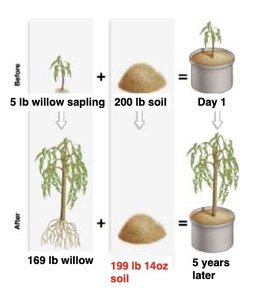
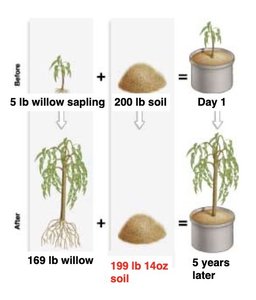
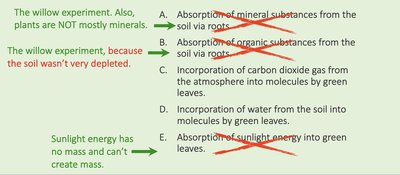
The willow experiment, conducted by Jean Baptista van Helmont, aimed to determine the source of plant mass. By growing a willow sapling in a controlled amount of soil and water for five years, he observed that the soil mass changed very little, while the willow gained significant mass. This led to the conclusion that plant mass does not primarily come from soil, but from water and other sources, laying the foundation for later discoveries about photosynthesis.
Key Point: Most of a plant's mass comes from water and carbon dioxide, not soil.
Example: The willow sapling increased from 5 lb to 169 lb, while the soil lost only a few ounces.
Photosynthesis: Conservation of Mass and Energy
Photosynthesis is the process by which plants convert energy from sunlight into chemical energy stored in glucose. The reaction involves the transformation of carbon dioxide and water into glucose and oxygen, demonstrating the conservation of mass and energy.
Key Point: Sunlight energy is stored in the chemical bonds of glucose.
Equation:
Example: Glucose produced is used for ATP synthesis and building biological molecules.

Oxygen Labeling Experiment
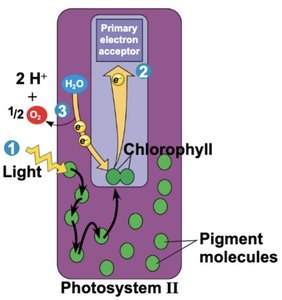
Scientists used isotopes to trace the origin of oxygen released during photosynthesis. By providing plants with water containing heavy oxygen isotopes and normal carbon dioxide, they found that the oxygen gas released came from water, not carbon dioxide.
Key Point: Oxygen released during photosynthesis originates from water molecules.
Definition: Isotope: Atoms of the same element with different numbers of neutrons.
Stages of Photosynthesis
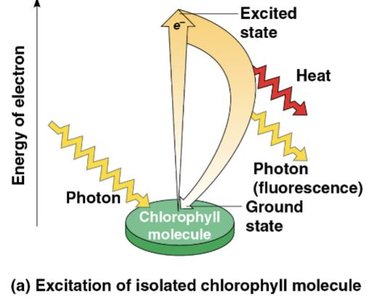
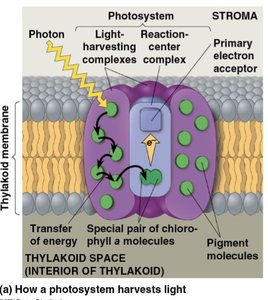
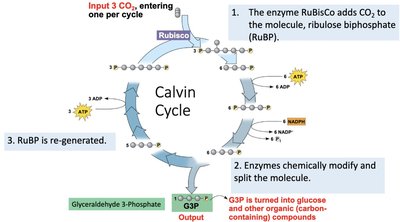
Photosynthesis occurs in two main stages: the light reactions and the Calvin cycle. Light reactions convert solar energy into ATP and NADPH, while the Calvin cycle uses these molecules to fix carbon dioxide into sugar.
Light Reactions: Occur in the thylakoid membranes, involve photosystems, and produce ATP, NADPH, and O2.
Calvin Cycle: Occurs in the stroma, uses ATP and NADPH to convert CO2 into glucose.
Enzyme: RuBisCo catalyzes carbon fixation.

Adaptations to Minimize Photorespiration
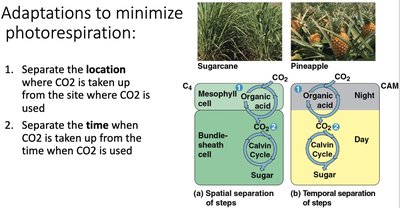
Some plants have evolved mechanisms to minimize photorespiration, which can waste energy and reduce efficiency. C4 and CAM plants separate the location or timing of CO2 uptake and usage to optimize photosynthesis.
C4 Plants: Spatial separation of steps (e.g., sugarcane).
CAM Plants: Temporal separation of steps (e.g., pineapple).
Cell Signaling
Purpose and Steps of Cell Signaling
Cell signaling enables organisms to coordinate responses to environmental changes, facilitate development, and maintain homeostasis. The process involves three main steps: reception, transduction, and response.
Reception: Detection of a signal by receptors.
Transduction: Relay and amplification of the signal inside the cell.
Response: Cellular activities are regulated.
Types of Signals and Signaling Distances
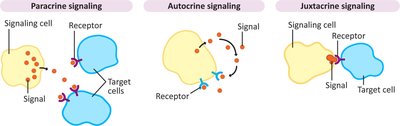
Signals can be proteins, peptides, steroids, amino acid derivatives, or gases. Signaling can occur locally (adjacent cells) or over long distances (hormones).
Reception: Receptors and Signal Detection
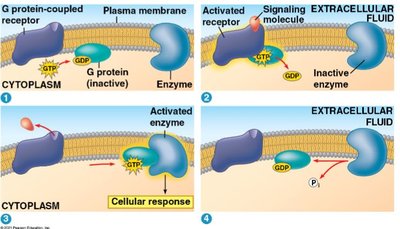
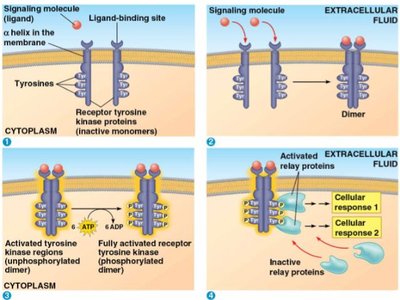
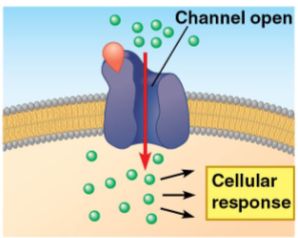
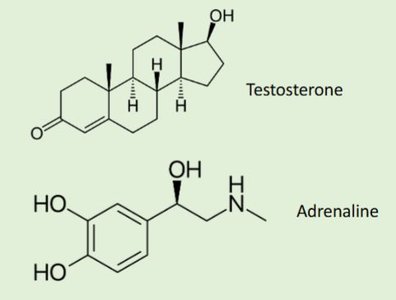
Receptors can be embedded in the cell membrane or located inside the cell. Membrane receptors detect hydrophilic ligands, while intracellular receptors detect hydrophobic ligands.
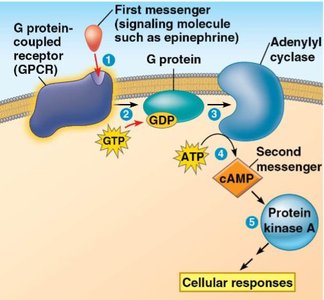
Membrane Receptors: G protein-coupled receptors (GPCRs), receptor tyrosine kinases (RTKs), ion channel receptors.
Intracellular Receptors: Located in cytoplasm or nucleus, bind hydrophobic ligands.
Transduction: Signal Relay and Amplification
Transduction involves phosphorylation cascades and second messengers. Protein kinases transfer phosphate groups, while phosphatases remove them. Second messengers like cAMP and Ca2+ amplify the signal.
Phosphorylation Cascade: Sequential activation of proteins by phosphorylation.
Second Messengers: Small molecules that relay signals (e.g., cAMP, Ca2+).
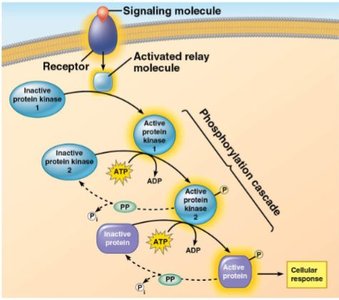
Cellular Response: Regulation of Activities
Cell signaling regulates activities in the nucleus (gene expression) and cytoplasm (protein activity). Signal regulation includes amplification, specificity, efficiency, and termination.
Amplification: Enzyme cascades amplify the response.
Specificity: Different cells respond differently based on their proteins.
Efficiency: Scaffold proteins enhance response speed.
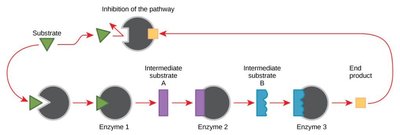
Termination: Signal removal and feedback inhibition.
Practice Questions: Cell Signaling
Example: Insulin binding to a transmembrane protein triggers a signaling cascade via receptor tyrosine kinases.
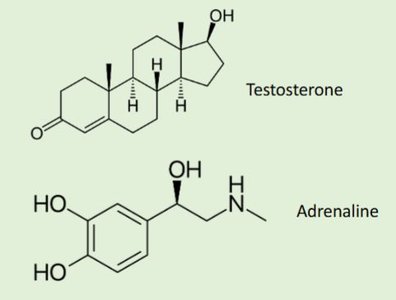
Example: Testosterone, a hydrophobic molecule, is more likely to have a receptor in the cytoplasm.
The Cell Cycle & Mitosis
Motivations and Overview of Cell Division
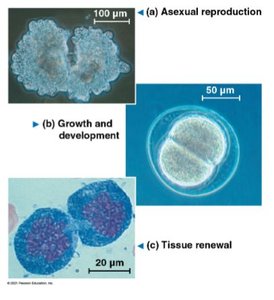
Cell division is essential for asexual reproduction, growth, development, and tissue renewal. Eukaryotic cell division ensures daughter cells have identical genetic information.
Key Point: DNA replication and division occur only under specific conditions.
Example: Stem cells divide for tissue repair.
Chromosome Structure and DNA Organization
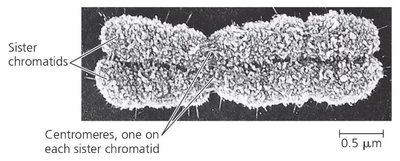
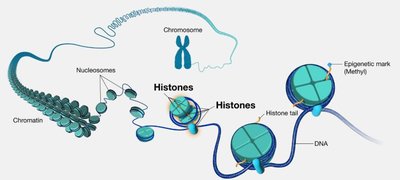
Chromosomes consist of DNA wrapped around histone proteins. Chromatids are joined at the centromere. DNA condensation protects genetic material and ensures accurate division.
Key Point: Condensed DNA fits in the nucleus and restricts gene expression.
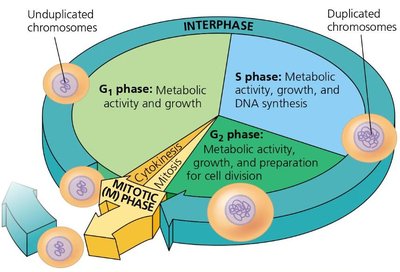
The Cell Cycle
The cell cycle includes interphase (G1, S, G2 phases) and mitotic phase (mitosis and cytokinesis). DNA is duplicated during S phase, and cells prepare for division in G2.
G1 Phase: Growth and metabolic activity.
S Phase: DNA synthesis.
G2 Phase: Preparation for division.
M Phase: Mitosis and cytokinesis.
Mitosis: Phases and Process
Mitosis is the process by which a cell divides to produce two genetically identical daughter cells. The phases include interphase, prophase, metaphase, anaphase, telophase, and cytokinesis.
Interphase: Chromosomes duplicate.
Prophase: Spindle formation.
Metaphase: Chromosomes align at the metaphase plate.
Anaphase: Sister chromatids separate.
Telophase & Cytokinesis: Cells divide.
Meiosis
Genetic Concepts and Chromosome Structure
Meiosis is the process by which gametes are produced, ensuring genetic diversity. Key terms include character, trait, gene, gamete, somatic cell, chromosome, locus, haploid, and diploid.
Character: Feature that varies between individuals.
Trait: Variant of a character.
Gene: Unit of heredity.
Chromosome: Supercoiled DNA.
Locus: Specific gene position.
Haploid: One chromosome copy (gametes).
Diploid: Two chromosome copies (somatic cells).
Process of Meiosis
Meiosis involves two divisions: Meiosis I (homologous chromosomes separate) and Meiosis II (sister chromatids separate). Crossing over during prophase I increases genetic diversity.
Step 1: DNA replication in interphase.
Step 2: Homologous chromosomes form tetrads and cross over.
Step 3: Sister chromatids separate.
Genetic Diversity Mechanisms
Three mechanisms contribute to genetic diversity: law of segregation, independent assortment, and random fertilization.
Law of Segregation: Maternal and paternal chromosomes separate during meiosis.
Independent Assortment: Chromosomes are randomly distributed to gametes.
Random Fertilization: Any sperm can fertilize any egg.
Asexual vs Sexual Reproduction
Asexual reproduction produces clones, while sexual reproduction combines genes from two parents, resulting in unique offspring.
Asexual: One parent, identical offspring.
Sexual: Two parents, genetically diverse offspring.
Meiosis vs Mitosis
Both processes involve DNA replication and similar stages, but differ in their outcomes and roles in reproduction.
Mitosis: Produces two identical diploid cells (asexual reproduction).
Meiosis: Produces four genetically distinct haploid cells (sexual reproduction).
Practice Questions: Meiosis
Distinct Stages: Prophase I and Metaphase I are unique to meiosis due to crossing over and homologous chromosome alignment.
Additional info: Academic context and explanations have been expanded for clarity and completeness.
