 Back
BIO 112 Final Exam Review: Viruses, Phylogeny, Bacteria & Archaea
Study Guide - Smart Notes
 Tailored notes based on your materials, expanded with key definitions, examples, and context.
FINAL EXAM REVIEW
Chapter 19 – Viruses
Virus Structure and Reproduction
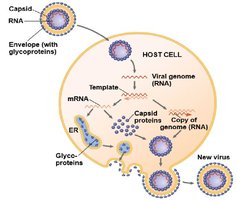
Viruses are infectious particles consisting of genetic material (either double- or single-stranded DNA or RNA) surrounded by a protein coat called a capsid. Some viruses are further enclosed by a viral envelope derived from the host cell membrane. The structure of a virus determines its host range, or the spectrum of host species it can infect.
Capsomeres: Protein subunits that make up the capsid.
Retroviruses: RNA viruses that use reverse transcriptase to convert their RNA genome into DNA, which integrates into the host genome (e.g., HIV/AIDS).
Bacteriophage Life Cycles
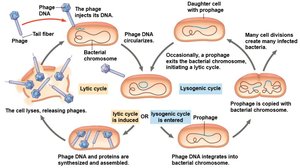
Bacteriophages are viruses that infect bacteria. They can undergo two types of reproductive cycles:
Lytic cycle: The phage replicates within the host, leading to cell lysis and release of new phages.
Lysogenic cycle: The phage DNA integrates into the host genome as a prophage and is replicated along with the host cell's DNA. Environmental triggers can induce the lytic cycle.
Temperate phages: Phages capable of both lytic and lysogenic cycles.
Animal Viruses
Most animal viruses possess a viral envelope with specific glycoproteins that facilitate entry into host cells. Some animal viruses can integrate their DNA into the host genome, forming a provirus (permanently integrated viral DNA).
Evolution of Viruses
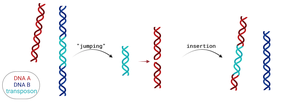
Viruses are thought to have evolved from mobile genetic elements such as plasmids and transposons:
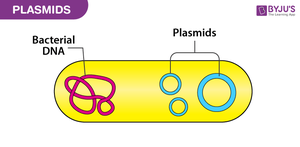
Plasmids: Small, circular DNA molecules in bacteria that can replicate independently of the bacterial chromosome and can be transferred between cells.
Transposons: DNA segments that can move from one location to another within a genome (“jumping genes”).
Emerging Viruses and Prions
Emerging viruses are viruses that suddenly become apparent, often due to mutation, spread from isolated populations, or transmission from animals to humans. Examples include HIV/AIDS, H5N1 (bird flu), and swine flu. An epidemic is a widespread outbreak, while a pandemic is a global outbreak.
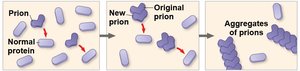
Prions are infectious, misfolded proteins that can induce normal proteins to misfold, leading to aggregation and disease (e.g., possibly Alzheimer’s and Parkinson’s diseases).
Chapter 26 – Phylogeny
Taxonomy and Classification
Taxonomy is the science of naming and classifying organisms based on shared characteristics. The hierarchical system (from broadest to most specific) is: Kingdom, Phylum, Class, Order, Family, Genus, Species. Binomial nomenclature assigns each species a two-part Latin name (genus and species epithet).
Phylogenetic Trees
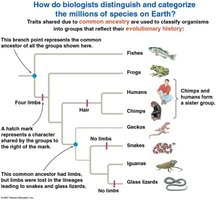
A phylogenetic tree is a hypothesis about evolutionary relationships. Key terms:
Branch point: Represents divergence of two lineages.
Sister taxa: Groups that share an immediate common ancestor.
Basal taxon: Lineage that diverges early in the history of a group.
Taxon: Any named group at any level of the hierarchy.
Homology vs Analogy
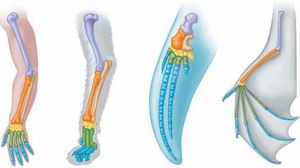
Homologies are similarities due to shared ancestry, while analogies are similarities due to convergent evolution (not common ancestry). Complex structures are more likely to be homologous.
Cladistics and Clades
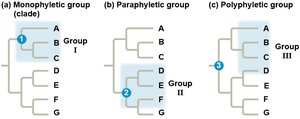
Cladistics groups organisms by common ancestry. A clade is a monophyletic group (ancestor and all descendants). Other groupings include:
Paraphyletic: Ancestor and some, but not all, descendants.
Polyphyletic: Group with members from different ancestors.
Gene Duplications: Paralogous vs Orthologous Genes
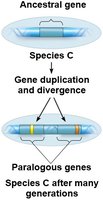
Paralogous genes: Result from gene duplication within a species (e.g., olfactory genes in humans).
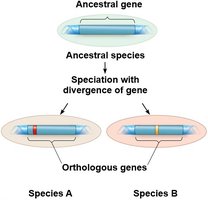
Orthologous genes: Result from speciation; found in different species (e.g., cytochrome c in humans and dogs).
Molecular Clocks and Horizontal Gene Transfer
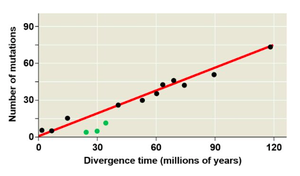
Molecular clocks use the rate of genetic mutations to estimate evolutionary time. Genes used should be non-essential and accumulate neutral mutations at a steady rate.
Horizontal gene transfer is the movement of genes between genomes (not by inheritance), complicating phylogenetic analysis.
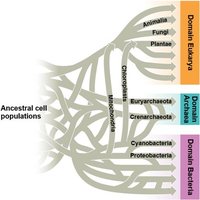
Chapter 27 – Bacteria & Archaea
Bacterial Structure and Classification
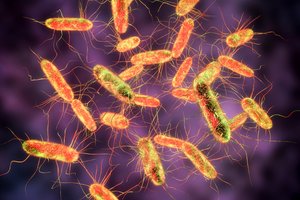
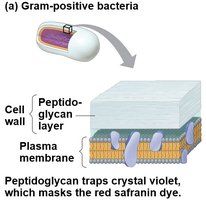
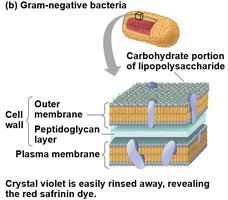
Bacteria are classified by shape (cocci, bacilli, spiral) and cell wall composition. The cell wall contains peptidoglycan:
Gram-positive: Thick peptidoglycan layer; stains purple.
Gram-negative: Thin peptidoglycan layer plus outer membrane with lipopolysaccharides; stains pink and is more resistant to antibiotics.
Bacterial Cell Surface Structures
Capsule/slime layer: Polysaccharide or protein layer for adherence and protection.
Endospores: Dormant, resistant cells for survival in harsh conditions.
Fimbriae: Short, hair-like structures for attachment.
Pili: Longer appendages for DNA exchange (conjugation).
Flagella: Used for movement.
Internal Organization and Genetic Diversity
Bacteria lack a nucleus; DNA is in a nucleoid. Some have plasmids (small, circular DNA). Genetic diversity arises from:
Rapid reproduction and mutation
Genetic recombination: Transformation (uptake of DNA), transduction (virus-mediated), and conjugation (direct transfer via pili).
Bacterial Nutrition and Metabolism
Bacteria are classified by energy and carbon sources:
Phototrophs: Use light energy.
Chemotrophs: Use chemical energy.
Autotrophs: Use CO2 as carbon source.
Heterotrophs: Use organic compounds as carbon source.
Some bacteria fix nitrogen, and others form biofilms for metabolic cooperation.
Prokaryotic Diversity and Roles
Bacteria and archaea are highly diverse due to horizontal gene transfer. Major groups include:
Proteobacteria: Diverse, includes pathogens.
Chlamydias: Animal cell parasites.
Spirochetes: Spiral-shaped, some pathogenic.
Cyanobacteria: Photosynthetic, ancestors of chloroplasts.
Gram-positive bacteria: Includes decomposers and pathogens.
Archaea include extremophiles (halophiles, thermophiles) and methanogens. Prokaryotes play key roles in chemical recycling, mutualism, and pathogenesis.
Bacteria in Research and Biotechnology
Bacteria are used in genetic engineering (e.g., CRISPR-Cas9), bioremediation, and production of biofuels and natural plastics.
